

Beyond the Sparkle: The Legendary Diamonds That Shaped Human History
Home
News And Media Beyond the Sparkle: The Legendary Diamonds That Shaped Human History SHOP NOWHome
News And Media Beyond the Sparkle: The Legendary Diamonds That Shaped Human History SHOP NOWMar, 17, 2026 by Archit Mohanty 0 Comments
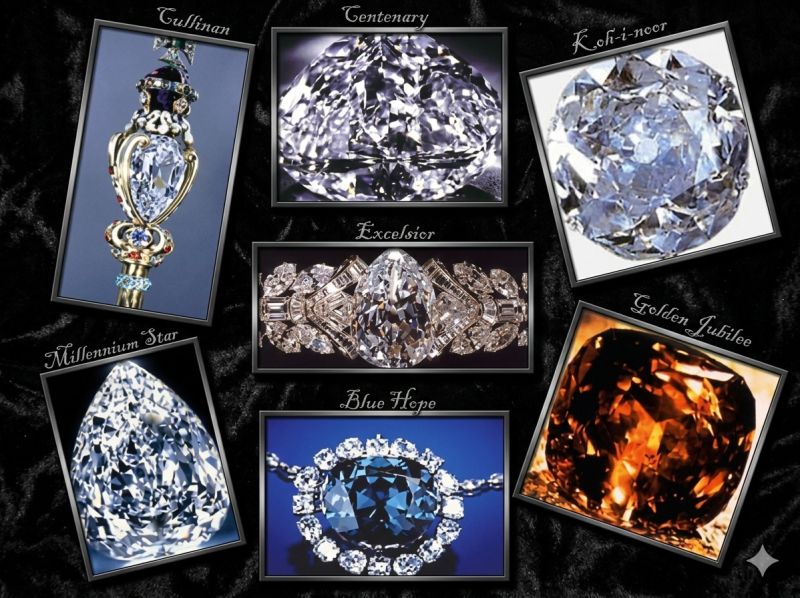
For millennia, diamonds have been more than just beautiful gemstones. They have been symbols of divine power, instruments of political intrigue, instruments of war, and the ultimate store of value. While the modern diamond industry has evolved with laboratory-grown stones and ethical sourcing, the allure of natural, legendary diamonds remains unmatched.
These stones are geological marvels born deep within the Earth's mantle over a billion years ago, brought to the surface by violent volcanic eruptions. But it is their human stories tales of conquest, curses, and coronations that have cemented their place in history.
In this guide, we delve deep into the science, history, and mystery of the world's most famous diamonds. Whether you are a gemologist, an investor, or a romantic, these stories continue to fascinate.
No diamond in history has captured the public imagination quite like the Hope Diamond. Weighing 45.52 carats.
The story of the Hope Diamond begins in India, likely at the Kollur Mine in the Golconda region. Originally, it was a much larger stone known as the "Tavernier Blue," purchased by the French gem merchant Jean-Baptiste Tavernier in the 17th century. Tavernier later sold it to King Louis XIV of France.
The "curse" legend that the diamond brings misfortune to its owners is largely a Victorian-era marketing invention. However, it has a dark history nonetheless. It was stolen during the French Revolution (contributing to the woes of Marie Antoinette, who often wore it), and later resurfaced in London.
After several tragic deaths in the family of its British owner, Henry Philip Hope (after whom the diamond is named), the myth of the curse took hold.
According to the Gemological Institute of America (GIA), the Hope Diamond is a Type IIb diamond, which means it contains trace amounts of boron. This element is responsible for its rare and coveted blue color.
The Hope Diamond is not just a pretty face; it is a subject of intense scientific study. It exhibits a unique phosphorescence a red glow when exposed to ultraviolet light a phenomenon that continues to puzzle scientists.
Looking to acquire your own piece of history? While you may not find a cursed blue diamond, you can explore a wide range of certified natural diamonds on our marketplace. Shop Natural Diamonds at CaratX.
Discovered in 1905 at the Premier Mine in South Africa, the Cullinan remains the largest rough gem-quality diamond ever found. It weighed an astonishing 3,106 carats (about 1.33 pounds).
The stone was named after Sir Thomas Cullinan, the mine owner. It was presented to King Edward VII as a birthday gift. The cutting process was entrusted to the famous Dutch cutter, Joseph Asscher (of the Asscher Diamond Company).
Asscher studied the stone for months before making the single cut that would cleave it into pieces. Legend has it that he fainted from exhaustion and excitement after making the successful cut.
The Cullinan was cut into 9 major stones and 96 smaller brilliants.
Cullinan I (The Great Star of Africa): At 530.2 carats, it is the largest clear cut diamond in the world. It is set in the Sovereign's Sceptre with Cross.
Cullinan II (The Second Star of Africa): Weighing 317.4 carats, it is set in the Imperial State Crown.
Both of these stones are part of the British Crown Jewels, housed at the Tower of London. View the Crown Jewels at the Royal Collection Trust
Imagine the value of the Cullinan today. If it were discovered now, it would be one of the most valuable objects on Earth. Interested in the journey from rough to polished? CaratX connects buyers with polished diamonds and jewelry.
Sell your Diamonds or Jewelry Internationally through our secure B2B and B2C platform.
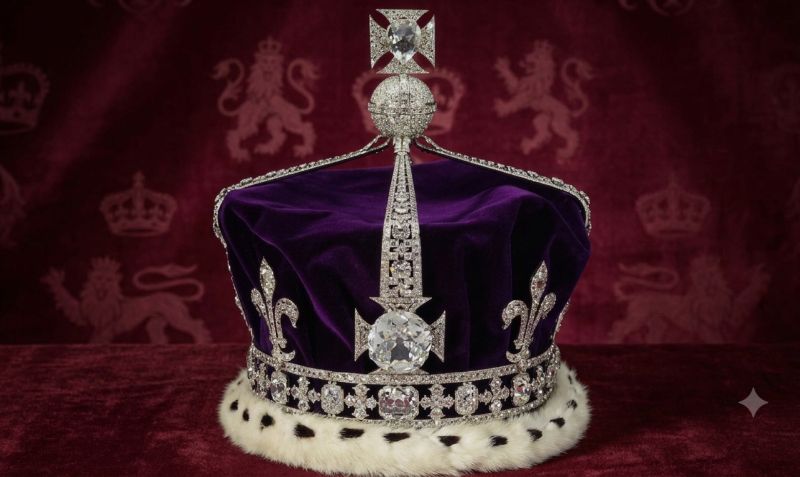
The Koh-i-Noor, which means "Mountain of Light" in Persian, is arguably the most contested gemstone in history. Originating in India, it has passed through the hands of Mughal Emperors, Persian kings, Afghan rulers, and Sikh Maharajas before ending up in the United Kingdom.
Historical records suggest the diamond was mined in the Golconda region of India, the only source of diamonds in the ancient world. It was famously seized by Nader Shah of Persia when he invaded Delhi in 1739.
The British East India Company forced the last Sikh ruler of the Punjab, Maharaja Duleep Singh, to surrender the gem to Queen Victoria in 1849 following the Anglo-Sikh wars.
When it arrived in London, Prince Albert was disappointed by its lack of brilliance compared to modern cut stones. In 1852, he ordered it to be recut from its original 186 carats to its current 105.6 carats. While this improved its sparkle, it destroyed much of its historical integrity and size.
While the previous diamonds are steeped in colonial history, the Pink Star is a modern phenomenon. Mined by De Beers in 1999 in South Africa, it started as a 132.5-carat rough diamond. The cutting and polishing process took a total of two years.
The result was a flawless 59.60-carat, Internally Flawless, Fancy Vivid Pink diamond. Pink diamonds are rare to begin with, but a stone of this size and color saturation is virtually unheard of.
In 2017, the Pink Star shattered records at a Sotheby's auction in Hong Kong, selling for $71.2 million the highest price ever paid for a gemstone at auction. The buyer was Chow Tai Fook, a Hong Kong-based jewelry company, which renamed it the "CTF Pink Star."
Explore Sotheby's Auction Archives for more record-breaking sales
To understand why these diamonds are so famous, one must understand the geology behind them.
The Carat: Size matters. Diamonds over 100 carats are exceptionally rare.
The Color: Fancy colored diamonds (Blue, Pink, Red) constitute less than 0.01% of all diamonds mined. The boron in the Hope Diamond and the atomic lattice distortion in the Pink Star create these hues.
The Clarity: Internally Flawless (IF) diamonds, like the Pink Star, have no internal inclusions visible under 10x magnification by a skilled grader.
The Origin: Diamonds from the historic Golconda mines (like the Hope and Koh-i-Noor) are known for their exceptional transparency, often called "Type IIa," the purest form of diamond.
In the past, only kings and maharajas could afford such treasures. Today, the diamond market has been democratized. However, liquidity remains a challenge for diamond owners.
This is where CaratX bridges the gap.
Whether you are looking to acquire a certified natural diamond or looking to sell your existing jewelry to a global audience, CaratX provides the infrastructure.
For Buyers: We offer a vast selection of certified natural diamonds and exquisite jewelry at unbeatable prices. Browse our Gemstone Collection.
For Sellers: Are you a jeweler or a diamond supplier? Expand your reach to buyers in 18+ international countries. Our platform handles the logistics and compliance.
Register as a Seller on CaratX.
For Businesses (B2B): Our wholesale marketplace allows you to source inventory directly from vetted suppliers. Check our Seller Plans and Pricing.
The history of famous diamonds is often a bloody one. The term "blood diamond" or "conflict diamond" refers to diamonds mined in war zones and sold to finance armed conflict. This was particularly prevalent in parts of Africa during the 1990s.
At CaratX , we are committed to ethical sourcing and transparency. We encourage all our sellers to provide certification and provenance for their goods.
1. What is the largest diamond ever found? The largest rough diamond ever discovered is the Cullinan Diamond, found in South Africa in 1905, weighing 3,106 carats.
2. Is the Hope Diamond really cursed? The "curse" is considered a myth created to add drama to the stone's history. While its owners have had tumultuous lives, there is no scientific evidence of a curse. It is currently a happy and popular resident of the Smithsonian Museum.
3. Where did the Koh-i-Noor diamond come from? It is believed to have been mined in the Golconda region of India. It is currently part of the British Crown Jewels.
4. How can I sell my diamond online? You can sell your diamonds and jewelry to a global audience by registering on the CaratX marketplace. We connect you with verified B2B and B2C buyers. Start selling here.
5. What is a fancy color diamond? Fancy color diamonds are natural diamonds that exhibit a distinct color (like blue, pink, yellow, or red) beyond the typical "colorless" to "light yellow" range. The Pink Star is a prime example.
6. Are lab-grown diamonds mentioned in this article? No, this article focuses specifically on legendary natural diamonds. However, CaratX acknowledges the growing market for lab-grown stones and their ethical advantages.
Ready to start your own legacy?
Aug, 06, 2022
Aug, 06, 2022

0 Comments
Please login to leave a reply.