

Diamond Market War Impact, Price Drops & Supply Tightening
Home
News And Media Diamond Market War Impact, Price Drops & Supply Tightening SHOP NOWHome
News And Media Diamond Market War Impact, Price Drops & Supply Tightening SHOP NOWApr, 13, 2026 by Archit Mohanty 0 Comments
The global diamond industry finds itself at a critical crossroads in March 2025, navigating a perfect storm of geopolitical conflicts, structural supply shifts, and evolving consumer demand.
From heightened tensions in the Middle East disrupting key trading centers to aggressive price corrections in smaller diamonds, the market's mixed signals are challenging every participant from miners to retailers. This detailed analysis explores the multifaceted pressures reshaping the diamond landscape and what they mean for the industry moving forward.
The diamond market's fragility was starkly illustrated in March as escalating tensions between Iran and Israel introduced a fresh layer of instability. The conflict directly impacted two of the industry's most vital trading hubs: Israel and Dubai.
Israel's diamond industry, centered in Ramat Gan, has long been a cornerstone of global diamond trading and cutting. However, the current geopolitical climate has dramatically altered its operational landscape. As a major hub for rough diamond imports and polished exports, any disruption here sends shockwaves throughout the global supply chain.
The impact extends beyond immediate trading halts. Israel's highly developed cutting and polishing sector, known for its expertise in handling larger and more valuable stones, has faced operational challenges. This has forced many international buyers and sellers to seek alternative trading venues, adding time and cost to transactions.
Dubai has emerged in recent years as a rapidly growing diamond trading center, offering a neutral, well-regulated environment for rough diamond auctions and polished trading. However, the current regional instability has temporarily dampened its role. While Dubai remains operational, the perception of heightened risk in the broader Middle East has led to a cautious approach from many international players, slowing down trading volumes.
The current market pressures are not solely geopolitical; they are deeply rooted in a series of interconnected supply chain shocks that have fundamentally altered how diamonds move from mine to market.
The ongoing conflict in Ukraine and subsequent sanctions on Russia have created one of the most significant supply chain disruptions in recent history. Russia, primarily through its state-controlled miner Alrosa, is the world's largest producer of rough diamonds by volume. Sanctions imposed by the G7 nations, the United States, and others have restricted the flow of Russian diamonds into key markets.
As noted by the G7, the ban on Russian diamond imports has sparked a debate on how to ensure the traceability and transparency of the global diamond trade. One of the biggest challenges is that Russian diamonds can be difficult to identify and separate from other sources once they enter complex global supply chains.
The U.S. government's sanctions on Alrosa have raised concerns about potential disruptions to the global diamond supply and ethical sourcing within the jewelry industry. With a significant portion of the world's diamond supply now potentially restricted, prices could increase, especially for larger, higher-quality stones.
The Wilson Center points out that the diamond industry is worth over $81.4 billion per year, with 65% of global production sourced from Africa. This African dominance underscores the vulnerability of a supply chain heavily dependent on a few key regions, now exacerbated by the removal of Russian supply from many Western markets.
Beyond sanctions, the diamond supply chain faces logistical nightmares. Major cutting and polishing centers in India, particularly Surat, rely on a steady flow of rough diamonds. Any delay in rough supply whether due to geopolitical tensions, shipping disruptions, or reduced production directly impacts manufacturing schedules and employment. The situation is compounded by rising energy costs and inflationary pressures, which increase the cost of production at every stage.
The Association of Intelligent Diamond International (AIDI) emphasizes that disruptions caused by geopolitical instability and logistical challenges have highlighted the vulnerability of the global diamond trade. Strategies for mitigating these risks include diversification of sourcing regions and investment in supply chain technologies such as blockchain for traceability.
The industry's benchmark for polished diamond prices reveals a market under significant strain, with notable divergences across carat weights.
1. 0.30 Carat
RAPI Change: -1.1%
Key Drivers: Weak consumer sentiment and oversupply in the low-end segment.
2. 0.50 Carat
RAPI Change: -3.5%
Key Drivers: Largest decline driven by mass-market oversupply and increasing competition from lab-grown diamonds.
3. 1.00 Carat
RAPI Change: -1.7%
Key Drivers: Sluggish demand along with excess inventory in the market.
4. 3.00 Carat
RAPI Change: -0.5%
Key Drivers: Relatively stable performance supported by sustained investment demand.
The most dramatic movement was seen in 0.50-carat diamonds, which plunged by 3.5%, the largest decline among all categories tracked by the RAPI. This segment is particularly sensitive to mass-market jewelry demand and faces intense competition from lab-grown diamonds, which have aggressively captured market share in the lower price tiers.
The impacts of the COVID-19 pandemic and the Russia-Ukraine conflict, the global natural diamond market has experienced simultaneous declines in both transaction volumes and prices, accompanied by significant shifts in the supply-demand dynamics between natural and lab-grown diamonds.
0.30-carat diamonds fell by 1.1%, reflecting weak consumer sentiment for entry-level diamond jewelry. Meanwhile, 1-carat diamonds dropped 1.7%, a moderate decline suggesting some resilience in this popular engagement ring size.
The most stable category was 3-carat diamonds, declining only 0.5%. Larger stones are increasingly viewed not just as luxury items but as alternative investments, acting as a hedge against inflation and currency fluctuations.
The RAPI data tells only part of the story. Underlying the price movements is a clear polarization of demand that is reshaping the industry.
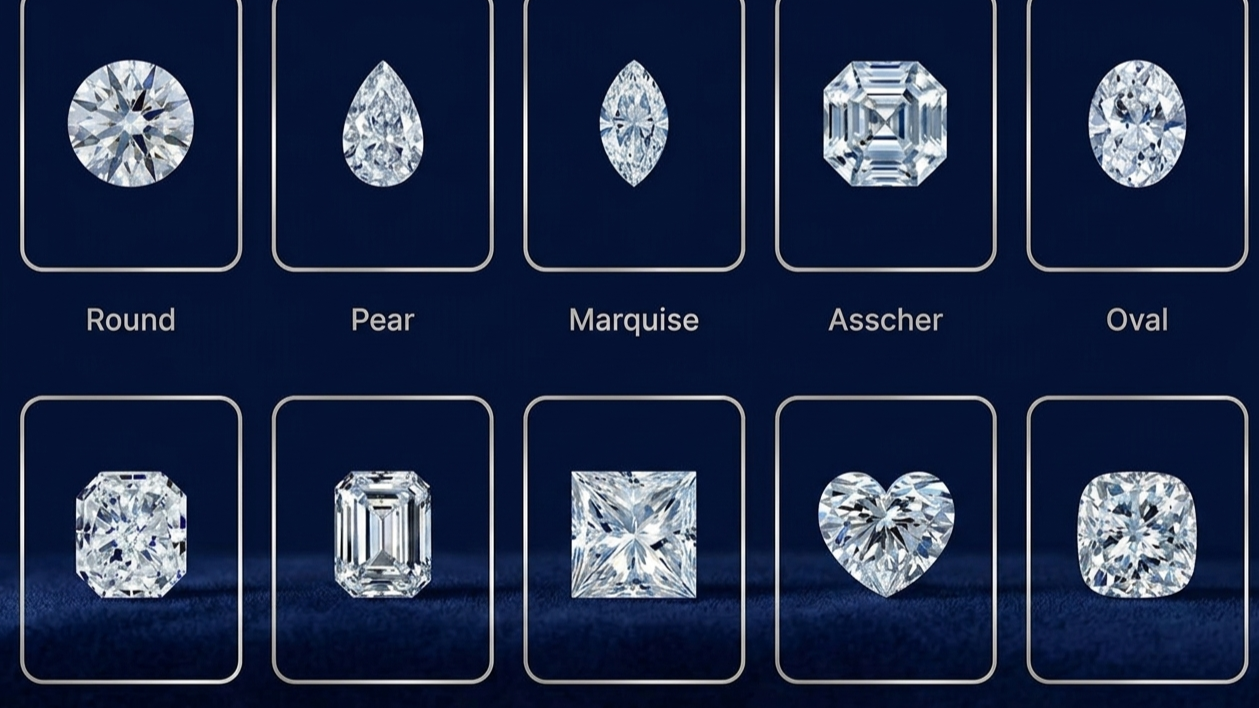
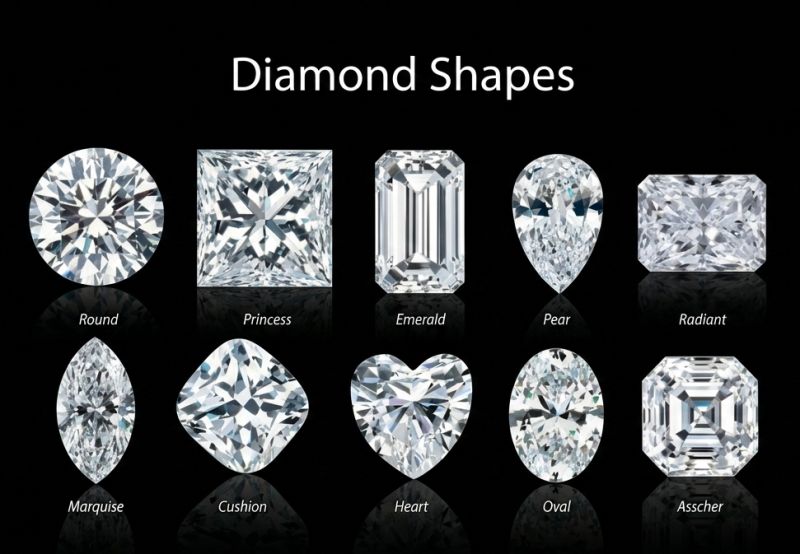
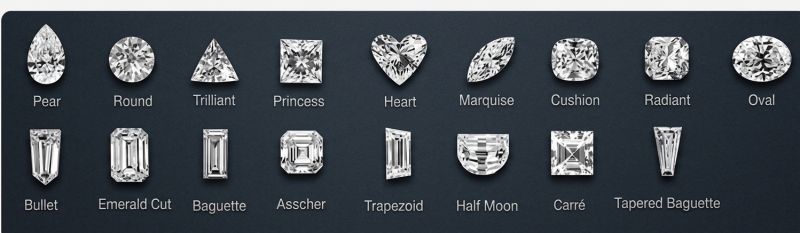
Despite economic headwinds, demand for diamonds of 2 carats and larger remains remarkably strong. Wealthy consumers continue to view these stones as stores of value and symbols of enduring status. This trend is particularly pronounced for long fancy shapes, including oval, marquise, and pear cuts, which have surged in popularity.
Large wholesalers in New York report steady retailer demand for these larger, premium stones. The appeal is twofold: larger diamonds offer a more distinctive and impressive appearance, and they tend to hold their value better than smaller counterparts. As one industry analysis notes, larger stones are holding their value remarkably well while smaller, mass-market sizes continue to see price corrections.
The primary driver of weakness in smaller diamonds is the meteoric rise of lab-grown diamonds (LGDs). Chemically and physically identical to natural diamonds but produced in a matter of weeks in a laboratory, LGDs have disrupted the lower end of the market.
Research from Harvard University's library access notes that the explosion of lab-grown stones has shaken up the sector, and established players are struggling for relevance. The natural diamond industry is facing an existential threat from stones that are just a fraction of the price.
A study from the Hong Kong University of Science and Technology notes that the U.S. is by far the largest market for lab-grown diamonds, accounting for 70% of global sales of lab-grown diamond jewelry in 2024. National Public Radio (NPR) reports that the manmade diamond market was about $13 billion last year, with projections suggesting demand will grow to almost $22 billion by the start of the next decade.
In response to these market dynamics, the industry has implemented strategic price adjustments. The adjustments are focused on specific segments:
Round diamonds up to 1.99 carats: Prices have been adjusted to reflect weaker demand and increased competition from lab-grown stones in this popular size range.
Pear shapes up to 0.99 carats: Despite the popularity of pear shapes in larger sizes, smaller pear-cut diamonds have faced price pressure.
Crucially, these adjustments have been described as "controlled and stable." Rather than panic-driven price cuts, the industry is attempting a measured recalibration. This approach helps maintain confidence among buyers and sellers, preventing the kind of freefall that could destabilize the entire market.
For sellers looking to navigate this environment, listing inventory on a robust B2B platform is essential. CaratX provides a global marketplace where diamonds and jewelry can be showcased to buyers in 18+ international countries, helping sellers reach new audiences even in a challenging market.
On the supply side, the market is facing a significant tightening, particularly for larger rough diamonds.
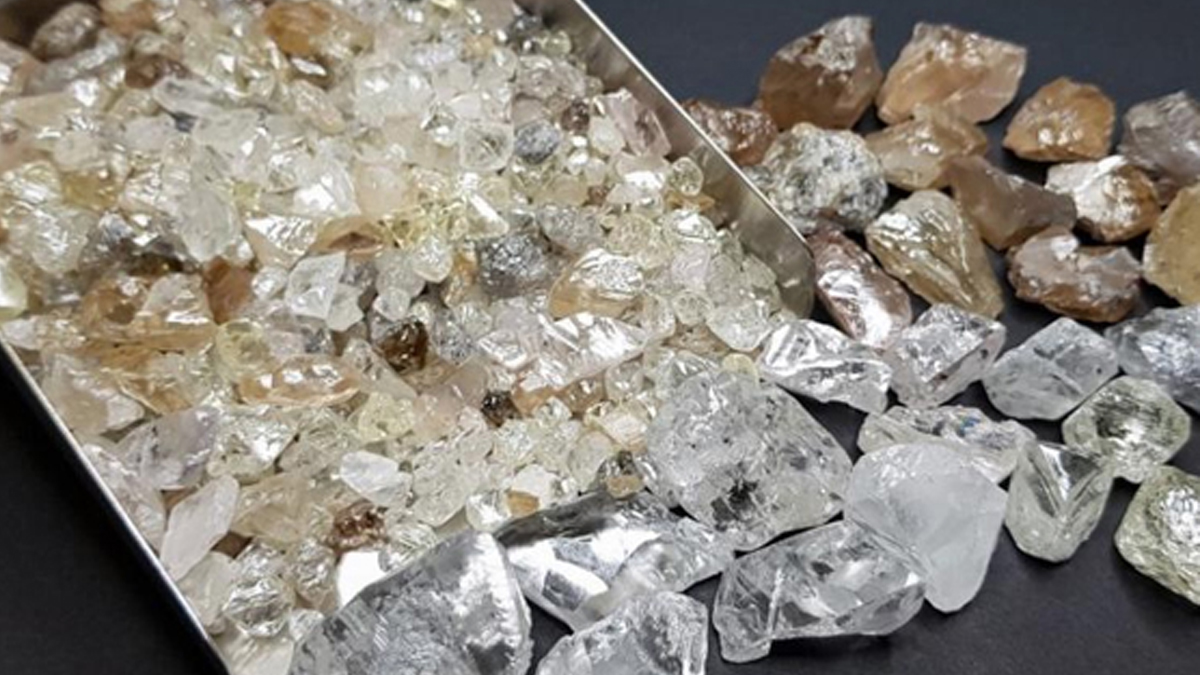
Rough diamonds of 5 carats and above are experiencing a classic supply-demand imbalance: demand remains high, but supply is constrained. Large, high-quality rough diamonds are becoming increasingly rare, driving up their value. This scarcity is reflected in reports of price increases at De Beers' March sight, where rough diamond prices for select categories have been adjusted upward.
The GIA's Gems & Gemology publication notes that since 2007, rough diamond prices have become extremely volatile, partly due to the growing percentage of rough diamonds now sold by tender and live auctions rather than the century-old system of marketing rough diamonds at set prices to a pre-approved clientele.
The most significant supply-side development is De Beers' dramatic reduction of its sightholder list. The company has cut its number of sightholders from approximately 69 to between 45 and 50 a reduction of 20 to 25 companies.
This move reflects multiple pressures:
Declining rough diamond availability: De Beers' production volumes have dropped, necessitating a smaller distribution network.
Weak demand: The midstream segment (cutters and polishers) is struggling with thin margins and high inventory levels.
Strategic pivot: De Beers aims to focus on "value creation" with fewer, more strategic partners.
Reports from the Israeli Diamond Industry indicate that De Beers has stripped around 10 sightholders of their rough-diamond allocations for 2025 and is planning to offer fewer goods overall. The total value of allocations next year is expected to be 20% to 30% lower.
This restructuring is part of a broader industry trend. Anglo American, De Beers' parent company, has announced a massive write-down of De Beers' book value by approximately $2.8 billion, reflecting the challenging market environment.
Meanwhile, competitor Rio Tinto has exited the diamond business entirely, reporting a $79 million loss in its diamond division in 2025, reflecting structural oversupply and increasing competition from lab-grown diamonds.
The external pressure of US tariffs on Indian goods continues to create uncertainty for diamond exporters. As of March 2025, these tariffs remain at approximately 10% on most diamond and jewelry products.
However, there is positive news. In February 2026, the United States lowered import duties on Indian goods from a punitive 50% to 18%, offering immediate relief to exporters. Under the new agreement, tariffs will be eliminated entirely on certain products, including gems and diamonds.
A joint statement by the United States and India outlines that India will eliminate or reduce tariffs on all U.S. products, while the United States will apply a reciprocal tariff rate of 18% under Executive Order 14257 of April 2, 2025.
Moody's Ratings has noted that the U.S. tariff reduction is credit positive for labor-intensive sectors such as gems, jewelry, textiles, and apparel, which are India's top export sectors. This development is expected to boost Indian diamond and jewelry exports significantly, potentially by 25% or more, as reported by industry sources.
As the diamond market navigates this perfect storm of war, supply cuts, and shifting demand, several strategic imperatives emerge for industry participants:
Diversify sourcing: Over-reliance on any single supplier or region is increasingly risky. Explore alternative rough sources and consider direct relationships with miners.
Embrace digital platforms: Traditional trading hubs are disrupted. Platforms like CaratX offer access to buyers in 18+ international countries, providing a crucial sales channel.
Stock the right sizes: With strong demand for 2+ carat diamonds and long fancy shapes, align inventory with consumer preferences.
Educate consumers: Help buyers understand the differences between natural and lab-grown diamonds. Transparency builds trust and justifies premium pricing for natural stones.
Consider vertical integration: Direct sourcing from platforms like CaratX can reduce costs and improve margins.
Focus on quality: Investment-grade diamonds typically 1 carat and above with excellent cut, color, and clarity offer the best value retention.
Monitor geopolitical developments: The Russian diamond ban and Middle East tensions will continue to shape supply.
Diamond prices show a polarized trend. Smaller diamonds (0.30–1.00 carat) are experiencing price declines, with 0.50-carat stones dropping 3.5% in March. However, larger diamonds (2 carats and above) are holding their value well, supported by strong demand and limited supply.
Smaller diamonds face intense competition from lab-grown diamonds, which have captured significant market share in the mass-market jewelry segment. Larger diamonds are viewed as investment assets and status symbols, making them more resilient to price pressure.
Sanctions on Russian diamonds, primarily from Alrosa, have restricted supply to Western markets. This has created supply chain challenges and may lead to price increases for certain categories, particularly larger stones. However, enforcement and traceability remain challenges.
The Kimberley Process Certification Scheme (KPCS) is a UN-endorsed international initiative to prevent "conflict diamonds" from entering the legitimate diamond trade. It requires member countries to certify that rough diamond exports are conflict-free.
It depends on what you're selling. Large diamonds (2+ carats) and long fancy shapes (oval, marquise, pear) are in strong demand. Smaller diamonds face more challenging market conditions. For sellers, listing on global platforms like CaratX can help reach international buyers.
US tariffs on Indian diamonds remain at approximately 10%, creating uncertainty for exporters. However, a recent trade agreement has reduced tariffs from 50% to 18% and promises eventual elimination on certain products, which is expected to boost exports significantly.
De Beers is reducing its sightholder list from approximately 69 to 45–50 companies due to declining rough diamond availability, weak midstream demand, and a strategic shift toward "value creation" with fewer, more focused partners.
Yes, significantly. Lab-grown diamonds have captured market share in the lower price tiers, putting downward pressure on prices of smaller natural diamonds. The lab-grown diamond market has surpassed $9 billion and continues to grow, particularly in the U.S., which accounts for 70% of global LGD sales.
Long fancy shapes particularly oval, marquise, and pear cuts are seeing strong demand, especially in larger sizes (2 carats and above). These shapes offer a distinctive, elongating appearance on the finger and have become increasingly fashionable.
Platforms like CaratX provide access to B2B and B2C buyers in 18+ international countries. Sellers can register on the CaratX marketplace to list diamonds, gemstones, and jewelry, reaching a global audience with reduced costs compared to traditional trading channels.
Shop natural diamonds: https://caratx.com/search-results/Natural
Shop gemstones: https://caratx.com/search-results/gemstones
Seller registration (B2B/B2C): www.caratx.com/register
Pricing and seller plans: https://caratx.com/generic-pages/launch-your-products-on-caratx
The diamond market is navigating unprecedented challenges, but opportunities remain for those who adapt. Stay informed, diversify your approach, and leverage platforms like CaratX to reach global buyers.
Follow CaratX for more insightful and educational content on the evolving diamond industry.
Jun, 18, 2026
Aug, 06, 2022
Aug, 06, 2022

0 Comments
Please login to leave a reply.