

The Fascinating World of Gold Colors in Modern Jewelry
Home
News And Media The Fascinating World of Gold Colors in Modern Jewelry SHOP NOWHome
News And Media The Fascinating World of Gold Colors in Modern Jewelry SHOP NOWMay, 26, 2026 by Archit Mohanty 0 Comments
Yes, pure 24K gold is a rich, unmistakable yellow. But the story of gold doesn't end there. By mixing pure gold with other metals a process known as alloying jewelers can produce a stunning spectrum of colors, each with its own unique character and charm. From the classic warmth of yellow gold to the bold mystery of black, this is your guide to the captivating world of gold colors in modern jewelry.
To understand how gold changes color, we must look at its structure. Pure, 24-karat gold is naturally soft and very malleable, which makes it less durable for everyday wear. To create beautiful, strong jewelry, gold is alloyed, or mixed, with other metals. These metals change the alloy's physical properties and, crucially, alter how it reflects light, giving it a completely new color.
This process is a precise science. The Gemological Institute of America (GIA) provides a helpful breakdown, noting that the karat system measures an alloy's purity on a scale of 24 parts, so 18K gold contains 18 parts pure gold and 6 parts other metals. By controlling these ratios, a world of colors becomes possible, many of which are rigorously measured using systems like CIELAB to ensure consistency and quality in fine jewelry.
Let's explore the most beautiful and sought-after shades of gold available today.
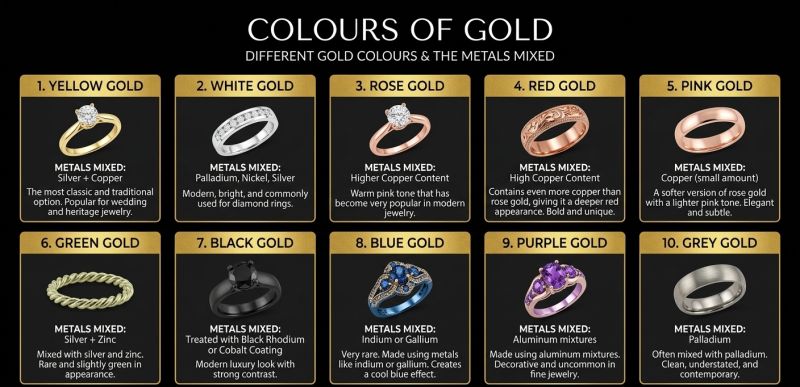
The most classic and traditional gold color, yellow gold is typically created by alloying pure gold with silver and copper. This formula preserves the metal's natural warm, sunny hue while adding strength and durability.
Yellow gold is deeply associated with tradition and heritage, making it a timeless choice for wedding bands and vintage-inspired designs. It’s also prized for its hypoallergenic properties and the brilliant shine it imparts to jewelry.
White gold offers a modern, bright, and sleek alternative. It is made by alloying pure gold with white metals like palladium, nickel, and silver, which bleach the yellow hue into a silvery white. To achieve its brilliant, mirror-like finish, white gold jewelry is almost always plated with a rare, hard metal from the platinum family: rhodium.
Because of its neutral tone and ability to enhance the sparkle of colorless stones, white gold has become the standard for diamond engagement rings, modern wedding bands, and any piece where a bright, contemporary look is desired.
Rose gold has a warm, romantic pink tone that has seen a massive resurgence in modern jewelry. Its beautiful blush comes from a higher copper content in the alloy. The more copper used, the richer and deeper the rose hue.
Rose gold is incredibly versatile. It looks stunning on all skin tones and pairs beautifully with both warm and cool-colored gemstones. Its vintage feel and modern sensibility have made it a top choice for engagement rings, watches, and delicate everyday jewelry.
If rose gold is a delicate blush, red gold is a bold scarlet. Red gold is simply an extension of the rose gold family but contains an even higher percentage of copper. This gives it a deeper, more intense reddish appearance that is both striking and unique.
This bold gold color makes a powerful statement. It is often used in accent pieces, men's jewelry, and designs where a strong, passionate aesthetic is desired.
Pink gold is a softer, more delicate cousin of rose gold. Created with just a touch of copper alloyed with gold, it has a light, elegant pink blush that is subtle and refined. Its gentle hue is perfect for romantic, delicate jewelry designs and pieces intended for a soft, vintage-inspired look.
Green gold is one of the rarer shades in the gold spectrum. It is created by alloying gold with silver, and sometimes zinc, which shifts the color towards a pale, greenish-yellow. In ancient times, this natural alloy of gold and silver was known as electrum.
This subtle and earthy hue is a favorite among artisans and designers who prize its uniqueness and connection to ancient metallurgy. Green gold adds an organic, sophisticated touch to bespoke jewelry pieces.
Black gold is the ultimate expression of modern luxury. Unlike other colors, black gold is rarely achieved through standard alloying. Instead, the surface of gold is treated with black rhodium plating or a cobalt coating to create its deep, dark, and dramatic appearance.
Black gold is prized for its striking contrast and bold aesthetic. It's a powerful choice for men's jewelry, statement rings, and contemporary pieces designed to push the boundaries of traditional design.
Blue gold is a very rare and exotic color. It is typically created by alloying gold with indium or gallium. The interatomic structure of the resulting alloy absorbs specific wavelengths of light, producing a fascinating cool blue effect.
Because it is often more brittle than other alloys, blue gold is not typically used for everyday jewelry but is highly prized as a decorative accent in high-end, avant-garde pieces.
Purple gold, also known as amethyst gold, is one of the most unique of all. It is not a standard alloy but an intermetallic compound made of gold and aluminum (AuAl₂). This chemical bond gives it a distinctive lavender or purple color.
Like blue gold, purple gold is quite brittle and cannot be used in the same way as traditional gold alloys. It is often faceted and set like a gemstone, making it a true collector's item for the most discerning jewelry enthusiasts.
Grey gold is a clean, understated, and contemporary gold color. It is often created by alloying gold with palladium. The result is a soft, elegant grey metal that provides a subtle alternative to the bright finish of white gold.
Its quiet, sophisticated tone makes it a growing favorite for minimalist designs, men's jewelry, and anyone who appreciates a more subtle, modern take on a classic precious metal.
As we move through 2026, certain gold colors are making major waves in the jewelry industry. According to the CaratX guide to jewelry coloring techniques, designers are mastering revolutionary science to push the boundaries of what's possible with metal. Here’s what’s trending:
Rose and White Gold Remain Dominant: These two colors continue to be the top choices for bridal jewelry, with designers creating stunning contrasts by pairing white gold settings with rose gold accents.
Yellow Gold's Comeback: In luxury and vintage-inspired designs, yellow gold is experiencing a powerful resurgence. Its warm, classic look is being reimagined in modern silhouettes.
The Rise of Dark Metals: Black gold and grey gold are rapidly growing in popularity, especially in men's jewelry collections, where they offer a bold, contemporary edge to bracelets, signet rings, and wedding bands.
Colored Diamonds Take Center Stage: As interest in unique jewelry grows, so does the demand for fancy colored diamonds. CaratX's guide to fancy colored diamonds explores these rare and vibrant gems, which pair perfectly with complementary gold shades.
With so many options, how do you choose? Your choice of gold color should reflect your personal style, complement your skin tone, and fit the piece's intended use. For everyday-wear items like engagement rings, consider the hardness and durability of the alloy you prefer. For example, while 18K gold is beautiful, a 14K alloy is more durable and scratch-resistant for an active lifestyle.
When in doubt, trust your instincts. The best gold color is the one that makes you feel confident and beautiful every time you wear it.
Q: Is 24K gold the best quality? A: 24K gold is 99.9% pure, but it is very soft and easily scratched or bent. For jewelry, 18K (75% gold) or 14K (58.3% gold) are often better choices because they are significantly more durable.
Q: Does white gold need special care? A: Yes, most white gold jewelry is plated with a hard metal called rhodium to give it its bright white color. Over time, this rhodium plating can wear away, revealing the slightly yellowish color of the underlying white gold alloy. Your jeweler can re-plate the piece to restore its original brilliance.
Q: Is rose gold more expensive than yellow gold? A: Not necessarily. The price of gold jewelry depends primarily on its karat weight (the amount of pure gold it contains) and the complexity of its design, not on the color of the alloy used to achieve it.
Q: Are gold alloys safe for people with metal allergies? A: Some people have skin sensitivities to certain metals used in alloys, most notably nickel, which is often found in white gold. If you have sensitive skin, it is best to choose a high-karat gold (which has fewer other metals) or a gold alloy that uses hypoallergenic whiteners like palladium instead of nickel.
Q: Can I sell my colored gold jewelry? A: Yes, absolutely. You can sell your colored gold jewelry to buyers and platforms like CaratX.
The world of colored gold offers endless possibilities for designers, retailers, and collectors.
Whether you're looking to buy stunning natural diamonds www.caratx.com, find beautiful gemstones at unbeatable prices www.caratx.com, or expand your business internationally, CaratX is your global marketplace.
Sellers: Start selling to buyers in 18+ countries www.caratx.com/register
Learn more about our seller pricing and plans https://caratx.com/generic-pages/launch-your-products-on-caratx
Follow CaratX for more insightful and educational content.
Jun, 15, 2026
Aug, 06, 2022
Aug, 06, 2022

0 Comments
Please login to leave a reply.