

💎Premium Natural Diamonds Are Showing Stronger Stability in 2026 -
Home
News And Media 💎Premium Natural Diamonds Are Showing Stronger Stability in 2026 - SHOP NOWHome
News And Media 💎Premium Natural Diamonds Are Showing Stronger Stability in 2026 - SHOP NOWMay, 27, 2026 by Archit Mohanty 0 Comments
Introduction: A New Era of Premium Stability
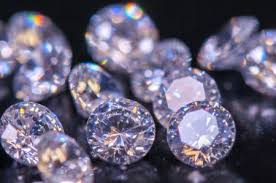
The natural diamond market has entered 2026 after enduring what industry analysts describe as "three punishing years" of sweeping corrections spanning 2023, 2024, and the early portion of 2025. Following an extended period in which global diamond production plummeted to multi-decade lows, the market's trajectory has markedly bifurcated.
While commercial-grade stones continue to trade 15–30% below the frothy peaks of 2022, premium natural diamonds specifically those graded D–F in color and VS clarity or higher are demonstrating robust resilience. Certain premium categories have registered up to 5% price recovery, reflecting a deliberate global pivot among luxury buyers toward certified quality, rarity, and timeless value.
The diamond market is no longer a monolithic entity. Data from the industry's most authoritative pricing and intelligence source, confirms that natural diamond prices declined by as much as 26% in 2025 alone, with small-melee stones and lower-clarity commercial goods bearing the brunt of the downturn.
Compounding this pressure, global diamond production slid to approximately 100 million carats in 2025 a level not seen in multiple decades and is forecast to rebound only marginally to around 105 million carats in 2026.
Despite these broad pressures, premium-quality natural diamonds in the D–F color, VS1–VS2 clarity ranges particularly in sizes above 2 carats have not only held their value but are showing clear signs of renewed buyer interest. Industry experts at the Gem & Jewellery Export Promotion Council (GJEPC) have noted that while overall price stability is expected to return by mid-2026, the premium segment's performance is diverging sharply from the mass market, with long-term demand remaining notably intact at higher price points.
One of the most critical catalysts for premium price stability is disciplined supply management. De Beers Group the world's largest diamond producer, accounting for approximately 40% of global supply has aggressively aligned output with prevailing demand. In the first quarter of 2026, De Beers reported a 17% increase in rough diamond production, reaching 7.1 million carats, driven primarily by higher volumes from Canadian and South African operations.
However, the company's full-year 2026 guidance of 21–26 million carats remains significantly constrained compared to historical averages, and this guidance was already reduced from a previous estimate of 26–29 million carats due to persistent geopolitical and tariff uncertainties.
De Beers is currently estimated to be producing at as much as 35% under capacity, a strategic decision that reinforces scarcity for premium rough goods, a benefit that flows directly downstream to the polished natural diamond market. When major producers restrict output in a disciplined manner, the pricing floor for premium certified diamonds firms considerably.
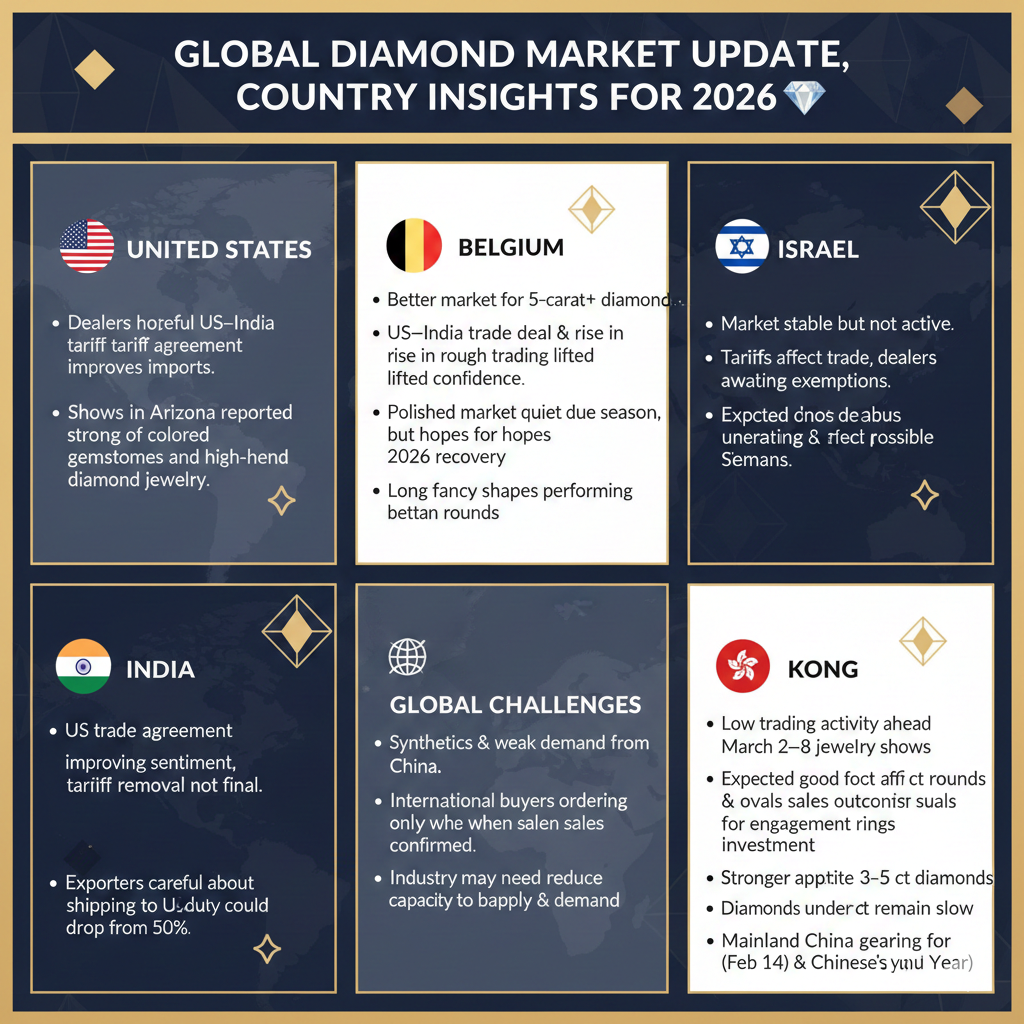
The US diamond market remains the most consequential barometer of global diamond health, and current indicators are constructive. The jewelry industry is actively preparing for the upcoming Las Vegas jewelry shows, which include the JCK Las Vegas show and the Luxury show scheduled for May 27 through June 1, 2026. Wholesalers and retailers report steady demand, with market sentiment ranging from stable to mildly optimistic as trade activity accelerates in advance of these critical events.
JCK Las Vegas 2026 is expected to showcase a strong return to diamond-forward design. Industry voices note that as lab-grown diamonds continue to expand the market, the desire for natural diamonds particularly in meaningful sizes and distinctive cuts has become even more pronounced. American demand for natural diamonds in the premium segment is estimated to have risen 2–4% year-on-year, with the bridal sector leading the charge.
The Dubai Diamond Exchange and the broader UAE luxury diamond trading ecosystem are experiencing extraordinary momentum. Premium demand in the region is estimated to have increased 5–8%, especially in high-end categories above 5 carats.
As geopolitical tensions reshuffle traditional trade flows, Dubai's strategic location, tax-advantaged environment, and world-class infrastructure have positioned it as an increasingly central node in the global natural diamond supply chain.
India's appetite for natural diamonds remains voracious, driven by a cultural tradition of bridal jewelry and a rapidly expanding aspirational class. The Indian market has registered the strongest growth among all major regions, with natural diamond demand estimated to have risen 6–10% compared to previous years.
European luxury demand has not retreated; it has redefined itself. The continent's high-net-worth buyers are more selective but equally committed to quality. Market stabilization in Europe is estimated at 1–3%, with heritage jewelers in London, Paris, and Geneva reporting steady inquiries for large certified natural diamonds, particularly in antique and vintage-inspired cuts.
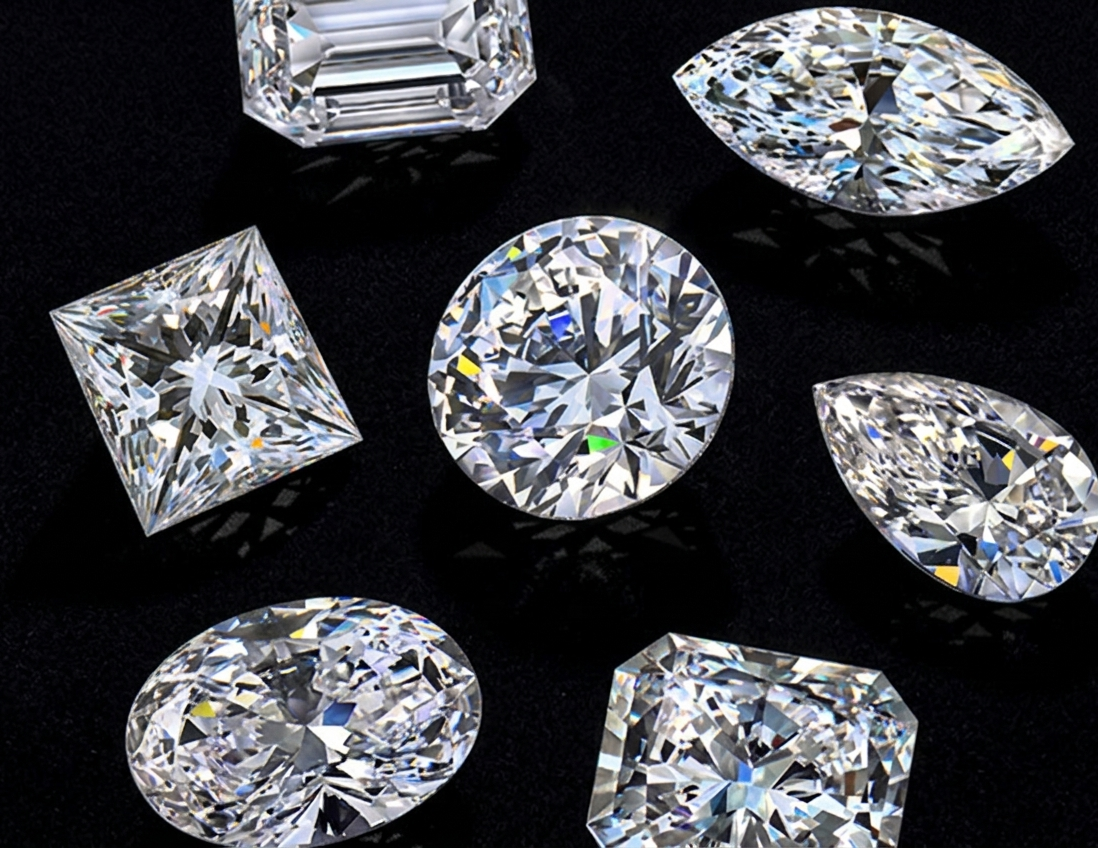
Round brilliant diamonds continue to command the largest global market share, estimated between 55% and 60%. The round cut's unrivaled light performance, standardized pricing, and universal liquidity ensure its continued dominance, particularly in the bridal sector. However, the most dramatic shift in consumer preference is occurring in the fancy shape category.
In diamonds weighing 2 carats and above, long fancy shapes are consistently outperforming round brilliants. The "long fancy shapes such as Ovals, Marquises and Emeralds [are] doing better than rounds in 2 ct. and larger".
High-quality Marquises, long Radiants, and long Cushions are now in such critically short supply that Marquises have become the most expensive fancy shape on the market.
This phenomenon has a rational explanation: elongated cuts distribute their weight along a vertical axis, making the diamond appear substantially larger than a round brilliant of the same carat weight while maximizing finger coverage. For buyers seeking a luxurious visual impression without paying for additional carat weight, elongated fancies offer an exceptionally favorable value proposition.
While fancy shapes lead in percentage growth, the absolute volume of round brilliant trading remains immense. A specific sweet spot has emerged: oversized rounds in the 1.20 carat to 1.70 carat range, particularly in G–I colors with VS1–SI1 clarity and Triple Excellent (3X) cut grades.
These stones offer an optimal balance of beauty, certification integrity, and attainable pricing, making them highly attractive to both wholesalers and end consumers. For those seeking certified round brilliants, the CaratX natural diamond marketplace provides access to an extensive global inventory.
Perhaps the most unexpected yet powerful trend of 2026 is the resurgence of antique-cut diamonds. Old Mine Cuts, characterized by their rounded cushion shape, smaller table, higher crown, and larger culet (created during the 18th and 19th centuries for candlelit viewing), and Old European Cuts, the late-19th-century precursor to the modern round brilliant, are experiencing surging demand.
These cuts appeal to a growing segment of buyers craving authenticity, individuality, and historical narrative over algorithmically perfect, mass-produced aesthetics. Roman Jewelers and other leading retailers have reported that the cultural shift of 2026 is now driving buyers toward stones with character soft sparkles, uneven faceting, and a tangible sense of provenance.
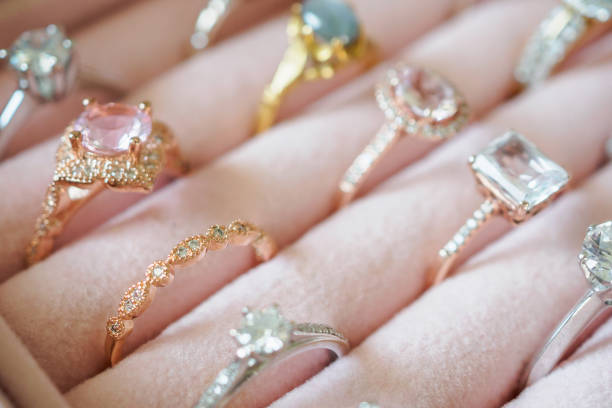
In the premium US market, bridal jewelry and high-end custom pieces are increasingly specified with antique diamonds, with vintage and estate jewelry channels seeing demand rise by an estimated 15–20%.
CaratX has documented this movement in resources such as Beyond the Brilliant Cut: Old Mine Cut Diamonds Are Making a Big Comeback and The Journey of Diamond Cutting: From Ancient Mystery to Modern Mastery.
For collectors and designers seeking authentic Old Mine or Old European cut stones, the CaratX loose diamond inventory includes both certified modern and antique-style cuts suitable for bespoke creations.
Another category showing accelerating strength is layouts matching sets of diamonds specified for necklaces, tennis bracelets, and multi-stone rings. This growing demand signals sustained interest in both high-end luxury jewelry and custom-made designs. Rather than purchasing a single statement stone, sophisticated buyers are commissioning matched ensembles that offer compositional harmony and extended wearability.
Wholesalers report that supply of well-matched layouts in premium colors (D–G) and clarities (VS1–SI1) remains tight, and buyers willing to pay modest premiums for certified matched sets are finding willing sellers. The trend toward layouts reinforces the broader theme of customization and individualism that now defines the premium natural diamond market.
No analysis of the natural diamond market would be complete without addressing the sustained ascent of laboratory-grown diamonds (LGDs). At a compound annual growth rate of 13–14%. India's lab-grown diamond exports, for the first time in April 2026, marginally surpassed natural diamond exports by volume: 1.36 million carats of polished lab-grown versus 1.34 million carats of natural.
In the United States, lab-grown diamonds now represent an estimated 61% of engagement rings, a segment once considered the unassailable fortress of natural diamonds. However, market analysts at BriteCo and other research organizations have noted an emerging "return to natural" phenomenon, as consumers increasingly recognize that lab-grown stones, while brilliant, retain only 10–30% of their original value on resale, whereas premium natural diamonds have demonstrated centuries of value retention and appreciation.
For buyers and sellers navigating this complex bifurcation, CaratX offers a dedicated seller registration portal for participants seeking to engage with 18+ international countries across both B2B and B2C channels.
CaratX exclusively lists GIA-certified natural diamonds, providing buyers with documented assurance of quality and origin.
For wholesalers, retailers, and manufacturers seeking to capitalize on the premium natural diamond market, CaratX offers a B2B and B2C marketplace connecting sellers with buyers across 18+ international countries. The platform serves as an exclusive diamond, gemstone, jewelry, and pearl hub, designed to reduce the costs of online selling while expanding global market access.
The CaratX seller ecosystem enables businesses to:
Reach B2B and B2C buyers in the United States, Europe, the UAE, India, and 14+ additional markets
List loose diamonds, layouts, antique cuts, and finished jewelry for international sale
Access transparent CaratX pricing plans designed to maximize seller margins
Benefit from CaratX's increasing search authority and marketing infrastructure
To begin selling, qualified sellers should complete registration at CaratX Seller Registration. The platform supports diamond sellers, jewelry designers, and gemstone dealers seeking international expansion.
For buyers, CaratX provides direct access to:
Natural diamonds of all shapes: round brilliants, ovals, emeralds, cushions, radiants, and marquises.
Gemstones at competitive wholesale pricing.
Engagement rings and custom jewelry from a global network of artisan sellers.
Buyers can shop the complete marketplace at CaratX.com.
The natural diamond market entering the second half of 2026 is fundamentally different from the market of 2022. The era of indiscriminate price appreciation is over; the era of selective, quality-driven value appreciation has begun.
The sustained interest in long fancy shapes, the accelerating demand for antique cuts, the disciplined production strategies of De Beers, and the improving regional demand across the US, UAE, and India all point to a market that is healing but healing unevenly.
Premium natural diamonds have emerged from the correction stronger, more selective, and more sought-after than their commercial-grade counterparts. For sellers positioned in this segment, 2026 represents a genuine opportunity for profitable, sustainable growth.
Q1: Are natural diamond prices going up or down in 2026? A1: Overall natural diamond prices remain mixed. Commercial-grade stones continue to trade 15–30% below 2022 peaks, while premium categories (D–F color, VS clarity, and above) are showing price stabilization and modest recovery of up to 5%. The market has bifurcated sharply between mass-market and premium segments.
Q2: Which diamond shapes are performing best right now? A2: In the 2-carat-and-above category, elongated fancy shapes particularly Oval, Emerald, Marquise, long Radiant, and long Cushion are outperforming round brilliants. High-quality Marquises are currently the most expensive fancy shape due to supply constraints.
Q3: What is driving the revival of antique-cut diamonds? A3: Antique cuts like Old Mine and Old European are experiencing a renaissance driven by buyers seeking authenticity, individual character, and historical narrative. These stones, hand-cut for candlelit viewing, offer "soft sparkle" rather than algorithmic perfection, appealing to a cultural preference for meaningful, non-mass-produced luxury.
Q4: How can I sell diamonds internationally? A4: Sellers can access international markets through platforms like CaratX, which connects sellers with buyers across 18+ countries. Registration is available at CaratX Seller Registration.
Q5: What certifications should I look for when buying premium natural diamonds? A5: The most authoritative certifications are GIA grading reports (covering the 4Cs of cut, color, clarity, and carat weight). For conflict-free assurance, verify Kimberley Process Certification Scheme compliance. Additional confidence comes from World Diamond Council System of Warranties participants.
Q6: How does lab-grown diamond competition affect natural diamond values? A6: The rapid expansion of lab-grown diamonds has primarily pressured lower-quality natural stones. Premium natural diamonds have demonstrated resilience because they offer attributes LGDs cannot: geological rarity, historical provenance, multi-century value retention, and resale markets where LGDs typically recover only 10–30% of original cost.
Jun, 15, 2026
Aug, 06, 2022
Aug, 06, 2022
0 Comments
Please login to leave a reply.