

The Science of Sparkle: How Diamond Color Grading Works and the Masterstone Method Explained
Home
Our Favorite Articles The Science of Sparkle: How Diamond Color Grading Works and the Masterstone Method Explained SHOP NOWHome
Our Favorite Articles The Science of Sparkle: How Diamond Color Grading Works and the Masterstone Method Explained SHOP NOWMar, 17, 2026 by Archit Mohanty 0 Comments
In the world of fine jewelry, few things are as mysterious or as misunderstood as diamond grading. When you look at a diamond, you see brilliance and fire. But a trained gemologist sees a complex puzzle of light performance, clarity characteristics, and most importantly, color.
Even the slightest hint of yellow or brown can drastically alter a diamond's value. A one-grade difference on the color scale can mean a price difference of thousands of dollars. So, how do experts ensure that a "G" color diamond in New York is the same as a "G" color diamond in Tokyo? The answer lies in a highly specialized process known as the Masterstone Method.
At CaratX, we connect buyers and sellers in over 18 countries with certified, high-quality diamonds. Understanding the nuances of grading is essential whether you are a buyer looking for the perfect stone or a seller aiming to price your inventory accurately. Let’s dive deep into the meticulous world of diamond color grading.
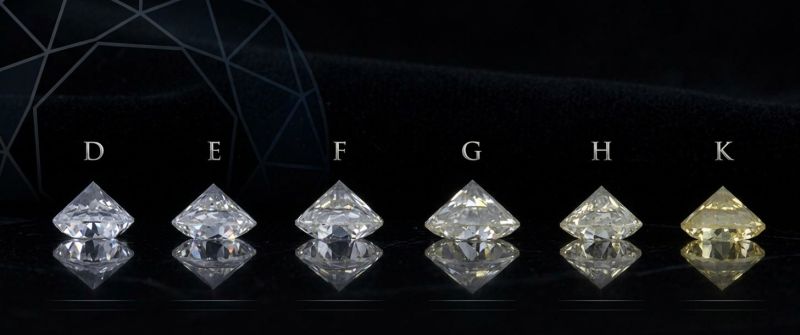
Before we explore the Masterstone Method, we must understand the scale it protects. The D-to-Z color grading system is the global standard, established by the Gemological Institute of America (GIA).
Colorless (D-F): These diamonds are rare and highly prized. They show no discernible body color, even to the trained eye.
Near Colorless (G-J): The sweet spot for value. Color is difficult to detect unless compared side-by-side with higher grades.
Faint Yellow (K-M): Color is noticeable, often appearing as a warm tint.
Very Light Yellow (N-R) & Light Yellow (S-Z): Color is obvious, even to the untrained eye.
This scale is linear, but the human eye does not perceive color linearly. This is why controlled environments and reference stones are non-negotiable.
The Masterstone Method is the industry’s gold standard for maintaining consistency in color grading. Because color grading is a comparative process not a mathematical one laboratories use masterstones to anchor the scale.
Masterstones are diamonds of known, verified color that represent the lightest possible example of a specific grade. For example, an "E" masterstone is not just any E-color diamond; it is the precise boundary where an E stops being a D.
Preparation: The diamond to be graded is thoroughly cleaned. Even a fingerprint can distort color perception.
The Setup: The diamond is placed table-down (pavilion up) on a neutral white folding tray. This position allows light to travel through the stone in a standardized way.
Comparison: The grader places the unknown diamond next to a series of masterstones. They look for which masterstone the unknown diamond is lighter than and which it is darker than.
The Verdict: If the diamond is lighter than an "H" masterstone but darker than a "G" masterstone, it is a "G."
According to the GIA, this method relies on the fact that "the masterstones represent the threshold between grades. Source: GIA.edu
Consistent diamond color grading isn't just about having the rocks; it’s about controlling the variables. Accurate grading depends on three main elements:
Masterstones are not just any diamonds. They are carefully selected to be "face-up" color stable and free of fluorescence that could interfere with grading. Laboratories often have multiple sets to ensure redundancy.
You cannot grade color under a disco ball or candlelight. The environment must be standardized:
Lighting: Grading rooms use daylight-equivalent fluorescent lighting (specifically around 5000 to 5500 Kelvin, or K). This spectrum provides neutral illumination that doesn't add yellow or blue tints.
Background: Graders use a neutral gray or white background. The tabletop must be non-fluorescent and non-reflective.
Dark Rooms: Many labs grade in rooms where the only light source is the standardized lamp, eliminating ambient light pollution.
Human expertise remains irreplaceable. A trained gemologist understands how to account for "color masks" (like face-up color vs. body color) and can make judgment calls when a diamond falls between two grades. This is where experience meets science.
Understanding this process empowers you in the marketplace.
For Buyers: When you shop for a diamond on a platform like CaratX, you are buying a stone that has likely passed through this rigorous scrutiny. Knowing that a "VS1, G color" diamond is backed by a scientific process gives you confidence in your purchase.
For Sellers: Accurate grading prevents pricing errors. If you misrepresent a stone by even one color grade, you either lose money or lose a customer due to a failed verification later.
It is vital to note that the D-to-Z scale applies to colorless-to-yellow diamonds. Diamonds with more saturated color (yellow, pink, blue) fall into the Fancy Color category, which uses a different descriptive scale (Faint, Very Light, Fancy Light, Fancy, etc.).
To truly understand grading, we must look at the physics involved. A diamond acts as a photon resonator. When light enters the diamond, it slows down and bends (refraction). The color we perceive is a result of specific wavelengths of light being absorbed by trace elements within the carbon lattice.
Nitrogen atoms are the primary culprit for yellow color in diamonds. The more nitrogen present in the crystal structure, the more blue light is absorbed, and the more yellow we see.
Boron results in a blue color (rare).
Hydrogen can sometimes result in violet or gray colors.
Because diamonds are born deep within the earth under varying pressure and chemical compositions, the absence of nitrogen results in the rarest prize: the Type IIa diamond, which often falls into the D-F colorless range.
Fluorescence is a diamond’s reaction to long-wave UV light. About 25% to 35% of diamonds display some fluorescence, usually blue.
During standard color grading (which uses controlled light low in UV), fluorescence is not a factor. However, in nature (sunlight), a diamond with strong blue fluorescence might look slightly hazy or, in rare cases with lower color grades, actually appear whiter because the blue fluorescence cancels out the yellow body color.
This is why grading must be done in a controlled environment to ensure that the color grade reflects the diamond's true body color, not its reaction to ambient UV.
A: "Best" depends on your goal. If you are looking for investment-grade, perfect stones, D is the pinnacle. However, for the best value, G and H colors offer a near-colorless appearance to the naked eye at a significantly lower price point.
Browse our collection of certified diamonds to see the difference yourself.
A: You can get a general idea, but professional grading requires masterstones and controlled lighting. Comparing your diamond to a piece of white paper or silver jewelry is highly inaccurate. For accurate valuation, always rely on a lab report from GIA, AGS, or IGI.
A: Absolutely. A yellow gold setting can mask slight yellow tints in a diamond (making I and J colors look whiter). A platinum or white gold setting acts as a mirror, reflecting white light back through the diamond and potentially highlighting any yellow tints.
This is why many people choose J color diamonds for yellow gold settings to maximize value and aesthetics.
A: Both are reputable, but GIA is generally considered the strictest standard for color. A diamond graded "G" by GIA might be graded "F" by a less strict lab. When buying on CaratX, ensure you check which lab provided the certification to understand the rigor behind the grade.
Diamond color grading is a fascinating intersection of geology, physics, and human expertise. The Masterstone Method ensures that when you buy a diamond from a marketplace like CaratX , you are getting exactly what you pay for.
Whether you are a retailer looking to stock your inventory or a consumer searching for the perfect symbol of commitment, understanding the "why" behind the grade helps you make smarter, more confident decisions.
Ready to put this knowledge to use?
Sellers: Register on CaratX to access B2B and B2C buyers in 18+ countries.
Buyers: Shop Natural Diamonds and find your perfect stone at unbeatable prices.
Explore our Pricing Plans to start your global jewelry business today.
To ensure the accuracy and authority of this information, the following sources were referenced:
Gemological Institute of America (GIA) . Diamond Color. Retrieved from https://www.gia.edu/diamond-color (Explains the D-Z scale and masterstone setup).
American Gem Society (AGS) . The 4Cs of Diamond Quality. Retrieved from https://www.americangemsociety.org/ (Context on the standards of grading)

Aug, 06, 2022
Aug, 06, 2022


0 Comments
Please login to leave a reply.