
The 1-Carat Diamond Market Deep Dive: Price Corrections, Quality Shifts, and Strategic Buying in 2026
Home
News And Media The 1-Carat Diamond Market Deep Dive: Price Corrections, Quality Shifts, and Strategic Buying in 2026 SHOP NOWHome
News And Media The 1-Carat Diamond Market Deep Dive: Price Corrections, Quality Shifts, and Strategic Buying in 2026 SHOP NOWMar, 26, 2026 by Archit Mohanty 0 Comments
The diamond market is often described as a paradox: a realm of timeless romance driven by the cold, hard mathematics of supply and demand. As we move through the first quarter of 2026, the 1-carat diamond segment the undisputed king of the engagement ring market is sending a clear signal to retailers, investors, and consumers alike.
While headline prices are experiencing a slight correction, the underlying data reveals a market that is not weakening, but rather refining itself.
According to the latest CaratX Market Update for February 2026, the 1-carat diamond market is undergoing a “quality rotation.” Prices are easing, but demand is concentrating fiercely on high-clarity, high-color stones. For sellers, this means inventory strategy must pivot; for buyers, it represents a unique opportunity to secure better value without compromising on the "4 Cs."
In this extensive analysis, we will break down the price movements, inventory distribution, and buyer psychology shaping the market. We will also explore how platforms like CaratX are democratizing access to these global markets, allowing sellers to move inventory across 18+ international countries.
The headline news for February 2026 is a slight deflationary pressure on the 1-carat benchmark. However, looking at the aggregate data hides a more nuanced reality. The market is bifurcating. We are seeing a "two-speed" market where premiums for top-tier goods are holding firm, while lower-tier goods are experiencing steeper discounts.
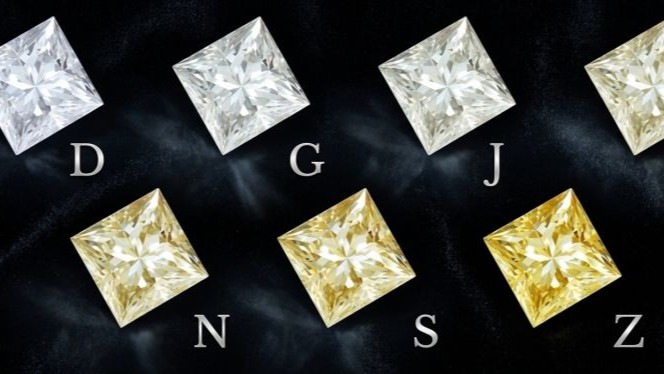
Stones in the D-F color range with IF-VVS clarities saw a decline of approximately 1.4%. At first glance, this might seem like a weakness at the top. However, industry analysts suggest this is less about lack of demand and more about supply recalibration.
According to a study by the Gemological Institute of America (GIA) on market liquidity, high-color, high-clarity diamonds are often used as "bankable" assets. The slight dip in February often correlates with the post-holiday inventory rebalancing where dealers lower asking prices to free up capital for new rough purchases.
The fact that this drop was contained to just 1.4% significantly less than the volatility seen in lower-quality goods indicates a resilient floor for these assets.
The mid-range specifically G-J colors with VS and SI clarities remains the engine of the market. These stones saw a smaller decline of approximately 0.5%. This stability is crucial because this category represents the bulk of commercial jewelry sold globally.
For the average consumer, a G-VS1 diamond is visually indistinguishable from a D-IF to the naked eye but offers a significantly lower price point. As economic uncertainties linger globally, the value proposition of this segment becomes increasingly attractive.
The World Diamond Council has noted that consumer education is driving this trend; modern buyers understand that "eye-clean" SI stones offer the best "bang for their buck" without sacrificing the carat weight they desire for the ring finger.
A fascinating outlier in the data is the K–M color range in IF–VVS clarities, which saw a +0.1% increase. Why would lower-color stones increase in price?
This is likely driven by the "fancy white" or vintage aesthetic trend. High-clarity stones with a slight tint (K-M) offer a unique look often described as "warm" that appeals to buyers seeking a vintage or gold-band setting. Furthermore, these stones represent a value opportunity for budget-conscious buyers who refuse to compromise on clarity or carat weight.
The supply side tells a compelling story about what the industry is holding versus what the consumer wants.
G–J color diamonds dominate the supply chain, accounting for 58.4% of total 1-carat inventory. This includes the full spectrum of clarities from IF down to SI.
This heavy concentration is a double-edged sword.
For Buyers: It means that G-J diamonds are the most widely available. Whether you are looking for a flawless investment piece or a commercial SI stone for a pendant, the supply is robust. This competition among sellers often leads to better pricing for the consumer.
For Sellers: It signifies high competition. To move inventory in this saturated segment, sellers must differentiate through cut quality (Excellent/Ideal proportions) or through value-added services like certification and setting.
Conversely, the supply of top-tier D-F IF-VVS stones is relatively scarce, representing a fraction of the inventory. This scarcity, combined with the demand we are about to analyze, creates a textbook supply-demand imbalance that supports pricing.
For sellers looking to offload inventory quickly, listing on a global platform like CaratX is essential.
By registering as a seller, you aren’t just limited to local buyers; you can tap into international markets where your specific inventory (whether it’s a rare D-F IF or a commercial G-J SI) might be in higher demand.
If inventory is the supply, search data is the voice of the consumer. And the voice is screaming for quality.
The most striking statistic in the CaratX report is the disparity between search interest and available inventory for D–F IF–VVS diamonds.
Search Share: 20.9%
Inventory Share: 14.6%
This represents a demand surplus of over 6%. In economic terms, when demand outpaces supply for a specific asset class, prices are expected to rise or, at the very least, remain sticky.
The slight 1.4% decline noted earlier is likely a function of the overall market correction, but the data suggests that these specific stones are "on sale" for a very short window. As soon as the inventory of these high-quality stones tightens further, we can expect prices to rebound sharply.
Modern diamond buyers are more informed than any generation before them. Gone are the days when a consumer walked into a mall jeweler and trusted the salesperson blindly. Today, buyers are researching cut grades on International Gem Society (IGS) articles, verifying certificates on the GIA website, and comparing prices across multiple marketplaces.
This education has led to a prioritization of cut quality and clarity. Buyers understand that a poorly cut diamond, even if it is D color, will look dull and lifeless. Conversely, an "I" color diamond with an Excellent cut grade can face up white and display brilliant fire.
Combining the data points price movement, inventory distribution, and search trends we can derive several key market insights for the remainder of 2026.
Prices are softening, but not sharply. This indicates a market that is cooling off from the post-pandemic luxury boom, but not crashing. Buyers are becoming hyper-selective. They are not simply looking for the cheapest 1-carat diamond; they are looking for the best 1-carat diamond within their budget.
This behavior aligns with research from Bain & Company, which noted in their Global Diamond Report that the industry is shifting from "commodity selling" to "value selling." Retailers who succeed will be those who can tell the story of why a specific stone with its unique inclusions, proportions, and light performance is worth its price.
The transparency of the data (inventory listings vs. searches) is only possible because of the digitization of the diamond trade. Platforms like CaratX are bridging the gap between diamond manufacturers in Surat or Antwerp and retail buyers in New York or London.
For sellers, this is a call to action. If your inventory is heavy in G-J VS-SI stones (the 58.4% majority), you need to ensure it is visible to the broadest possible audience. CaratX allows sellers to reach B2B and B2C buyers across 18+ international countries, turning slow-moving local inventory into global opportunities.
There is a growing bifurcation between diamonds bought for investment and diamonds bought for sentiment (engagement rings).
Investment: D-F IF-VVS stones remain the go-to. Their scarcity and the demand-supply gap suggest they retain value best during market corrections.
Sentiment: G-J VS stones are the champions here. They offer the emotional weight of a 1-carat diamond without the investment-grade premium.
Navigating this complex market requires tools that offer transparency, reach, and efficiency. This is where the CaratX marketplace comes into play.
Whether you are a seller looking to liquidate inventory or a buyer hunting for the perfect stone, CaratX provides the infrastructure to trade internationally.
For Sellers: If you have a stock of G-J VS diamonds that are facing stiff competition locally, listing on CaratX opens the door to international buyers who may have different inventory needs.
The platform simplifies the complexities of cross-border trade, from logistics to compliance. You can start selling to 18+ international countries by registering as a seller here: Sellers Register on CaratX.
For Buyers: For consumers seeking that elusive D-F IF stone that represents only 14.6% of inventory, shopping on a global marketplace increases your chances of finding the exact specifications you want.
You can shop natural diamonds and gemstones at competitive, transparent prices. Explore the collection here: Shop Natural Diamonds on CaratX.
For Jewelers: The platform also offers robust seller plans for jewelry businesses looking to expand their international footprint.
You can now sell jewelry internationally to buyers through the CaratX seller plan. Learn more about launching your products: Launch Your Products on CaratX.
The February 2026 trend analysis delivers a clear message to the industry: Top-quality diamonds still attract strong demand, and mid-range goods remain stable but competitive.
In today’s market, buyers are choosing smarter, not just cheaper. They are leveraging data, demanding certification, and seeking value in cut quality and transparency.
For sellers, the strategy is equally clear. Competing on price alone in the saturated G-J SI market is a race to the bottom.
Instead, sellers should focus on differentiation whether through superior cut quality, exceptional customer service, or by listing their inventory on a global marketplace like CaratX to find the right buyer, not just any buyer.
As the market continues to evolve, those who adapt to the "quality-driven" mindset will not only survive but thrive. Whether you are looking to buy a stone that balances value and beauty or sell inventory to a global audience, the tools and data are now available to make informed, profitable decisions.
Q1: Why are 1-carat diamond prices easing if demand is strong? Prices are easing slightly due to a combination of post-holiday inventory clearing and a broader economic shift where consumers are prioritizing value. However, the easing is not uniform; top-tier stones (D-F, IF-VVS) are seeing minimal declines relative to lower-quality goods, indicating a resilient core market.
Q2: Is it better to buy a D-F color diamond or a G-J color diamond? It depends on your priority. If you are looking for a long-term investment or a stone where colorlessness is paramount, D-F is the choice. However, for an engagement ring where the diamond will be set in platinum or white gold, a G-J color offers exceptional brilliance and is considered "colorless" to the naked eye, providing better value for money.
Q3: What does "eye-clean" mean, and why is it important? "Eye-clean" refers to a diamond (usually in the VS or SI clarity range) that has no inclusions visible to the naked eye. As the CaratX data shows, buyers are focusing on quality; an eye-clean SI diamond offers the same visual appearance as a VVS diamond but at a significantly lower price point.
Q4: How can I sell my diamond inventory quickly in this market? In a market with high competition (especially in the G-J VS/SI segment), visibility is key. Listing your inventory on a global marketplace like CaratX allows you to reach international buyers who may have specific needs that your local market does not. You can register to sell here: CaratX Seller Registration.
Q5: Are diamonds considered a good investment in 2026? Investment-grade diamonds (typically 1-carat+, D-F color, IF-VVS clarity, with GIA certification) have shown resilience in maintaining value. However, like any asset, they are subject to market liquidity. The current market favors quality; as the data shows, demand for top-tier stones outpaces supply, which is a positive indicator for value retention.
Follow CaratX for more insightful and educational content on the global diamond market.
May, 26, 2026
Aug, 06, 2022
Aug, 06, 2022
0 Comments
Please login to leave a reply.