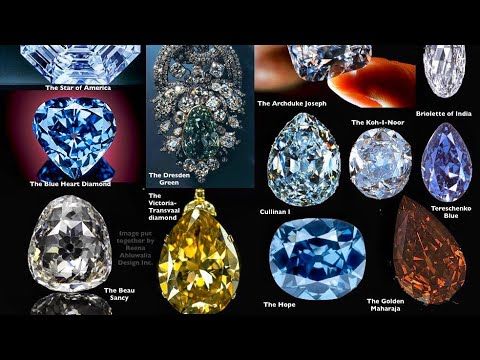

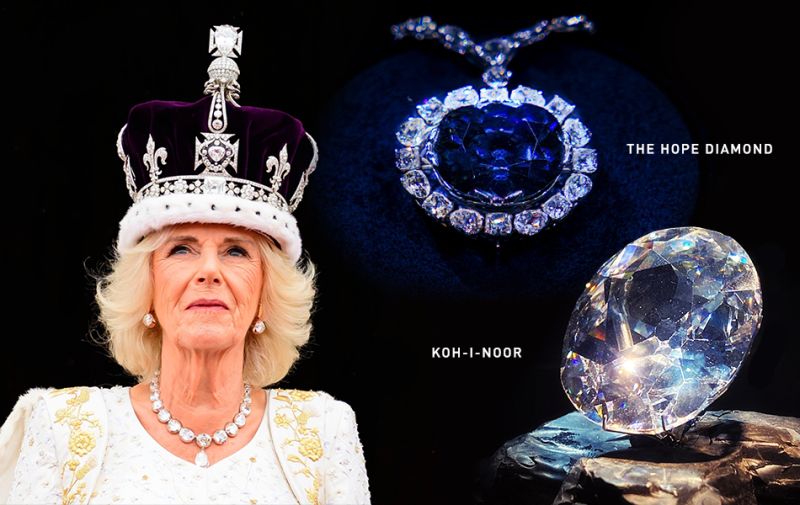
Hope Diamond with its deep, mesmerizing blue hue and a history soaked in both royal grandeur and alleged curses, the Hope Diamond is the poster child for rarity. However, to call it simply "the rarest" is to scratch only the surface of a much deeper, more complex geological and economic reality.
In the world of high-value gemstones, rarity is defined by a confluence of factors: atomic structure, celestial origin, color saturation, and supply chain transparency.
While the Hope Diamond is a paragon of these traits, the modern diamond connoisseur knows that true rarity often lies in specific categories such as Type IIb blues, fancy vivid pinks, and the newly appreciated salt-and-pepper diamonds that are reshaping the global market.
This article delves deep into what makes a diamond truly unique, from the billion-year-old carbon atoms beneath the Earth’s cratons to the modern B2B marketplaces facilitating international trade.
The Science of Rarity: Why Blue is the Benchmark
To understand why the Hope Diamond remains the poster child for rarity, we must first look at the periodic table.
The Boron Anomaly
Most diamonds are composed of pure carbon in a cubic lattice structure. They are classified as Type Ia, meaning they contain nitrogen impurities, which often result in a yellow or brown tint. However, natural blue diamonds classified as Type IIb are statistical outliers.
According to research from the Gemological Institute of America (GIA) , less than 0.02% of all diamonds mined are classified as natural blue diamonds.
What makes them blue is the presence of boron. Unlike nitrogen, which is abundant in the Earth’s crust, boron is typically found near the surface in ocean sediments. For boron to be incorporated into a diamond lattice, the gem must form in the Earth’s mantle (approximately 100 miles deep) where continental plates have subducted ancient seabeds.
This scientific scarcity is why the Hope Diamond, at 45.52 carats, remains the largest known fancy deep blue diamond in existence.
Beyond Blue: The Pink and Red Conundrum
While blue diamonds are rare, red diamonds such as the infamous Moussaieff Red are arguably even rarer. Unlike blue diamonds, which derive color from chemical impurities (boron), red and pink diamonds derive their color from a structural anomaly known as "plastic deformation." This occurs when the diamond crystal lattice is twisted during its ascent to the surface or due to immense pressure after formation.
Only one mine in history, the now-closed Argyle Mine in Australia, produced a significant quantity of pink diamonds. Since its closure in 2020, the supply of these gems has become functionally extinct, causing prices to skyrocket.
For sellers looking to understand how such geological rarities translate to market value, the CaratX Pricing and Launch Page offers insights into listing these high-value assets.
You can explore the detailed fee structure and requirements for selling rare colored diamonds here: CaratX Pricing & Seller Plans .
Historical Provenance: The Indian Connection
The story of the rarest diamonds is incomplete without acknowledging the Golconda region of India. The Hope Diamond, along with other legendary stones like the Koh-i-Noor and the Regent Diamond, was unearthed in the Kollur Mine in the Golconda Kingdom (modern-day Andhra Pradesh and Telangana).
Historically, Golconda diamonds set the standard for "world class." They were renowned for their unparalleled clarity often being Type IIa diamonds (chemically pure with no nitrogen impurities) which gave them an optical transparency unmatched by other sources.
The Legacy of Golconda -
The Golconda mines were the primary source of the world’s largest and most significant diamonds from the 16th to the 19th centuries.
The diamonds from this region were not just gemstones; they were currency, political leverage, and symbols of divine right for the Mughal emperors and later European monarchies.
Today, "Golconda" is more than a geographic location; it is a certification grade. A diamond certified as originating from the Golconda region (or exhibiting the characteristics of Golconda diamonds) commands a significant premium due to its historical provenance and chemical purity.
The Investment Thesis: Why Rarity Outperforms
For investors and high-net-worth individuals, rare diamonds have transitioned from luxury accessories to alternative asset classes. The supply shock caused by the closure of the Argyle Mine and the decreasing output of the Debswana mines in Botswana has created a supply/demand imbalance.
Price Growth Analysis -
Blue Diamonds: According to data aggregated by the Fancy Color Research Foundation (FCRF) , fancy vivid blue diamonds have appreciated by over 300% in the last 15 years.
Pink Diamonds: Following the closure of Argyle, pink diamonds have seen an average annual appreciation of 12-15% , outpacing traditional assets like gold and real estate.
The Role of Certification -
Unlike white diamonds, which are commoditized based on the 4Cs, rare colored diamonds rely heavily on the authority of the issuing laboratory. The GIA is the undisputed leader in grading colored diamonds, particularly for determining whether a color is "natural" or "treated."
When buying or selling a stone like a 1-carat fancy intense blue, a GIA report confirming "Natural Color" can increase the value by a factor of 10 compared to a treated stone.
If you are a seller looking to list certified rare diamonds, you need a platform that caters to international buyers who understand the value of GIA certifications.
CaratX allows you to list these assets directly to B2B and B2C buyers across 18+ countries. Start your registration process here: CaratX Seller Registration .
Modern Rarity:
In the current market, "rarity" is also being redefined by the supply chain. Millennial and Gen Z buyers are increasingly prioritizing ethical sourcing and lab-grown alternatives, which paradoxically makes natural, ethically-sourced rare stones even more coveted.
Natural vs. Lab-Grown
It is crucial to distinguish between the rarity of natural diamonds and the abundance of lab-grown.
Lab-Grown Diamonds: Chemically identical, but infinitely replicable. They have no rarity value on the secondary market and are depreciating in price as manufacturing technology improves.
Natural Diamonds: Finite. The discovery rate of new diamond mines has plummeted. No significant new diamond mines have been discovered in the last decade that match the output of Argyle or the Orapa mine in Botswana.
How to Sell Rare Diamonds in the International Market
For sellers holding rare inventory whether it be a 45-carat historical piece or a collection of fancy color melee the challenge is access. The domestic market may not have the liquidity to absorb such high-value items. This is where CaratX functions as a bridge.
International Compliance -
Selling diamonds internationally requires adherence to strict customs regulations, insurance protocols, and duty structures. CaratX facilitates this by:
Verifying Seller Credentials: Ensuring that all sellers are legitimate businesses.
Global Reach: Connecting sellers to buyers in over 18 international countries, including the US, UAE, Belgium, and India.
Streamlined Logistics: Offering guidance on the safe shipping of high-value assets across borders.
Listing Your Inventory -
Whether you are a manufacturer in Surat with a stock of fancy color diamonds or a retailer in New York with antique jewelry, the process to list is digital-first.
You can start selling your diamonds and jewelry internationally today. The CaratX platform is designed for B2B wholesalers and B2C retailers alike. Don’t let geographic barriers limit your liquidity.
Register now to access the global market: Sell Internationally on CaratX .
For those looking to source these rare gems, CaratX also hosts a curated inventory of natural diamonds and gemstones.
Explore the current stock here: Shop Natural Diamonds on CaratX and Shop Gemstones .
The Future of Rare Diamonds -
As we look to the future, the definition of "the rarest diamond" is evolving. The Hope Diamond will always remain a cultural touchstone. However, the market is shifting toward "collector categories" :
Vivid Greens: Caused by natural radiation exposure, these are incredibly rare and often command higher per-carat prices than blues at auction.
Chameleon Diamonds: Stones that change color when heated or left in the dark.
Argyle Pinks: With the mine closed, these diamonds have become a finite asset class.
Buyers want to know the exact mine of origin. Platforms like CaratX are adapting to this trend by supporting sellers who can provide provenance data, ensuring that the story of the diamond from the Earth to the finger is preserved.
9. Frequently Asked Questions (FAQs)
Q1: Is the Hope Diamond truly the rarest diamond, or are there rarer stones?
While the Hope Diamond is the most famous and is exceptionally rare due to its size (45.52 carats) and deep blue color, there are diamonds that are statistically "rarer." For example, red diamonds (like the Moussaieff Red) are so scarce that most gemologists never see one in their lifetime. Additionally, natural green diamonds (irradiated) are also rarer than blue, though they are often less saturated in color.
Q2: What is the best certification for a rare blue or pink diamond?
The Gemological Institute of America (GIA) is considered the global authority. When purchasing a fancy color diamond, a GIA report that explicitly states "Natural Color" is non-negotiable. If the report says "Color Treated" or "HPHT Processed," the value is significantly diminished compared to a natural, untreated stone.
Q3: Can I sell a rare diamond internationally if I am a small business?
Yes. Platforms like CaratX allow small to medium-sized sellers to access international B2B and B2C markets.
You need to register as a seller, provide the necessary certifications (GIA reports, business credentials), and utilize the platform’s tools to manage shipping and compliance to over 18 countries.
You can register here: CaratX Seller Registration .
Q4: Are lab-grown blue diamonds considered rare?
No. While lab-grown diamonds are chemically identical, they are not rare. The technology allows for infinite replication of blue color using boron during the CVD (Chemical Vapor Deposition) process. Lab-grown stones do not retain secondary market value and are priced as consumer goods, not investment assets.
Q5: Where can I buy natural fancy color diamonds online?
For buyers looking for certified natural diamonds, CaratX offers a direct marketplace to purchase from verified sellers.
You can browse inventories of natural diamonds and gemstones at competitive international prices here: Shop Natural Diamonds .
Ready to enter the global diamond market? Whether you are a buyer searching for a once-in-a-lifetime fancy color diamond or a seller looking to liquidate inventory at international price points, CaratX is your gateway.
Sellers: Register now to list your diamonds and jewelry. Click here to register as a seller.
Buyers: Explore our collection of natural diamonds and gemstones. Visit CaratX Marketplace.