

The 5 Factors That Decide a Diamond’s Clarity Grade: The Ultimate GIA Guide
Home
Our Favorite Articles The 5 Factors That Decide a Diamond’s Clarity Grade: The Ultimate GIA Guide SHOP NOWHome
Our Favorite Articles The 5 Factors That Decide a Diamond’s Clarity Grade: The Ultimate GIA Guide SHOP NOWMar, 17, 2026 by Archit Mohanty 0 Comments
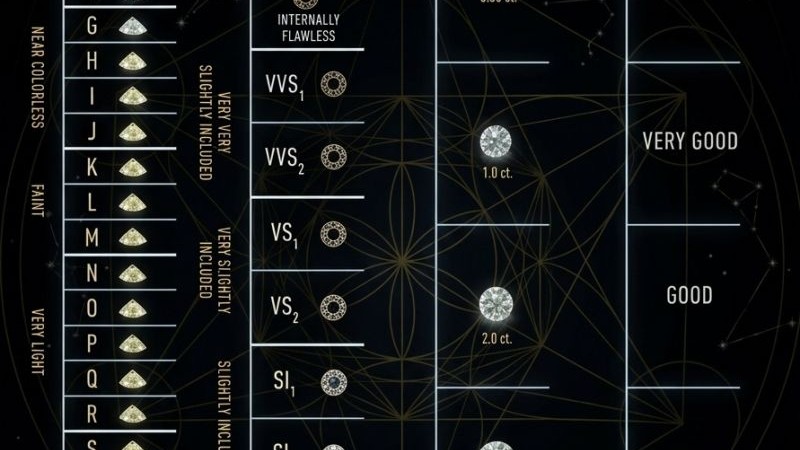
When it comes to purchasing a diamond, whether for an engagement ring or an investment portfolio, understanding the 4 Cs of Diamond Quality (Cut, Color, Clarity, and Carat) is essential. Among these, Clarity is often the most misunderstood and technically complex.
At CaratX , we connect buyers and sellers in over 18 countries with high-quality, certified diamonds. To help you make an informed decision, we have compiled this comprehensive guide based on the standards set by the Gemological Institute of America (GIA) .
In this guide, we will explore the five specific factors that GIA gemologists use to determine a diamond’s clarity grade. We will also look at how these factors impact rarity, price, and visual appeal.
Diamond clarity refers to the absence of internal characteristics called inclusions and surface irregularities called blemishes. While the average consumer might look for a "perfect" stone, the reality is that less than 1% of all natural diamonds are graded as Flawless (FL) .
According to the GIA's official clarity grading scale, most diamonds used in fine jewelry fall into the VS (Very Slightly Included) and SI (Slightly Included) categories. These diamonds offer the best balance of beauty and value because their inclusions are difficult to see without magnification.
To determine where a diamond falls on this scale from Flawless to I3 (Imperfect) gemologists analyze five distinct factors.
When a GIA graduate sits down to grade a diamond, they aren't just looking for "spots." They are systematically evaluating the stone based on the following five criteria.
The size of an inclusion is arguably the most significant factor in determining clarity.
Why it matters: Larger inclusions are exponentially easier to see, both under magnification and to the naked eye. They physically disrupt more of the diamond's structure and impede the passage of light.
The Standard: Diamonds are graded using 10× magnification, the international standard set by the GIA. If an inclusion is large enough to be easily spotted by a skilled grader at 10x, it will significantly lower the clarity grade.
Practical Impact: A tiny pinpoint that requires magnification to see might still allow for a VS1 grade, whereas a large, visible feather could drop the stone to an SI2 or I1.
Gemologists assess how many inclusions are present.
The Statistics: Studies suggest that over 95% of natural diamonds contain inclusions of some type. They are nature’s fingerprints proof of the incredible pressure and heat that formed the stone billions of years ago.
The Grading Logic: A diamond with a single, small, transparent crystal will receive a much higher grade than a diamond with a cluster of pinpoints or multiple feathers scattered across the stone. The "cleanliness" of the internal surface area is key.
Where an inclusion sits inside the diamond determines its visual impact.
Under the Table: The table is the large, flat facet on the top of the diamond. Inclusions located directly under the table are the most visible because they reflect light back to the eye. These have the most severe impact on the grade.
Under the Pavilion/Crown: Inclusions hiding near the girdle (the widest edge) or deep in the pavilion (the bottom) are often masked by the diamond's brilliant facet pattern. These have a lesser impact on the final grade.
Strategic Setting: This is why jewelers sometimes set a slightly lower-clarity diamond in a way that hides an inclusion under a prong.
Relief describes how much the inclusion stands out from its surroundings. This is graded by the inclusion’s color and visibility relative to the diamond.
High Relief: Dark or black crystals (like graphite or sulfide inclusions) create high contrast against a white diamond. These are very easy to spot and hurt the grade significantly.
Low Relief: Transparent or colorless inclusions (like another diamond crystal growing inside) blend into the facets. They are harder to detect, even under magnification, and therefore have a milder effect on the clarity grade.
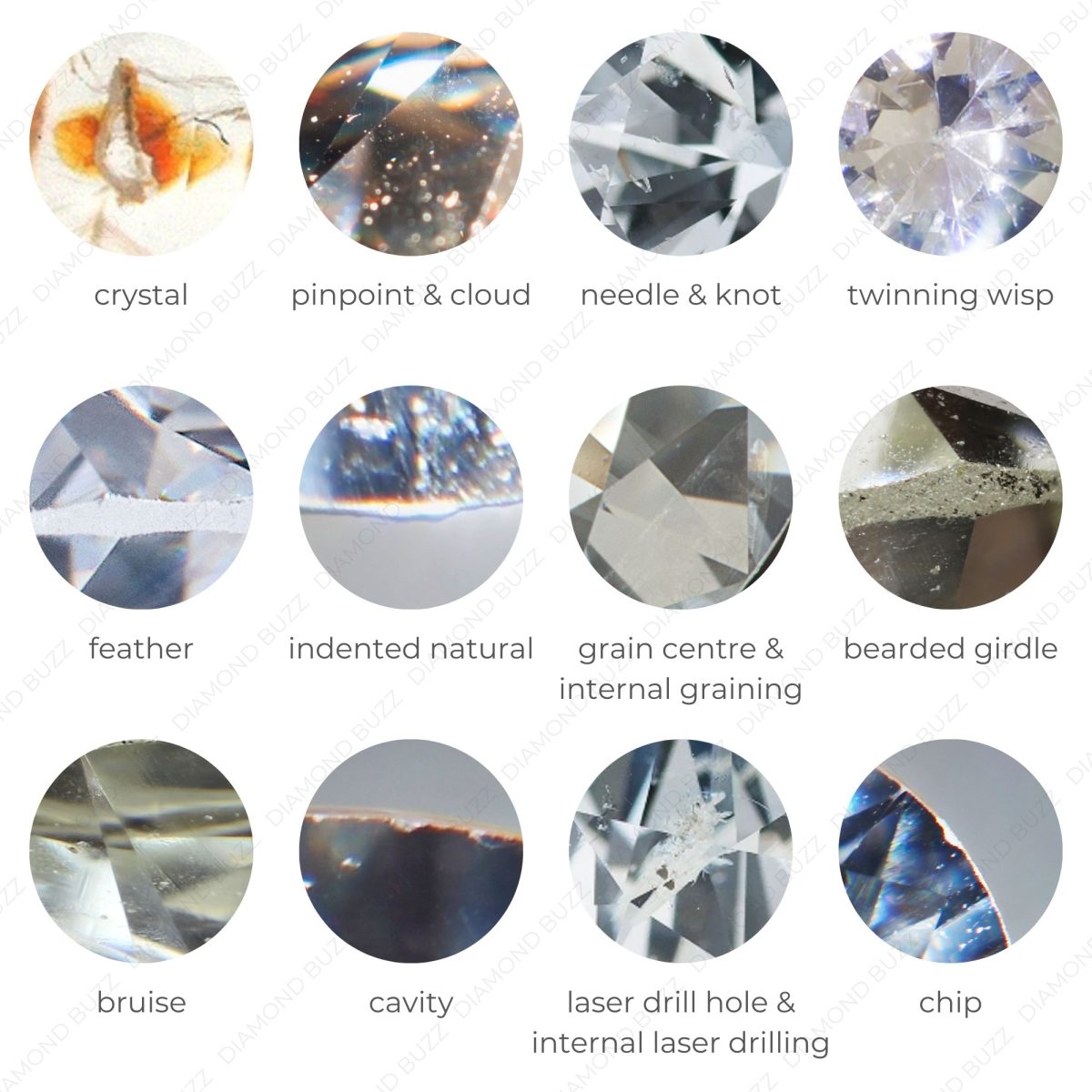
Finally, the gemologist identifies the specific type of inclusion. Different types have different implications for the diamond's durability and appearance.
Crystals: Small minerals trapped inside. Can be colorless, red, green, or black.
Feathers: Internal fractures. Depending on their location, they can sometimes pose durability risks if they reach the surface.
Needles: Long, thin inclusions that look like tiny rods.
Clouds: A hazy area caused by a group of tiny pinpoints. A dense cloud can make a diamond appear milky.
For a visual guide on these inclusion types, you can explore the high-resolution images of natural diamonds available on the CaratX Marketplace .
Understanding the factors above helps explain why the GIA clarity scale is structured the way it is.
FL (Flawless) & IF (Internally Flawless): No inclusions visible under 10x magnification. These are the rarest of the rare.
VVS1 & VVS2 (Very, Very Slightly Included): Inclusions are so tiny that even a grader has difficulty seeing them under 10x.
VS1 & VS2 (Very Slightly Included): Inclusions are visible under 10x but are minor (small size, low relief).
SI1 & SI2 (Slightly Included): Inclusions are easy to see under 10x. An SI2 may have a inclusion visible to the naked eye.
I1, I2, I3 (Imperfect): Inclusions are obvious under 10x and usually visible to the naked eye, potentially affecting durability.
If you are looking to buy diamonds that are eye-clean but offer value, the VS and SI categories are your best bet. Shop natural diamonds from our inventory here to see the difference.
When reading about the five factors above, it becomes clear that determining clarity is not a guessing game, it is a science. This is why buying a diamond graded by an independent, authoritative laboratory like the GIA is crucial.
According to the American Gem Society (AGS) , a grading report from a reputable lab provides a "blueprint" for the diamond, ensuring you are paying for exactly what you get.
The GIA created the 4Cs and the international grading system we use today. Their nonprofit status ensures that they are not buying or selling diamonds, meaning their only incentive is accuracy.
If you are a consumer, don't be afraid of inclusions. Instead, use the five factors to your advantage:
Prioritize Location: Look for a diamond where the inclusion is near the edge (where it can be hidden by a prong or setting).
Check Relief: Prefer crystals that are transparent rather than dark and contrasty.
Review the Plot: A GIA report includes a "clarity plot"a map of the inclusions. Use this to visualize the "Location" and "Number" factors.
For those looking to enter the diamond trade, understanding these nuances is vital for inventory management. Sellers who can accurately describe why an SI1 diamond looks cleaner than an SI2 will win more sales.
If you are a business looking to expand your inventory, register as a seller on CaratX to access a global B2B and B2C buyer base. We offer specialized plans, including options for selling jewelry internationally .
The clarity of a diamond is a fascinating snapshot of its journey through time. By evaluating the size, number, location, relief, and nature of its internal characteristics, GIA gemologists provide a standardized grade that helps the entire industry communicate value.
At CaratX , we are committed to transparency. Whether you are buying a gemstone or selling a large parcel of stock, our platform ensures you have all the data you need.
For Buyers: Discover the perfect stone with confidence. Shop the CaratX collection now .
For Sellers: Reach buyers in 18+ international countries. Check our seller pricing and plans here to get started today.
Q: What does "Eye-Clean" mean? A: "Eye-clean" is a trade term meaning that a grader cannot see any inclusions with the naked eye (at a normal viewing distance of about 6-12 inches). This usually applies to diamonds graded VS2 or higher, though some well-placed SI1 diamonds can also be eye-clean.
Q: Is a Flawless diamond worth the investment? A: Flawless diamonds are exceptionally rare and carry a significant price premium. However, a VS1 diamond may look just as beautiful to the naked eye as a Flawless one but costs significantly less. For jewelry, VS and SI offer the best value. For large investment stones (10+ carats), Flawless becomes a major factor.
Q: Can inclusions make a diamond break? A: Generally, no. However, certain types of inclusions, such as large "feathers" (fractures) that reach the surface, can pose a durability risk if the diamond receives a sharp blow. This is one reason why the "Nature" of the inclusion is a critical grading factor.
Q: What is the difference between a "Crystal" and a "Cloud"? A: A crystal is a single, distinct mineral inclusion inside the diamond. A cloud is a group of three or more tiny pinpoints that are so close together they create a hazy or milky area. Clouds are particularly tricky because they can sometimes make the entire diamond appear less brilliant.
Q: How do I start selling on CaratX? A: It’s simple! Visit our seller registration page to create your account and start listing your diamonds and jewelry to a global audience immediately.
May, 18, 2026
Aug, 06, 2022
Aug, 06, 2022

0 Comments
Please login to leave a reply.