

Weekly Diamond Market Analysis: How Elongated Fancy Shapes Are Reshaping the 2‑Carat+ Landscape
Home
News And Media Weekly Diamond Market Analysis: How Elongated Fancy Shapes Are Reshaping the 2‑Carat+ Landscape SHOP NOWHome
News And Media Weekly Diamond Market Analysis: How Elongated Fancy Shapes Are Reshaping the 2‑Carat+ Landscape SHOP NOWMay, 14, 2026 by Archit Mohanty 0 Comments
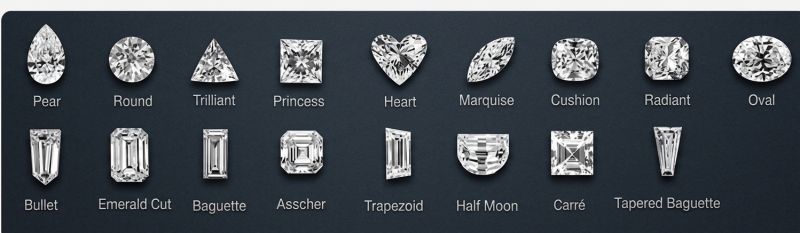
The global diamond industry is undergoing a dramatic transformation, and all indicators suggest that long fancy shapes have decisively overtaken rounds in the critical 2‑carat‑and‑larger category. From the bustling wholesale floors of New York to the high‑stakes auction rooms of Geneva, a powerful narrative is emerging: elongation is everything.
As the industry gathers momentum ahead of the spring shows particularly the crucial JCK Las Vegas event buyers and sellers alike are recalibrating their strategies to capture the growing premium commanded by well‑cut marquises, elongated ovals, and long cushions.
This week’s analysis draws on exclusive market intelligence and proprietary data from the CaratX platform. Whether you are a manufacturer looking to offload inventory, a retailer seeking the next hot silhouette, or an investor tracking high‑value trends, this deep dive will equip you with the knowledge to navigate the shifting currents of the diamond trade.
For decades, the round brilliant cut has been the undisputed king of the diamond world the default choice for engagement rings and fine jewelry. However, the latest market data signals a significant shift.
According to Index, long fancy shapes such as ovals, marquises, and emeralds are now consistently outperforming rounds in the 2‑carat‑and‑larger segment. This trend is not a fleeting fashion moment; it is a structural realignment driven by changing consumer preferences, supply constraints, and the inherent optical advantages of elongated cuts.
CaratX market analysis reinforces this view, noting that elongated shapes offer a larger “face‑up” appearance than rounds of the same carat weight, making them highly coveted for bridal upgrades and statement pieces. In practical terms, a well‑proportioned 2‑carat oval can appear as large as a 2.5‑carat round, delivering exceptional value for money without compromising on visual impact.
For a overview of why elongated shapes are dominating, read our in‑depth report here - https://caratx.com/blog-category-posts/news-and-media
Among all fancy shapes, the marquise cut stands alone at the top of the pricing pyramid. Its distinctive boat‑like silhouette, with two pointed ends and a curved belly, creates an exceptional finger‑lengthening effect that has captivated royalty and celebrities for centuries. However, its renewed popularity has collided with a harsh reality: high‑quality marquises are in critically short supply.
“High‑quality Marquises, long Radiants and long Cushions in short supply. Marquise most expensive fancy shape.” The shortage is not merely about quantity; it is about craftsmanship. The marquise cut is notoriously difficult to execute.
This supply‑demand imbalance has pushed premiums to extraordinary levels. Some industry observers report that well‑cut marquises can now price in at up to 15% more than their shorter fancy‑cut counterparts. For sellers holding high‑quality marquise diamonds, the current environment presents a golden opportunity.
Ready to list your marquise inventory? Register on CaratX to reach B2B and B2C buyers across 18+ international countries.
No other shape better illustrates the market’s appetite for elongation than the cushion cut. Traditional square cushions have long been popular for their romantic, antique charm. But the market has spoken decisively: long cushions are where the money is.
According to multiple industry sources, long cushions are trading at a premium of 20% to 25% over their square counterparts. This premium is a direct reflection of their elegant, flattering proportions on the finger and their relative scarcity. Manufacturers are increasingly cutting rough to maximize yield, but the optical benefits of an elongated cushion typically with a length‑to‑width ratio of 1.20 to 1.35 are driving consumer demand upward.
The Antique Gem & Treasure Alliance (AGTA) confirms that “rectangular elongated shapes have been one of the most enduring strong trends over a decade,” with demand remaining consistently robust for ovals and antique old‑mine cuts as well. The trend has even been supercharged by celebrity influence, with prominent figures sporting elongated antique cushion cuts set in yellow gold a style that has been trending in the trade for upwards of eight years.
Explore our curated collection of cushion‑cut diamonds: Shop natural diamonds at CaratX
While the marquise commands the highest premium, the elongated oval remains the workhorse of the fancy‑shape market particularly in the United States. April 2026 market comments both highlight a “solid US market for elongated Ovals of good shape and quality in D‑I, VS‑SI categories”.
This consistent demand is driven by several factors. First, the oval’s rounded edges make it less prone to chipping than pointed shapes like the marquise, offering practical durability for daily wear. Second, the oval’s elongation creates the illusion of greater size without the stigma of a “fancy” shape. Third, the US engagement ring market has firmly embraced the oval as a sophisticated alternative to the round brilliant.
However, the market is becoming increasingly selective. Buyers are rejecting poorly cut ovals with visible bow‑ties or uneven shoulders. The premium is reserved for stones with balanced proportions, excellent symmetry, and minimal light leakage.
For sellers, this means that quality matters more than ever. For buyers, it means that a well‑cut oval represents one of the best value propositions in the current market.
One of the most consistent themes across all market intelligence is the critical importance of cut quality. The phrase “very well‑cut fancy shapes difficult to find and commanding premiums” appears verbatim in multiple industry reports, alongside the equally telling warning: “Fancies with bad proportions illiquid.”
But what does “well‑cut” actually mean from a gemological perspective?
The Gemological Institute of America (GIA), the world’s foremost authority on diamond grading, has conducted extensive research into diamond cut. According to GIA, cut quality refers to a diamond’s proportions, symmetry, and polish the factors that determine how effectively a diamond interacts with light. “Cut is all about a diamond’s fire, sparkle, and brightness,” GIA explains, and “no other ‘C’ has more impact on a diamond’s appearance.”
For round brilliant diamonds, GIA’s cut grading system assigns grades from Excellent to Poor based on an analysis of how a diamond’s proportions work together. But for fancy shapes, the picture is more complex. There is no universal cut grade for marquises, ovals, or cushions. Instead, buyers must rely on a combination of visual assessment, proportion measurements, and advanced light performance tools.
The US market remains the engine of global diamond demand, particularly for larger stones. Wholesalers report steady demand for 2‑carat‑and‑larger diamonds, especially in long fancies.
The mood is distinctly positive ahead of the JCK Las Vegas shows (May 29‑June 1), with larger dealers outperforming smaller ones due to better access to sought‑after goods. Antique cuts including old‑mine and old‑European remain hot, appealing to buyers seeking vintage character and uniqueness.
India, the world’s second‑largest gold consumer, is on high alert following dramatic policy developments. Prime Minister Narendra Modi recently urged citizens to avoid buying gold for a year amid economic pressures linked to the Iran conflict and rising oil prices. Subsequently, the Indian government increased import duties on gold and silver from 6% to 15% imposing a 10% basic customs duty alongside a 5% Agriculture Infrastructure and Development Cess.
The move is designed to curb gold imports, which hit a record high of $71.98 billion in FY26, and ease pressure on India’s widening current account deficit and the rupee. However, industry experts warn that higher duties may fuel smuggling, as was observed when duties previously stood at 15%. For the diamond trade, the policy shift is a reminder of gold’s role as a competing asset class and a barometer of broader economic sentiment in one of the world’s most important markets.
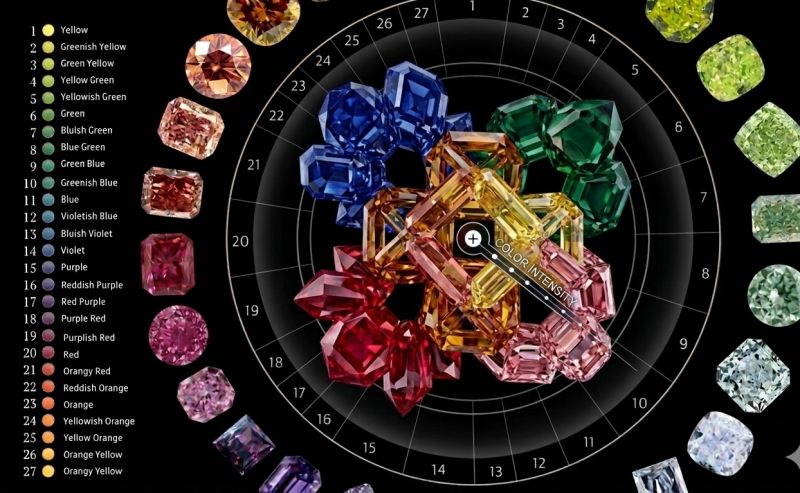
Across the Atlantic, the recent GemGenève show reflected surging interest in colored diamonds and gemstones. GemGeneve reflects strong demand for fancy‑color diamonds and gemstones”. Luxury buyers are increasingly moving beyond standardized perfection and embracing individuality, with step‑cut pears, hexagonal cuts, and other hybrid shapes gaining traction. The Fancy Color Research Foundation (FCRF) estimates that the wholesale value of fancy‑color diamonds entering the market exceeded $4.5 billion in 2024.
For those interested in colored diamonds, CaratX offers a dedicated market analysis: Pink & Blue Diamonds in 2026: Market Selectivity, Value Drivers, and Regional Demand.
The debate between natural and laboratory‑grown diamonds continues to intensify, with the latest skirmish involving Pandora and the Natural Diamond Council (NDC). Pandora recently announced that it would disclose the carbon footprint of every lab‑grown diamond it sells, claiming that its lab‑grown stones have a 90% smaller carbon footprint than mined diamonds.
The NDC also emphasized that natural diamonds and lab‑grown diamonds are “fundamentally different product categories” one a rare and finite product of nature, the other a factory‑made product that can be manufactured in virtually unlimited quantities. Comparing the two solely on value, meaning, or environmental impact, the NDC argued, “misleads consumers and fuels misinformation.”
In a powerful demonstration of the enduring allure of rare natural diamonds, Christie’s Geneva auction house sold a 5.50‑carat triangular‑cut, fancy‑vivid‑blue‑green diamond for over 17.4million∗∗ equivalentto∗∗17.4million∗∗ equivalentto∗∗3.2 million per carat.
The stone, named the “Ocean Dream,” is billed as the largest fancy‑vivid‑blue‑green diamond known to exist. Originating from an 11.70‑carat rough discovered in Central Africa in the 1990s, the diamond easily surpassed its presale estimate of $7‑10 million.
The Ocean Dream’s triangular cut is itself noteworthy. Trilliant (triangular)‑cut diamonds are relatively uncommon in high‑value auctions, yet the stone’s exceptional color, a rare combination of blue and green hues drove fierce bidding. The price was more than double the roughly $8.5 million the gem fetched at Christie’s in 2014, highlighting the appreciation trajectory for top‑tier fancy‑color diamonds.
Both Christie’s and Sotheby’s report that collectors are increasingly drawn to rare, colored diamonds, which make up only a fraction of all diamonds mined worldwide. This trend bodes well for sellers of fancy‑color inventory and reinforces the value of natural diamonds as investable assets.
For insights into the fancy‑color diamond market in India, where demand from ultra‑high‑net‑worth individuals rose 20‑25% over the past year.
Q1: Why are elongated fancy shapes outperforming rounds in the 2‑carat+ category?
A: Elongated shapes such as ovals, marquises, and cushions offer a larger “face‑up” appearance than rounds of the same carat weight, creating better value perception. Additionally, changing consumer tastes and social media influence have elevated the desirability of unique, non‑traditional shapes.
Q2: What makes the marquise cut the most expensive fancy shape?
A: The marquise cut requires masterful precision to avoid the “bow‑tie” effect dark shadows across the center. High‑quality examples are in critically short supply, and the shape’s exceptional finger‑lengthening properties drive sustained demand, pushing premiums upward.
Q3: How much premium do long cushions command over square cushions?
A: Current market data indicates a premium of 20‑25% for long cushions compared to their square equivalents, reflecting strong consumer preference for elongated proportions.
Q4: What cut quality indicators should I look for in a fancy‑shape diamond?
A: For fancy shapes, look for balanced length‑to‑width ratios, minimal bow‑tie effect, even symmetry, and high transparency. Advanced tools like AGS’s ASET® imaging can objectively evaluate light performance (brightness, fire, contrast, and light leakage).
Q5: How does the 15% Indian gold import duty impact the diamond trade?
A: The duty hike raises gold prices domestically, potentially diverting some consumer spending away from gold jewelry toward diamond jewelry. However, it also risks increasing gold smuggling. The broader effect is increased pressure on India’s trade balance, which could influence diamond import policies.
Q6: Are lab‑grown diamonds really more environmentally friendly than natural diamonds?
A: This is a complex and disputed claim. The Natural Diamond Council (NDC) has challenged Pandora’s assertion of a 90% lower carbon footprint, citing the use of outdated data and incomplete lifecycle comparisons. Responsible producers in both sectors are working to reduce environmental impact, and consumers should seek transparent, third‑party‑verified information.
Q7: How can I start selling diamonds internationally through CaratX?
A: Sellers can register on the CaratX marketplace to access buyers in 18+ international countries. Visit our seller registration page to get started. Both B2B and B2C sales channels are supported.
Q8: Where can I shop for natural diamonds or gemstones online?
A: CaratX offers a comprehensive marketplace for natural diamonds and gemstones. Browse our inventory at https://caratx.com. For pricing and seller plan details, see our pricing information page.
The diamond market is rarely static, but the current convergence of trends consumer preference for elongated shapes, acute shortages of high‑quality marquises and long cushions, the growing sophistication of cut grading technology, and the enduring allure of natural fancy‑color diamonds represents a genuine inflection point.
For sellers, the message is clear: well‑cut fancy shapes are gold. Badly proportioned stones are increasingly difficult to move, but premium inventory commands exceptional prices. For buyers, the opportunity lies in securing high‑quality elongated stones before supply constraints push prices even higher.
CaratX is your gateway to this dynamic market. Whether you are looking to sell diamonds to buyers across 18+ international countries, shop for natural diamonds or gemstones at competitive prices, or simply stay informed with cutting‑edge market intelligence, the CaratX marketplace and educational platform are here to serve you.
Sellers: Register now on CaratX to list your inventory and connect with global buyers.
Jewelry Businesses: Explore our seller plans to expand your international reach.
Buyers: Shop natural diamonds and shop gemstones with confidence.
Follow CaratX for more insightful and educational content. The next market shift is always just around the corner.
Aug, 06, 2022
Aug, 06, 2022


0 Comments
Please login to leave a reply.