

The Anatomy of a Diamond Pendant : Find Your Perfect Sparkle
Home
Education Blog The Anatomy of a Diamond Pendant : Find Your Perfect Sparkle SHOP NOWHome
Education Blog The Anatomy of a Diamond Pendant : Find Your Perfect Sparkle SHOP NOWFeb, 17, 2026 by Archit Mohanty 0 Comments
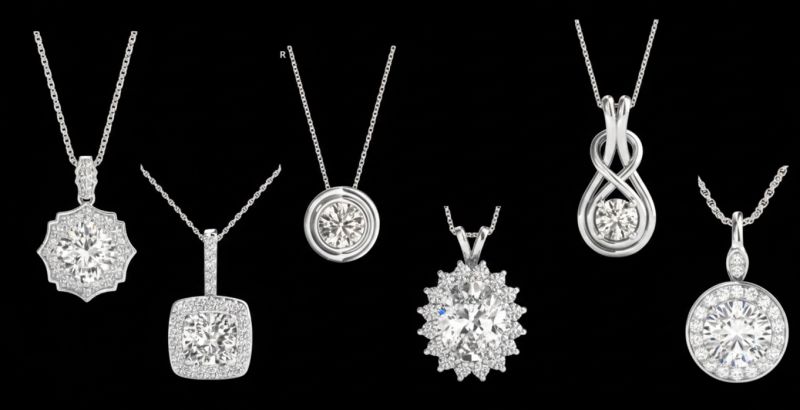
Diamond pendants are the quintessential accessory in any jewelry collection. Unlike a ring that might be removed for daily chores or earrings that can get lost in hair, a pendant sits gracefully at the hollow of your throat, catching light with every movement. It is often the first piece of fine jewelry we buy for ourselves or the piece we choose to mark a significant life event.
At CaratX , we bridge the gap between diamond mining and your jewelry box, offering a global marketplace for natural diamonds and exquisite jewelry. Whether you are a seller looking to reach international buyers or a consumer searching for the perfect stone, understanding the nuances of pendant styles is the first step to making a confident purchase.
Here is your definitive guide to diamond pendant styles, the craftsmanship behind them, and how to select a piece that will last a lifetime.
Before diving into styles, it helps to understand the components that make a pendant functional and beautiful.
The Bail: The part where the chain goes through. Common types include the fixed bail (soldered closed), the rollover bail (hinged), and the lobster claw attached directly to the diamond.
The Head/Setting: The metal piece that holds the diamond (e.g., prongs, bezel).
The Chain: While often sold separately, the chain is vital. Popular choices include cable chains, box chains, and rope chains.
For a wide selection of chains to pair with your pendant, check out our Jewelry Collection.
The solitaire pendant is the "little black dress" of jewelry. It features a single diamond, usually held by four or six prongs. This style is designed to showcase the diamond itself, with no distracting elements.
Why choose a Solitaire?
Versatility: It transitions seamlessly from a boardroom meeting to a black-tie event.
Focus on Quality: Because the diamond stands alone, it forces you to focus on the cut quality. A poorly cut diamond will look dull; a well-cut diamond (Ideal/Excellent) will act like a prism.
The "Floating" Effect: Modern solitaires often use minimal metal to create the illusion that the diamond is floating on the skin.
The 4Cs for a Solitaire Pendant: When buying a solitaire pendant, prioritize Cut above all else. The Cut determines the brilliance (white sparkle) and fire (colored sparkle).
Carat Weight: Solitaires are popular from 0.25ct (subtle daily wear) to 2.00ct+ (statement piece).
Setting Variations:
Prong Setting: Maximizes light exposure.
Bezel Setting: A metal rim encircles the diamond. This offers a modern look and maximum protection for an active lifestyle.
Explore our range of certified natural diamonds perfect for solitaire settings at CaratX Diamonds
If the solitaire is minimalism, the halo is glamour. A halo pendant features a center diamond encircled by a "halo" of smaller pave diamonds. This design serves two purposes: it makes the center stone look significantly larger, and it amplifies the overall sparkle tenfold.
The Psychology of the Halo: According to research on consumer behavior in the luxury goods market published by Harvard Business School, consumers are often drawn to items that signal high value through intricate detail and perceived size. The halo plays into this by offering a "big look" for a potentially lower budget than a single large stone of the same total carat weight.
Design Variations:
Double Halo: Two concentric circles of diamonds for even more impact.
Colored Stone Halo: A colored gemstone (like a sapphire or emerald) surrounded by white diamonds, offering a vintage Art Deco feel.
The heart pendant is one of the most recognized symbols in the world. While it can sometimes lean romantic, modern designers have refined it to be chic and wearable for all ages.
The Challenge of Cutting a Heart Shape: Cutting a heart-shaped diamond is one of the most difficult tasks for a gem cutter. It requires perfect symmetry; if the two halves of the heart are uneven, the stone loses its value and beauty.
Styling Tips:
Classic Heart: A full, plump heart shape set in yellow gold for a traditional look.
Open Heart: A modern design where the diamond forms the outline of the heart rather than a solid mass of metal/stone.
Also known as a pear-shaped or teardrop pendant, this style hangs vertically, drawing the eye downward and creating an elongating effect on the neck. It is widely considered one of the most flattering shapes for the decolletage.
The Importance of Orientation: The way a drop pendant is set changes its entire vibe:
Point Up: A classic pear shape set with the point towards the throat. This is a sophisticated, traditional look.
Point Down: Setting the stone with the point facing the chest creates a more modern, waterfall-like silhouette.
Cluster pendants are a marvel of design engineering. They use several smaller diamonds placed tightly together (often in a floral or geometric pattern) to mimic the look of a much larger, single diamond.
Why Clusters are Smart Buys:
Budget-Friendly: You get the surface coverage of a 2ct stone for the price of a 1ct total weight cluster.
Unique Light Play: Because the diamonds are angled differently, a cluster pendant can sparkle from every direction, even when the wearer is still.
Artistic Freedom: Designers can create shapes (like stars, flowers, or knots) that are impossible with a single stone.
Geometric pendants featuring shapes like hexagons, triangles, bars, and circles cater to the contemporary minimalist. These designs focus on the interplay of negative space and metal lines, with diamonds used as subtle accents rather than the main focus.
The Rise of the Geometric: The trend towards geometric jewelry mirrors the "brutalist" and "mid-century modern" movements in architecture and furniture.
Popular Shapes:
The Bar: A horizontal line of diamonds. Perfect for stacking with other necklaces.
The Hexagon: Often used to hold a single diamond in a "rough" or uncut style for an organic look.
Personalized jewelry has exploded in popularity thanks to social media. Initial pendants with diamonds add a touch of luxury to a sentimental piece. They make excellent gifts because they show thoughtfulness.
Metal Matters: When setting tiny diamonds into an initial, the durability of the metal is key.
Platinum: The strongest, most durable metal, but more expensive.
14k/18k Gold: Softer than platinum but standard for fine jewelry. Ensure the setting has reinforced prongs.
Looking to create a personalized piece? Register as a seller on the CaratX Marketplace to source high-quality melee diamonds for custom initials and nameplate jewelry.
Vintage-inspired pendants draw from the Georgian, Victorian, Edwardian, and Art Deco eras. These pieces are characterized by intricate metalwork filigree, milgrain (tiny beaded edges), and scrollwork.
Key Eras:
Edwardian (1901-1910): Platinum-heavy, lacy, and feminine, often featuring garlands and bows.
Art Deco (1920-1935): Geometric shapes, sharp lines, and contrasting colors (like onyx with diamonds).
These designs are often hallmarked by hand-engraving, a craft studied and preserved by institutions like the Gemological Institute of America (GIA) . The GIA’s research into antique cutting styles helps modern jewelers authenticate and recreate these period-specific looks.
Buying a diamond online can feel intimidating, but when you shop with a transparent marketplace like CaratX, you have the advantage of choice without the retail markup.
White Gold/Platinum: Best for icy white diamonds; enhances brilliance.
Yellow Gold: Best for lower color grade diamonds (K-M) as it masks any yellow tint; gives a warm, vintage look.
Rose Gold: Best for romantic styles like hearts and halos.
For the Minimalist: Solitaire or Geometric.
For the Romantic: Heart or Vintage.
For the One Who Has Everything: A high-carat Drop or Cluster.
Don't just buy a pendant; buy the certification. Always look for GIA or IGI certification. At CaratX , every natural diamond is certified, ensuring you know exactly what you are paying for.
Ready to buy? Shop our curated selection of loose diamonds and jewelry - https://caratx.com/search-results/Jewelry
If you are a jeweler, manufacturer, or diamond dealer, the CaratX platform offers an unparalleled opportunity to scale your business.
Global Reach: Sell your products to B2B and B2C buyers in 18+ countries without the logistical headache of international shipping.
Competitive Pricing: Check out our transparent seller plans - https://caratx.com/generic-pages/launch-your-products-on-caratx
Q: What is the best diamond shape for a pendant? A: Round brilliants are the most popular due to their maximum sparkle, but it depends on the style. Pear shapes elongate the neck, while princess cuts offer a modern, square silhouette.
Q: Can I wear a diamond pendant every day? A: Yes. However, ensure the setting is secure. Bezel settings are best for daily wear as they protect the diamond's edges. Prong settings should be checked by a jeweler every 6-12 months to ensure the prongs aren't snagging or wearing down.
Q: What length chain should I buy for my pendant?
16 inches (Choker): Sits at the base of the neck. Best for small, delicate pendants.
18 inches (Princess): Sits at the collarbone. The most common length, suitable for almost all pendant styles.
20 inches (Matinee): Falls below the collarbone. Best for larger statement pendants.
Q: What is the difference between natural diamonds and lab-grown diamonds? A: Natural diamonds are formed by the earth over billions of years. Lab-grown diamonds have the same chemical composition but are created in a laboratory. CaratX specializes in natural diamonds and natural gemstones, offering traceability from source to finished product.
Q: How do I clean my diamond pendant at home? A: Soak it in a solution of warm water and a few drops of mild dish soap. Use a soft toothbrush to gently scrub behind the diamond where dirt accumulates. Rinse and pat dry.
Ready to find your sparkle?
Shop Natural Diamonds at CaratX - https://caratx.com/search-results/Natural
Sell Your Jewelry Inventory Internationally - https://caratx.com/search-results/Jewelry
Aug, 06, 2022
Aug, 06, 2022
0 Comments
Please login to leave a reply.