
Introduction: More Than Just a Metal Holder
When you imagine a diamond ring, your mind likely jumps to the central stone's carat weight or brilliant sparkle. However, the setting the intricate metal framework that cradles the gem plays an equally starring role. It is the unsung hero of jewelry design, a critical element that determines not only the ring's aesthetic character but also its long-term durability, comfort, and security. Choosing the right setting transforms a beautiful stone into a personal heirloom, perfectly aligned with the wearer's lifestyle and taste.
This guide will delve deep into the world of diamond band settings. We'll explore the unique craftsmanship, historical charm, and practical considerations of each major style. By understanding these details, you can make an informed, confident choice that balances dazzling beauty with everyday wearability.
For a foundational understanding of the diamonds themselves, explore CaratX's comprehensive guide to the Four Cs of diamond quality, which details how cut, color, clarity, and carat weight interact with your chosen setting.
Understanding Setting Fundamentals -
Before examining specific styles, it's essential to grasp what a setting must achieve. A masterful setting performs three key functions:
Security: It must hold the diamond firmly in place, protecting it from impacts and preventing loss.
Aesthetics: It shapes the ring's style, influencing how light enters the stone and how much brilliance is reflected.
Comfort: It must feel smooth on the finger and be designed to resist snagging on clothing and hair.
The choice of metal (platinum, white, yellow, or rose gold) also interacts with the setting, affecting its color, strength, and maintenance needs.
A Deep Dive into Diamond Band Settings -
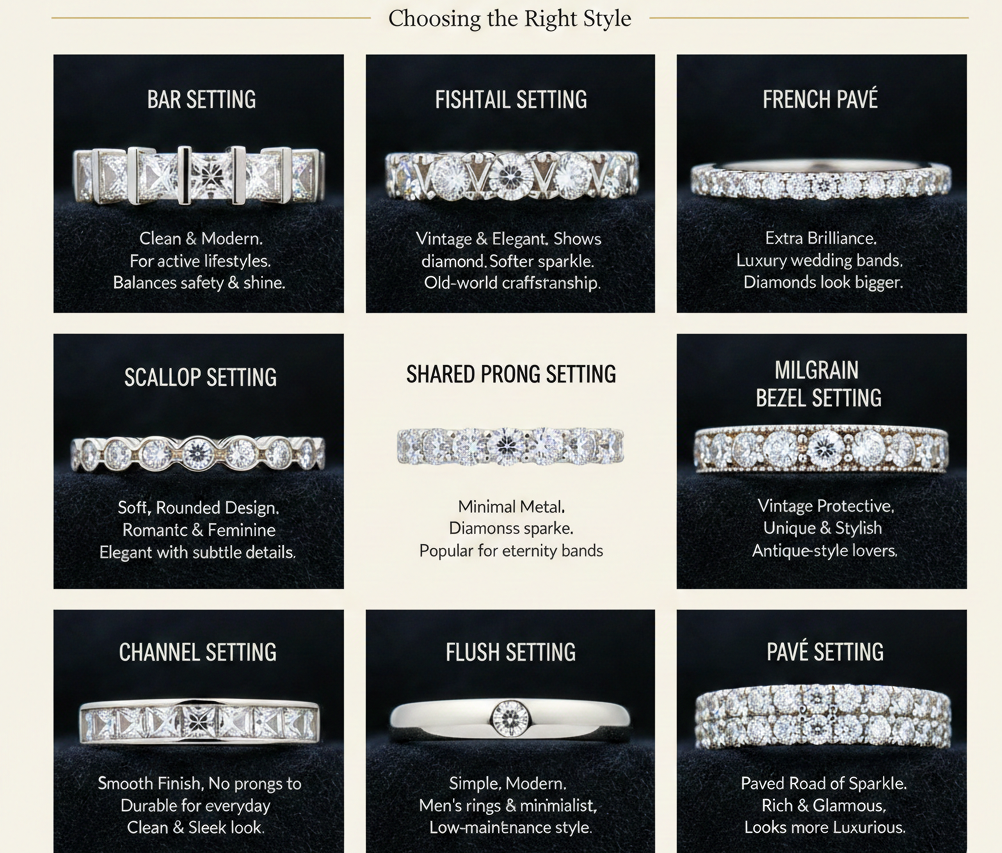
1. Bar Setting:
Character: Clean, architectural, and linear. Construction: Diamonds are set between vertical metal bars rather than traditional prongs. Each stone is separated by two bars, creating a crisp, contemporary channel of light.
Pros: Exceptionally secure; the bars protect the diamonds' girdles. Offers a smooth, snag-free feel. The structured look is ideal for sleek, modern jewelry.
Cons: Slightly less light enters the stones from the sides compared to prong settings, which can modestly affect side-sparkle.
Ideal For: Active individuals and those with a minimalist, modern aesthetic. It's a superb choice for men's diamond bands and eternity rings meant for daily wear. Discover contemporary bar-set designs in CaratX's curated collection of men's rings and modern jewelry.
2. Fishtail Setting:
Character: Artisan, delicate, and old-world. Construction: This technique involves cutting precise V-shaped notches into the metal band, resembling a fish's tail. The diamond is nestled into this notch, often held by small beads or grains of metal.
Pros: Exposes more of the diamond's profile for a softer, more romantic sparkle. The craftsmanship highlights vintage and antique-inspired designs.
Cons: Can be more delicate than other settings; the fine metal details may require careful maintenance.
Ideal For: Lovers of Victorian, Edwardian, or Art Deco eras. It pairs beautifully with ornate bands and colored gemstones.
3. French Pave:
Character: Luxurious, refined, and maximally brilliant. Construction: A subset of the pave style, French pave uses tiny, hand-cut prongs that are angled from the base metal. This technique allows for even smaller metal beads and creates the illusion that the diamonds are "floating" in a sea of sparkle.
Pros: Provides the highest possible brilliance for small stones, as minimal metal is visible from the top. The result is an unparalleled, glittering surface.
Cons: Requires expert craftsmanship and can be more expensive. The tiny prongs may need occasional checking by a jeweler.
Ideal For: Luxury wedding bands, anniversary rings, and anyone seeking a red-carpet level of glamour and detail.
4. Scallop Setting:
Character: Feminine, fluid, and luminous. Construction: The metal between stones is carved into gentle, U-shaped curves (scallops). This design increases the amount of reflected light between diamonds.
Pros: Creates a soft, continuous glow rather than a sharp sparkle. The rounded edges are very comfortable and contribute to a romantic, graceful look.
Cons: The carved metal can be thinner in places, potentially affecting durability under extreme stress.
Ideal For: Those seeking a ring with elegant, subtle detailing and a feminine touch. It works wonderfully as a complementary wedding band.
5. Shared Prong Setting:
Character: Seamless, light, and streamlined. Construction: Instead of each diamond having four prongs, adjacent stones share a single prong between them. This reduces the metal visible from the top view.
Pros: Creates an almost unbroken line of sparkle, making the band appear as a continuous ribbon of light. It uses less metal, which can reduce weight and cost.
Cons: If one shared prong is damaged, two diamonds are compromised. Slightly less secure than settings where each stone is independently held.
Ideal For: Classic eternity bands and any design where a seamless, glittering line is the primary goal.
6. Milgrain Bezel Setting:
Character: Decorative, protective, and richly detailed. Construction: A bezel, a thin metal rim, fully encircles the diamond, securing it from above. The milgrain detail is added by impressing tiny, bead-like lines along the metal edges.
Pros: The most protective setting available; the diamond is incredibly secure. The milgrain edge softens the look, adding vintage character and hiding the bezel's seam.
Cons: The bezel covers more of the diamond's circumference, reducing its apparent size and slightly limiting light entry from the sides.
Ideal For: Antique and reproduction jewelry, active lifestyles, and unique center stones like vintage cuts or colored diamonds. For those inspired by this style, CaratX offers a range of unique and antique-style jewelry perfect for customization.
7. Channel Setting:
Character: Strong, clean, and ultra-modern. Construction: Diamonds are set into a groove or "channel" created by two parallel metal walls. The stones sit flush with the band, with no prongs rising above the metal.
Pros: Extremely durable and snag-proof. Offers a smooth, uniform appearance that is both elegant and pragmatic. Excellent for guarding the girdles of the diamonds.
Cons: Difficult to resize. If the channel walls are damaged, multiple stones can become loose. Less sparkle than prong settings due to restricted light entry.
Ideal For: Modern wedding bands, eternity rings, and people with hands-on professions or active routines.
8. Flush Setting (Gypsy Setting):
Character: Minimalist, industrial, and integrated. Construction: A hole is drilled into the solid metal band, and the diamond is set into the hole, leaving its table (top) perfectly level with the metal surface. The metal is then hammered or rubbed over the stone's edges to secure it.
Pros: The most low-profile and secure setting possible. Completely smooth to the touch and virtually impervious to damage.
Cons: Diamonds can appear smaller as they are sunk into the metal. Requires precise drilling, and damaged stones are very difficult to replace.
Ideal For: Men's wedding bands, minimalist jewelry, and tech or medical professionals who need a completely smooth ring surface.
9. Pave Setting:
Character: Luxuriant, dazzling, and textured. Construction: From the French for "paved," this method involves clustering many small diamonds together, each held by tiny, almost invisible prongs or beads. The goal is to maximize diamond coverage and minimize metal visibility.
Pros: Creates an extraordinary, all-over sparkle that makes the metal band appear to be covered in diamonds. Adds significant brilliance and perceived luxury.
Cons: Small prongs can wear down over time and may need retipping. Not as secure for a center stone but excellent for bands and halos.
Ideal For: Adding brilliance to engagement ring bands, creating glamorous cocktail rings, and achieving maximum sparkle. Explore dazzling pave-set pieces in CaratX's selection of engagement rings and high-end jewelry.
10. Bezel Setting:
Character: Clean, modern, and functional. Construction: A solid metal rim wraps around the diamond's entire circumference, holding it securely in place. It can be full (encircling the entire stone) or partial (securing only parts of it).
Pros: Offers excellent protection for the diamond's edges (girdle). Smooth edges prevent snagging. Has a distinctive, contemporary look.
Cons: Like the milgrain bezel, it covers more of the diamond than a prong setting, which can reduce sparkle and make the stone look slightly smaller.
Ideal For: Solitaire rings with a modern twist, people with active lifestyles, and protecting valuable or uniquely shaped stones.
How to Choose Your Perfect Setting: A Practical Guide
Selecting a setting is a personal journey. Follow these steps to find your match:
Assess Your Lifestyle: Be brutally honest. Do you work with your hands, garden, or hit the gym regularly? Prioritize durability and security (Bezel, Channel, Flush). For a more formal or desk-based lifestyle, you can explore more delicate options (Fishtail, French Pave).
Define Your Aesthetic: Browse images and identify what you're drawn to. Do you love clean lines and modern art (Bar, Channel)? Or are you inspired by historical romance and intricate detail (Milgrain, Scallop)?
Consider the Stone: The setting should complement the diamond. A high-quality stone with an excellent cut deserves a setting that maximizes its light performance (like a shared prong or pave). A unique vintage cut may shine best in a period-appropriate setting like a fishtail or milgrain bezel.
Think About Comfort and Care: Try rings on. Notice how different settings feel against your fingers. Also, acknowledge the maintenance you're willing to perform. Prong settings need occasional check-ups, while bezel and channel settings are largely "set it and forget it."
Plan for the Future: Is this an engagement ring to be paired with a wedding band? Consider how they will sit together. Some settings, like flush or low bezels, allow for a perfectly flush fit.
For unparalleled selection and the ability to find or create your ideal ring, the global marketplace at CaratX connects you with expert sellers who can bring your vision to life.
Expert Care and Maintenance Tips -
Regular Inspections: Have a professional jeweler check prongs, bezels, and channels every 6-12 months, especially for pave and shared prong settings.
Smart Wear: Remove your ring during heavy lifting, sports, gardening, or cleaning with harsh chemicals.
Proper Cleaning: Soak in a mild dish soap and warm water solution, gently scrub with a soft toothbrush, rinse, and pat dry. Ultrasonic cleaners are generally safe for simple settings like bezels but can loosen stones in pave or shared prong settings.
Safe Storage: Store rings separately in a soft-lined box or pouch to prevent diamonds from scratching each other or other jewelry.
Conclusion:
The setting you choose is the foundation of your ring's personality and longevity. It's the bridge between the raw beauty of a diamond and the daily life it will become a part of. Whether you're drawn to the bold security of a channel set, the historic charm of a fishtail, or the unbridled sparkle of French pave, your choice is a reflection of your individual story.
By marrying your personal style with practical knowledge of craftsmanship and care, you can select a diamond band that will offer enduring beauty, security, and satisfaction for a lifetime. Ready to explore the possibilities?
Visit CaratX to browse thousands of designs from trusted international sellers and find the perfect expression of your style.
Frequently Asked Questions (FAQs)
Q1: What is the most secure diamond setting for an active lifestyle? The bezel setting (including milgrain) and the flush setting are considered the most secure, as the diamond is fully surrounded by metal. Channel and bar settings are also excellent, highly secure choices for active wear.
Q2: Which setting makes a diamond look the largest? Prong settings (like shared prong or classic four-prong) expose more of the diamond's circumference, allowing maximum light entry and creating the illusion of greater size. Pave settings on the band can also make a center stone appear larger by contrast.
Q3: Can I resize a ring with a channel or eternity setting? It is very difficult and often impossible to resize a full eternity band (where diamonds go all around the ring) or a channel-set band without compromising the setting's integrity or losing stones. It's critical to get an accurate ring size before purchasing these styles.
Q4: How often should I get my prong-set diamond ring checked? For rings worn daily, a professional inspection every six months to a year is recommended. A jeweler will check for worn or loose prongs under magnification. You should also perform a quick visual and tactile check monthly.
Q5: Is a pave setting high maintenance? Pave settings require more maintenance than simpler settings. The many tiny prongs can wear down over time and may need "retipping." However, with proper care and regular professional check-ups, a pave-set ring can last beautifully for decades.
Q6: Where can I find a reputable jeweler to create a custom setting? Marketplaces like CaratX connect you with a global network of vetted jewelry sellers and artisans. You can browse portfolios, read customer testimonials, and work directly with a professional to design a custom piece that perfectly matches your vision for the setting and stone. Learn more about their seller network and services on the CaratX seller registration and pricing page.
CaratX Diamond & Gemstone Marketplace. Diamond Guide and Education. CaratX.com. (Internal resource for understanding diamond 4Cs and jewelry styles).
CaratX Seller Information. Launch Your Products on CaratX - CaratX.com.