
In the high-stakes world of diamonds and gemstones, value is determined by what the naked eye cannot see. Whether you are a professional gemologist, a diamantaire, or a savvy consumer, understanding the internal world of a gemstone, its inclusions, growth patterns, and treatments is paramount.
While a simple loupe is the portable standard for initial inspections, the gemological microscope remains the undisputed king of the laboratory.
At CaratX, we bridge the gap between advanced gemological science and the global marketplace. Just as a microscope reveals the truth of a stone, our platform reveals the true value of diamonds to buyers in over 18 countries. But before we dive into the marketplace, let’s explore the tool that sets the standard for quality: the gemological microscope.
The Evolution of Gemology:
Gemology transitioned from an art to a science in the early 20th century. Before the widespread use of the microscope, gem identification relied heavily on specific gravity and visual estimations. Today, over 90% of professional gemologists rely on microscopes to confirm clarity characteristics and separate natural stones from synthetics.
A standard jeweler’s loupe provides a 10x magnification, which is the industry minimum for clarity grading by bodies like the GIA.
However, a gemological microscope offers dynamic magnification ranging from 10x to 60x or higher, coupled with controllable lighting that can make inclusions "pop" into view.
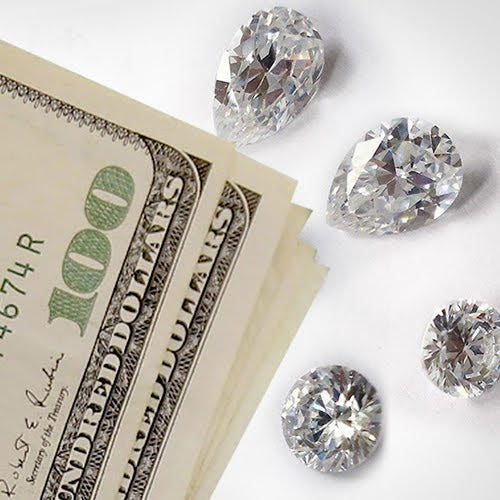
This level of detail is not just academic; it directly impacts the valuation of a stone you might find on a marketplace like CaratX.
Anatomy of a Gemological Microscope:
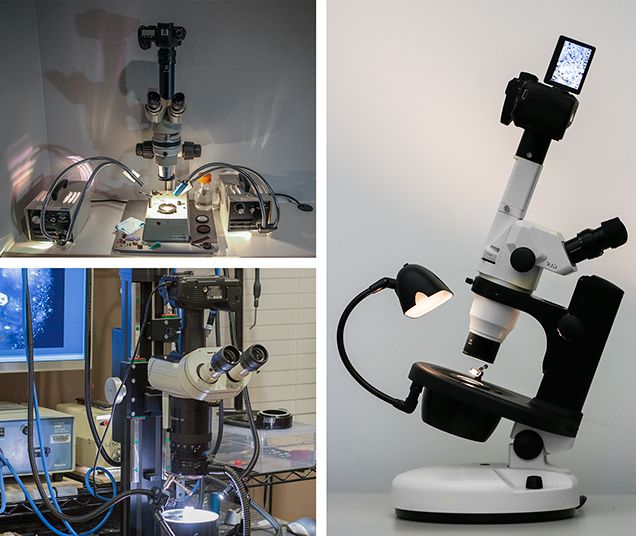
To truly understand how gemologists separate a flawless diamond from a high-quality simulant, one must understand the instrument itself. Unlike biological microscopes that view slides with transmitted light, gemological microscopes are designed for opaque and transparent objects with unique reflective properties.
1. Eyepieces (Ocular Lenses)
Modern gemological microscopes are almost exclusively binocular. This provides two main advantages: it reduces eye strain during long grading sessions and provides stereoscopic (3D) vision. This depth perception is critical when mapping the location of an inclusion to determine if it is "eye-clean" or if it poses a durability risk.
2. Objective Lenses and Zoom Control
High-quality gem microscopes utilize a zoom ratio (often 6.5:1 or 7.5:1) rather than fixed objective lenses. This allows the gemologist to smoothly zoom in on a suspicious feature. The highest quality optics are "plan achromatic," meaning they correct for color fringing and field curvature, ensuring the entire field of view is sharp, a necessity when photographing stones for certification.
3. The Stage and Stone Holding
This is where the rubber meets the road. The stage must be versatile. Most professional models feature a "dirty" stage a solid plate with a hole in the center or a universal arm holder. For diamonds specifically, tweezers are often mounted on a adjustable arm to allow the stone to be turned and viewed from every angle without the gemologist's unsteady hand getting in the way.
4. The Illumination System:
In gemology, lighting is as important as magnification. Different lighting techniques reveal different internal characteristics.
Darkfield Illumination: This is the most common technique. Light is shone at the stone from the sides against a dark background. This causes light-scattering inclusions to glow brightly against a dark backdrop, making them easy to spot.
Fiber Optic Lighting: Flexible "goosenecks" allow the gemologist to direct light at specific angles. This is essential for identifying surface-reaching fractures or determining the luster of a potential inclusion.
Overhead (Oblique) Lighting: Used to examine surface features, polish lines, and facet junctions.
5. The Base and Stand
Stability is non-negotiable at high magnification. A heavy, cast-metal base absorbs vibrations from foot traffic or street noise, ensuring the image remains steady.
For more insights on how precision impacts diamond trading, explore the CaratX pricing plans to see how we apply precision to commerce.
Practical Applications: From Rough to Polished
Identifying Treatments and Synthetics
The microscope is the first line of defense against undisclosed treatments.
Fracture Filling: In diamonds, glass filling is used to hide fractures. Under the microscope, this appears as a "flash effect" flashes of blue, pink, or purple color when the stone is tilted.
Laser Drilling: To remove dark inclusions, diamonds are sometimes laser-drilled. Under a microscope, these appear as straight, white tubes reaching the surface, often with a "beach ball" effect where the inclusion used to be.
HPHT Treatment: High-Pressure High-Treatment (HPHT) can alter a diamond's color. While difficult to see with basic lighting, magnification combined with UV fluorescence can reveal distinctive growth patterns.
Diamond Grading (The 4 Cs)
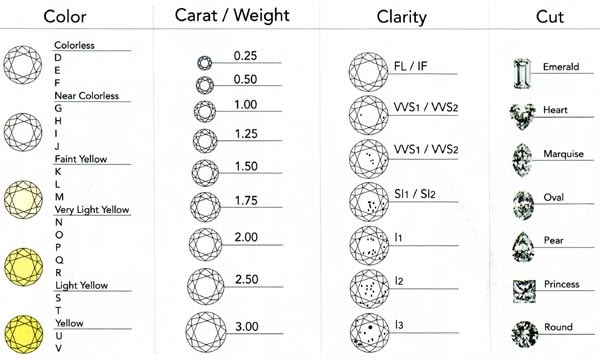
While color and cut are judged with specific lighting conditions, Clarity is entirely dependent on microscopic evaluation. A gemologist uses the microscope to plot the type, size, and location of inclusions to assign a grade from Flawless (FL) to I3.
When you shop for natural diamonds on CaratX, you are purchasing stones that have undergone this rigorous scrutiny.
Inclusions as Fingerprints -
Every gemstone deposit on earth has unique inclusion "fingerprints." For example, Colombian emeralds often contain three-phase inclusions (liquid, gas bubble, and crystal). By studying these under a microscope, a gemologist can often pinpoint the origin of a stone, which can dramatically increase its value.
Beyond the Microscope:
While the microscope is central, it often works in concert with other tools. Spectroscopy analyzes the light a stone absorbs to identify chemical elements. Darkfield illumination (a microscope technique) is often combined with spectroscopy to get a full picture. The Gemological Institute of America (GIA) utilizes these combined methods extensively in their research.
Why This Matters for Buyers and Sellers on CaratX
At CaratX , we believe in transparency. Understanding the science behind gemology empowers you as a buyer or seller. When you register on the CaratX marketplace, you are joining a community that values authenticity.
For Sellers: Presenting a stone with verified microscopic data builds trust. Whether you are selling to B2B partners or directly to consumers, providing detailed clarity characteristics sets you apart.
Register as a seller on CaratX today to showcase your verified inventory.
For Buyers: When you purchase a diamond from our platform, you can have confidence that the stone has been evaluated to standards that rely on tools like the gemological microscope. Shop our collection of gemstones at unbeatable prices, knowing the science has been done.
The journey of a diamond from the earth to your finger is long, but the final step of verification relies on optics and light.
We invite you to start selling or shopping in our 18+ international markets. Join CaratX now.
Frequently Asked Questions (FAQ)
1. What is the difference between a standard microscope and a gemological microscope? A standard biological microscope is designed to look through thin, translucent slices of tissue (slides). A gemological microscope is designed with a larger working distance (space between the lens and the object) and specialized lighting (darkfield, fiber optics) to examine the surface and interior of reflective, opaque, and faceted stones.
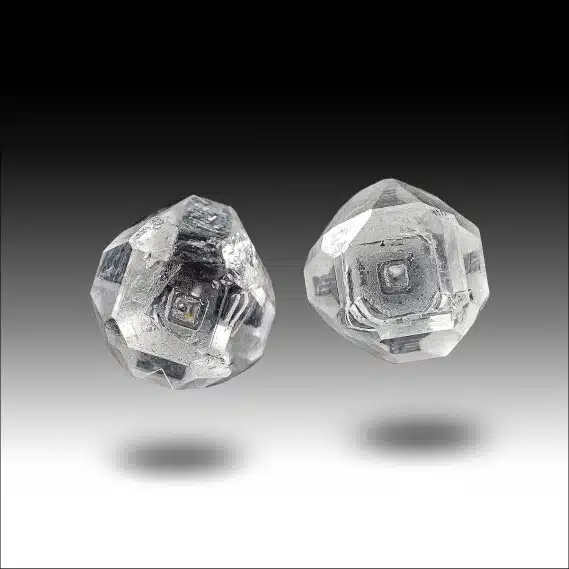
2. Can a microscope tell if a diamond is lab-grown? Often, yes. While advanced lab-grown diamonds have the same chemical composition as natural diamonds, they sometimes display distinctive growth patterns. For example, CVD (Chemical Vapor Deposition) lab-grown diamonds may show strain lines or banding patterns under high magnification and specific lighting that natural diamonds typically do not.
3. What magnification do I need to grade a diamond? The minimum standard for grading is 10x magnification, as prescribed by the GIA and FTC guidelines. However, professional gemologists use zoom-capable microscopes that go up to 60x or more to examine minute features that could affect durability or to identify treatments.
4. Is a microscope necessary for buying a gemstone online? While you as the buyer don't need to own a microscope, you should ensure the seller provides detailed clarity characteristics based on microscopic analysis.
On platforms like CaratX, we encourage sellers to provide high-resolution imagery and detailed specifications that reflect professional evaluation.
Image Credit - GIA