

The Hero of Jewelry: A Deep Dive into Chain Clasps and Their Impact on Quality
Home
News And Media The Hero of Jewelry: A Deep Dive into Chain Clasps and Their Impact on Quality SHOP NOWHome
News And Media The Hero of Jewelry: A Deep Dive into Chain Clasps and Their Impact on Quality SHOP NOWMar, 24, 2026 by Archit Mohanty 0 Comments
In the world of fine jewelry, the human eye is naturally drawn to the brilliance of a diamond or the luster of gold. However, seasoned jewelers and discerning collectors know that the true measure of a piece’s quality often lies in the details that go unnoticed until they fail.
The chain clasp is the mechanical heart of any necklace or bracelet. It is the single point of failure that separates a cherished heirloom from a lost investment. While it may seem like a small detail, the clasp dictates security, ease of use, and the overall longevity of the jewelry piece.
According to industry data, poor clasp quality is one of the top reasons for jewelry returns and repair requests. A weak or malfunctioning clasp doesn’t just cause inconvenience; it leads to lost inventory for sellers and lost sentimental value for buyers.
In this comprehensive guide, we will explore the engineering, metallurgy, and design psychology behind chain clasps, helping you make informed decisions whether you are a designer, a seller, or a buyer.
A strong clasp equals a reliable jewelry piece. When we discuss "quality" in jewelry, we often reference carat weight or purity of metal. However, the mechanical integrity of the clasp determines the user experience.
From an engineering perspective, a clasp must withstand tensile stress (pulling), shear stress (twisting), and cyclical loading (repeated opening and closing) over years of use. A failure in any of these areas renders the finest gemstone setting useless.
For jewelers looking to source high-quality components or finished pieces, ensuring clasp integrity is non-negotiable.
When selling internationally, as many do through platforms like CaratX, understanding these standards ensures you meet the expectations of B2B and B2C buyers across 18+ countries.
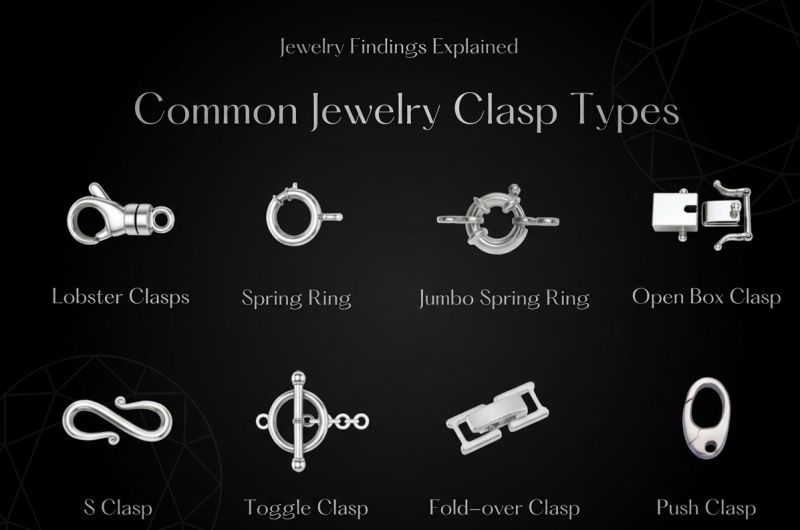
While the market is flooded with various mechanisms, most clasps fall into five main categories. Each offers a unique balance of security, aesthetics, and manufacturing cost.
The lobster clasp is the undisputed king of the jewelry world, utilized in over 60% of modern chain jewelry.
Mechanism: A spring-loaded hook with a hinged lever that opens to allow a ring or chain end to be inserted.
Pros: It offers superior strength due to its thick gauge wire and secure locking mechanism. It is intuitive to use, even for individuals with limited dexterity.
Cons: Heavier than other options, which can affect the drape of a very fine chain.
Best for: Medium to heavy chains, everyday necklaces, and bracelets where security is paramount.
Often found in entry-level and lightweight pieces, the spring ring is a cost-effective standard.
Mechanism: A hollow, circular tube with a spring-loaded arm that opens when a small lever is pulled.
Pros: Small and lightweight, making it ideal for delicate chains. It is the most cost-effective option for mass-market jewelry.
Cons: Slightly less durable than lobster clasps. The spring mechanism can wear out over time, and the small lever can be difficult to manipulate for those with arthritis.
Best for: Lightweight, budget-friendly pieces and children’s jewelry.
A favorite in the fashion and statement jewelry sectors, the toggle clasp combines function with decorative flair.
Mechanism: Consists of a bar (often decorated) and a circular loop. The bar is inserted through the loop and then lies perpendicular to it to lock.
Pros: Easy to wear and remove, even without looking. Highly visible, allowing it to act as a design element.
Cons: It can be prone to accidental opening if the bar slides back through the loop during wear (e.g., when wearing a sweater).
Best for: Heavy bracelets and statement necklaces where the clasp is part of the aesthetic.
Synonymous with premium jewelry, the box clasp offers a hidden locking system that provides a clean, uninterrupted look.
Mechanism: A "tongue" (a flat piece of metal) slides into a "box" (a hollow housing) where it is held in place by an internal spring or tension mechanism.
Pros: Extremely strong and secure. It provides a sleek, elegant finish that disappears into the chain design. Often includes a safety catch for high-value pieces.
Cons: Manufacturing requires high precision. If the internal spring fails, it is difficult and expensive to repair.
Best for: High-end necklaces, pearl strands, and diamond bracelets.
Designed for maximum security, the fold-over clasp (often with a safety latch) is the standard for high-value wrist wear.
Mechanism: A hinged lid that folds over a buckle base, snapping shut. Often includes an additional safety latch to prevent accidental opening.
Pros: Offers the highest level of security. Distributes weight evenly, making it comfortable for heavy pieces.
Cons: Bulkier than other clasps. Primarily limited to bracelets and watches.
Best for: Heavy gold bracelets, diamond tennis bracelets, and valuable wristwatches.
The material of the clasp is just as important as the mechanism. At a microscopic level, the hardness and ductility of the metal determine how well the clasp will hold up over time.
Gold (10k, 14k, 18k): 14k gold is the industry standard for clasps because it offers a balance of durability (due to copper and silver alloys) and value. 18k gold is softer and can wear down faster in moving parts like springs or hinges.
Platinum: Used in ultra-premium jewelry, platinum is incredibly dense and durable. It doesn't fatigue as easily as gold, making it ideal for spring mechanisms in high-wear items.
Stainless Steel & Titanium: Increasingly popular in the "fashion" and "industrial chic" segments. These materials offer superior tensile strength and are hypoallergenic.
When sourcing jewelry whether from a local artisan or an international marketplace like CaratX sellers should inspect clasps for the following criteria to minimize returns:
Spring Tension: A quality clasp should have a firm, audible "click" when closed. If the spring feels mushy or weak, it will fail within months.
Solder Points: Inspect where the clasp attaches to the chain. Poor soldering creates weak points. The connection should be seamless with no visible pits or discoloration.
Weight: A clasp that feels hollow or paper-thin is a liability. Heavy-gauge metal ensures longevity.
Laser Welding: Premium clasps often utilize laser welding for internal components, which creates a stronger bond than traditional torch soldering in small spaces.
For businesses, the clasp is a silent profit killer. Data from the Jewelers of America suggests that mechanical failure specifically clasps accounts for a significant percentage of post-purchase issues.
Customer Experience: A broken clasp on a necklace often results in a lost necklace, leading to a full refund request and a lost customer for life.
Repair Costs: Replacing a high-quality 14k gold lobster clasp can cost a jeweler between $50 and $150 in labor and materials. If the piece was sold on a thin margin, this repair erases all profitability.
By choosing suppliers that prioritize clasp quality, sellers mitigate risk. For those looking to scale, registering as a seller on CaratX allows access to a global network of vetted suppliers, ensuring that the small details like clasps meet international standards for durability.
As the jewelry market becomes increasingly globalized, understanding regional preferences for clasps can give sellers a competitive edge.
North American Market: Prefers lobster clasps for security and toggle clasps for casual fashion.
European Market: Often favors box clasps and hidden safety mechanisms, valuing minimalistic aesthetics and high security.
Asian Markets: High demand for spring ring clasps on lightweight, 10k-14k gold pieces, as well as intricate magnetic clasps for ease of use among aging populations.
If you are a seller aiming to tap into these international markets, listing your inventory on a platform that connects you to B2B and B2C buyers globally is essential. You can start selling jewelry internationally to buyers through the CaratX seller plan.
By ensuring your product descriptions highlight the clasp type and material, you reduce friction and returns from overseas buyers who cannot physically inspect the piece.
In the hierarchy of jewelry design, clasps are often an afterthought, yet they are the most interacted-with component of a necklace or bracelet. The right clasp ensures the piece is secure, comfortable, and long-lasting.
Whether you are a consumer investing in a diamond tennis bracelet which typically requires a heavy-duty fold-over clasp with a safety latch or a wholesaler sourcing inventory, paying attention to this small detail yields significant returns.
For businesses, the path to reducing returns and building a reputation for quality lies in rigorous sourcing.
By leveraging platforms like CaratX, sellers can find high-quality components and finished jewelry that meet the demands of the modern, international consumer.
Q: What is the most secure type of clasp for a diamond bracelet? A: For high-value items like diamond tennis bracelets, a fold-over clasp with a safety latch is considered the industry standard for maximum security. Box clasps with a double safety catch are also excellent options.
Q: Can a jeweler replace a broken clasp? A: Yes, a professional jeweler can replace a clasp. However, it is crucial to match the metal type (e.g., 14k gold with 14k gold) to avoid galvanic corrosion. The cost typically ranges from $50 to $200 depending on the metal and complexity.
Q: Are magnetic clasps safe and durable? A: Magnetic clasps offer convenience but are generally not recommended for heavy or valuable pieces. The magnetic force can weaken over time, and they are susceptible to accidental opening if caught on clothing or furniture. They are best suited for lightweight fashion jewelry.
Q: How can I tell if a lobster clasp is high quality? A: Squeeze the lever. A high-quality lobster clasp will have a stiff, strong spring with a definitive snap. The metal should feel heavy for its size, and the hinge should have no lateral play (wobbling).
Q: Does CaratX offer findings (clasps) or just finished jewelry? A: CaratX is a comprehensive B2B and B2C marketplace. You can find suppliers offering finished jewelry, loose gemstones, natural diamonds, and jewelry findings. Sellers can register to list their products or source inventory to meet their specific quality standards.
Ready to elevate your jewelry business?
Sellers: Register on CaratX marketplace to start selling to B2B and B2C buyers in over 18 international countries. Register here.
Buyers: Shop natural diamonds and gemstones from our CaratX marketplace at unbeatable prices. Shop now.
Pricing: For more details about our pricing plans and how to launch your products, check here: CaratX Pricing & Launch.
Follow CaratX for more insightful and educational content on the jewelry industry.
Jun, 18, 2026
Aug, 06, 2022
Aug, 06, 2022

0 Comments
Please login to leave a reply.