
The global diamond jewelry market represents one of the most fascinating and resilient segments of the luxury goods industry. As we navigate through 2026, understanding which diamond jewelry categories dominate global sales is essential for retailers, wholesalers, and industry professionals seeking to capitalize on market opportunities.
The global diamond jewelry market continues to demonstrate remarkable strength and adaptability. According to recent market research, the industry was valued at approximately $109.43 billion in 2025 and is projected to reach $115.44 billion in 2026, with a compound annual growth rate (CAGR) of 6.30% expected through 2032 .
The broader jewelry market, encompassing all materials, reached $254.13 billion in 2026 and is forecast to grow to $387.36 billion by 2034 .
For businesses looking to start selling to diamonds in 18+ international countries, platforms like CaratX provide the infrastructure needed to reach global B2B and B2C buyers efficiently.
#1 Most Sold: Diamond Engagement Rings –
Market Dominance and Cultural Significance -
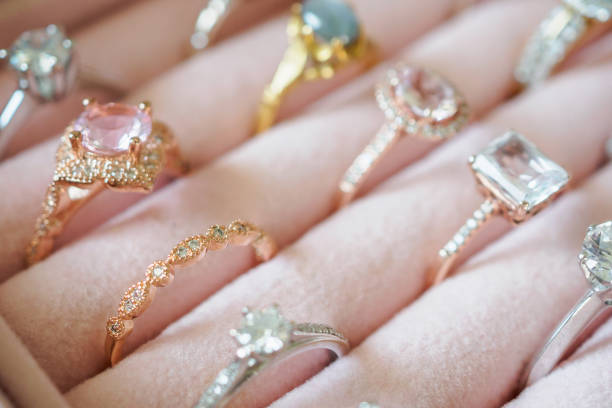
When analyzing global diamond jewelry sales, one category consistently emerges as the undisputed leader: diamond engagement rings. This dominance is not merely a commercial phenomenon but reflects deeply embedded cultural traditions spanning continents and generations.
Industry data indicates that engagement and bridal jewelry accounts for approximately 70%–80% of all diamond jewelry sales globally . In mature markets like the United States, over 80% of engagements include a diamond ring, representing a tradition that has persisted for generations despite evolving consumer preferences and economic fluctuations.
The engagement ring’s dominance can be attributed to several key factors:
Cultural Tradition: From the iconic “A Diamond is Forever” campaign launched by De Beers in the 1940s to modern social media celebrations, the diamond engagement ring has become an entrenched cultural institution. In markets across North America, Europe, and Asia, the tradition remains remarkably consistent .
Wide Price Range: Engagement rings accommodate virtually every budget, from modest 0.25-carat solitaires to multi-carat masterpieces. This accessibility ensures market penetration across all socioeconomic segments.
Regional Variations in Engagement Ring Preferences -
The North American market continues to lead in engagement ring consumption, with approximately 2.0-2.2 million marriages annually in the United States alone, each representing a significant diamond jewelry purchase opportunity.
The Asia-Pacific region, particularly China and India, represents the primary engine of volume growth, with China recording over 6.8 million marriages in 2022 and India hosting an estimated 8-10 million weddings annually.
For jewelers and retailers seeking to sell jewelry internationally, understanding these regional nuances is crucial. Platforms like CaratX marketplace offer access to diverse buyer bases across multiple countries, enabling sellers to tap into these regional demand patterns.
The Top-Selling Diamond Jewelry Categories Following Engagement Rings
Diamond Stud Earrings:
Following engagement rings, diamond stud earrings represent the second-largest category in global diamond jewelry sales. Their popularity stems from their versatility, timeless appeal, and status as one of the most frequently repeated purchases in fine jewelry.
Diamond stud earrings occupy a unique position in the market because they serve multiple consumer needs:
Everyday luxury: Unlike engagement rings, which typically represent a single lifetime purchase, stud earrings are often purchased multiple times throughout a consumer’s life
Gifting versatility: They remain the most popular diamond jewelry gift for birthdays, anniversaries, and milestone celebrations.
Entry-level accessibility: Smaller carat weight studs provide an accessible entry point for first-time diamond buyers.
Market data confirms that stud earrings consistently perform well across all price points. Recent analysis shows that diamond stud earrings have demonstrated handsome revenue growth in the U.S. market, with particular strength in the premiumization trend where consumers are spending more per item .
For businesses looking to shop natural diamonds for stud earring production, CaratX's natural diamond inventory offers comprehensive sourcing options.
Diamond Tennis Bracelets:
Tennis bracelets have experienced remarkable growth, particularly in the premium segment. Recent market data reveals that tennis bracelets have shown double-digit growth in demand, making them one of the standout performers in finished diamond jewelry .
The tennis bracelet’s enduring appeal can be attributed to:
Versatile styling: Appropriate for both casual and formal occasions.
Conspicuous value: Multiple diamonds create visible luxury presence.
Gift appeal: Highly popular for milestone anniversaries and significant life events.
The premiumization trend has particularly benefited tennis bracelets, with consumers increasingly willing to invest in higher-quality pieces. In January 2026, finished jewelry sales rose 13% year-over-year, with average spending per item increasing by more than 20% .
For those interested in shop gemstones or completed tennis bracelet inventory, the CaratX marketplace provides access to competitive wholesale pricing.
Diamond Pendants and Necklaces:
Diamond pendants and necklaces represent the fourth major category in global diamond jewelry sales. This segment has gained particular traction as an affordable entry point into diamond ownership and as a popular choice for self-purchase.
Key trends in the pendant and necklace category include:
Modern Layered Designs: Consumer interest in layered diamond necklaces has grown by approximately 26% among younger demographics . This trend reflects broader fashion movements toward personalized, stackable jewelry.
Female Self-Purchase: The diamond jewelry market has experienced a significant increase in female self-purchase volumes, with women increasingly buying diamond pendants for themselves as rewards for professional achievements or personal milestones.
Digital Discovery: Social commerce platforms, particularly TikTok, have become significant drivers of diamond pendant sales. Recent data shows that pendant-style jewelry ranks among the top trending products on social media platforms, with substantial order volumes and revenue generation.
Diamond Wedding Bands and Anniversary Rings -
While engagement rings dominate the bridal category, wedding bands and anniversary rings represent substantial and stable demand drivers. Wedding sets, in particular, have shown double-digit growth in demand alongside engagement rings.
The wedding band category benefits from:
Recurring purchase occasions: Anniversaries and vow renewals create ongoing demand.
Stacking trends: Modern consumers often purchase multiple bands to stack with engagement rings.
Men’s jewelry growth: Increasing acceptance of men’s diamond wedding bands has expanded the market.
For businesses interested in selling to B2B buyers, the consistent demand for wedding jewelry makes it an attractive category for inventory investment. Register on CaratX to connect with wholesale buyers seeking wedding jewelry inventory.
Market Segmentation Analysis:
By Jewelry Type
According to market analysis, the diamond jewelry market segments by product type as follows :
This segmentation reveals the concentrated nature of the diamond jewelry market, with rings alone accounting for nearly half of all sales. The remaining categories demonstrate the diversity of consumer preferences and the multiple entry points available for diamond jewelry purchases.
By Carat Weight -
Consumer preferences for diamond size vary significantly by category and purchase occasion:
Under 0.5 carat: Dominates the entry-level pendant and stud earring market; popular for everyday jewelry and gifting.
0.5 to 1 carat: The sweet spot for engagement rings and higher-quality stud earrings; represents the largest volume segment.
Above 1 carat: Growing segment driven by premiumization trends and lab-grown diamond affordability.
By Distribution Channel -
The distribution landscape for diamond jewelry has transformed dramatically, with online channels now accounting for approximately 45% of global diamond jewelry sales . This digital shift has created unprecedented opportunities for sellers to reach international buyers.
For businesses looking to capitalize on this trend, CaratX's seller plan enables direct access to 18+ international markets through a streamlined digital platform.
Critical Market Trends Shaping Diamond Jewelry Sales in 2026 -
Jewelry Premiumization: Fewer Items, Higher Value
The U.S. jewelry market is experiencing what industry analysts term “jewelry premiumization” – a structural shift where consumers are buying fewer items but spending significantly more on each purchase . This trend has profound implications for diamond jewelry sellers:
Demand for high-end pieces is up 12% year-over-year.
Average per-item expenditure has risen by double digits.
Success is increasingly about capturing value rather than moving volume.
Items priced below $1,500 are experiencing unit sales declines.
For sellers on CaratX, this trend suggests focusing on higher-quality, higher-margin inventory to meet evolving consumer preferences.
The Lab-Grown Diamond Revolution -
Laboratory-grown diamonds (LGD) represent the most significant disruption in the diamond jewelry market’s history. Currently capturing approximately 17% of the diamond jewelry market , lab-grown diamonds have fundamentally altered consumer expectations and pricing dynamics.
Key developments include:
Market Penetration: By unit volume, laboratory-made diamonds now account for approximately 15%–20% of diamond jewelry main stones sold in the U.S. retail market .
Price Dynamics: Lab-grown diamonds typically sell at 60%–80% discounts compared to natural diamonds, enabling consumers to purchase larger stones within the same budget .
Growth Trajectory: The lab-grown diamond jewelry segment is projected to grow at an annual rate of 8.5%–16.0%, significantly outpacing the natural diamond segment .
For natural diamond purists and lab-grown advocates alike, CaratX provides access to both categories, allowing sellers to diversify their inventory according to market demand.
This trend has particular relevance for sellers on CaratX, as customization often commands premium pricing and creates stronger customer loyalty. Sellers register on CaratX marketplace to showcase custom design capabilities to international buyers.
Digital Transformation and Social Commerce -
The digital transformation of diamond jewelry retail has accelerated dramatically, with several key developments:
Augmented Reality (AR) Try-On: Virtual try-on tools are now standard for online marketplaces, reducing the friction of purchasing expensive jewelry without physical fitting .
Social Commerce: Platforms like TikTok have become significant sales channels, with diamond jewelry ranking among top trending products. Recent data shows individual sellers achieving 866 orders in 7 days for popular jewelry items .
Direct-to-Consumer (DTC) Growth: The rise of DTC brands has disrupted traditional markup structures, offering high-quality diamond jewelry at more transparent price points .
For businesses ready to embrace digital sales, CaratX provides the infrastructure to reach buyers across 18+ countries through a unified platform.
Regional Market Analysis: Where Diamond Jewelry Sells Best
North America: The Mature Market Leader
North America remains the world’s most influential diamond jewelry market, accounting for approximately 34%–36% of global market share . Key characteristics include:
Robust bridal tradition maintaining stable baseline demand
Strong self-gifting trend, particularly among female consumers
Global leadership in lab-grown diamond adoption
“Phygital” retail models integrating physical flagship experiences with AI-driven digital consultation
The United States market alone generates significant demand, with over 80% of brides receiving diamond engagement rings . For sellers looking to enter this lucrative market, CaratX provides the necessary connections to U.S. buyers.
Asia-Pacific:
The Asia-Pacific region represents the primary engine of global volume growth, expected to expand at 4.5%–9.5% annually . This dynamic market features two distinct pillars:
China: The Chinese market is increasingly driven by “celebration jewelry” beyond weddings, including gifts for anniversaries and professional milestones. Chinese consumers are highly digitally savvy, making social commerce and “live selling” on platforms critical for market penetration . China’s diamond jewelry market is projected to reach $35.31 billion by 2026 .
India: The Indian market is undergoing transition from unorganized, family-run jewelers to large, branded retail chains. While gold remains traditional, diamonds are rapidly gaining share of the “modern Indian wedding” budget, particularly in urban centers . India’s market is projected to reach $31.14 billion by 2026 .
Europe:
Europe’s diamond jewelry market is characterized by:
Preference for “High Jewelry” and artisanal craftsmanship
Highest sensitivity to ESG factors among global consumers
Strong demand for fully traceable, conflict-free diamonds
Resurgence of vintage and pre-owned diamond markets
France, Italy, and Switzerland remain the epicenters of design innovation, with European consumers among the most demanding regarding sustainability credentials .
Emerging Markets: Latin America and Middle East
Latin America (led by Brazil and Mexico) shows growth of 2.5%–6.0% annually, supported by strong cultural emphasis on grand social celebrations .
The Middle East, particularly the UAE and Saudi Arabia, serves as a global hub for ultra-luxury diamond consumption. Dubai’s status as a tax-free jewelry destination attracts high-net-worth individuals from across the globe .
The Diamond Jewelry Value Chain:
Understanding the diamond jewelry value chain is essential for sellers seeking to optimize their business strategies. The traditional “Diamond Pipeline” consists of five key stages :
Upstream:
The process begins with either extraction of rough diamonds from mines (primarily in Russia, Botswana, Canada, and Australia) or high-tech synthesis using CVD (Chemical Vapor Deposition) or HPHT (High Pressure High Temperature) technologies.
Midstream: Sorting, Cutting, and Polishing
Rough stones are sorted and sold to “diamantaires.” The cutting and polishing stage is critical for determining a diamond’s final value. This stage is heavily concentrated in Surat, India, where approximately 90% of the world’s diamonds are processed .
Jewelry Design and Manufacturing -
Polished diamonds are integrated into precious metal settings, with value added through design ethos, craftsmanship, and brand identity.
Downstream:
The final stage captures “emotional value” through branding, prestige retail environments, and after-sales services that build long-term customer loyalty.
For sellers looking to participate in any stage of this value chain, CaratX provides access to international markets and buyers.
For independent sellers and emerging brands, CaratX marketplace offers a platform to compete alongside these established players by reaching international buyers directly.
Frequently Asked Questions (FAQs)
Q1: What is the best-selling diamond jewelry category worldwide?
A: Diamond engagement rings are the undisputed best-selling category, accounting for approximately 70%–80% of diamond jewelry sales globally. They are followed by diamond stud earrings, tennis bracelets, and diamond pendants .
Q2: How large is the global diamond jewelry market in 2026?
A: The diamond jewelry market is valued at approximately $115.44 billion in 2026, with projections to reach $167.93 billion by 2032 at a CAGR of 6.30% .
Q3: What percentage of diamond jewelry sales are engagement rings?
A: Engagement and bridal jewelry accounts for approximately 70%–80% of all diamond jewelry sales. In many countries, over 80% of engagements include a diamond ring .
Q4: How are lab-grown diamonds affecting the market?
A: Lab-grown diamonds currently capture approximately 17% of the diamond jewelry market and are projected to grow at 8.5%–16.0% annually. They typically sell at 60%–80% discounts compared to natural diamonds .
Q5: What is the fastest-growing distribution channel for diamond jewelry?
A: Online distribution is the fastest-growing channel, now accounting for approximately 45% of global diamond jewelry sales, with growth rates of 7.0%–13.5% annually .
Q6: Which region has the largest diamond jewelry market?
A: North America maintains the largest market share at 34%–36%, followed by Asia-Pacific as the fastest-growing region with projected growth of 4.5%–9.5% annually .
Q7: How can I start selling diamond jewelry internationally?
A: Platforms like CaratX enable sellers to reach buyers across 18+ international countries through a unified B2B and B2C marketplace. Registration provides access to global distribution channels and buyer networks.
Q8: Are diamonds a good investment in 2026?
A: While diamonds retain value and offer emotional and aesthetic rewards, they are generally not considered a primary investment vehicle like gold. Value depends on the “Four Cs” (Cut, Carat, Color, Clarity) and market demand. For most buyers, value lies in beauty and significance rather than financial return .
Q9: What are the current trends in diamond jewelry design?
A: Key trends include oval and cushion cuts for engagement rings, layered necklace designs (up 26% in popularity), stackable rings, and increased demand for personalized and custom designs .
Q10: How important is diamond certification?
A: Certification has become a determining factor for over 70% of urban jewelry purchases. Reputable laboratories like GIA, IGI, and GSI provide objective grading that builds consumer trust and supports pricing .
Conclusion:
The diamond jewelry market in 2026 represents a fascinating intersection of timeless tradition and rapid transformation. While engagement rings continue to dominate global sales, the market has evolved to offer multiple entry points and purchase occasions through diverse categories including stud earrings, tennis bracelets, and pendants.
For sellers ready to capitalize on these opportunities, CaratX provides the platform infrastructure to start selling to diamonds in 18+ international countries. Whether you’re a manufacturer, wholesaler, or retailer, the CaratX marketplace connects you with B2B and B2C buyers seeking quality diamond jewelry.
Register on CaratX today to begin your journey in the global diamond jewelry market. For detailed information about pricing and seller plans, visit the CaratX pricing page.