
Antwerp Signals Recovery, Polished Prices Rise While Rough Still Under Pressure
Home
News And Media Antwerp Signals Recovery, Polished Prices Rise While Rough Still Under Pressure SHOP NOWHome
News And Media Antwerp Signals Recovery, Polished Prices Rise While Rough Still Under Pressure SHOP NOWApr, 27, 2026 by Archit Mohanty 0 Comments
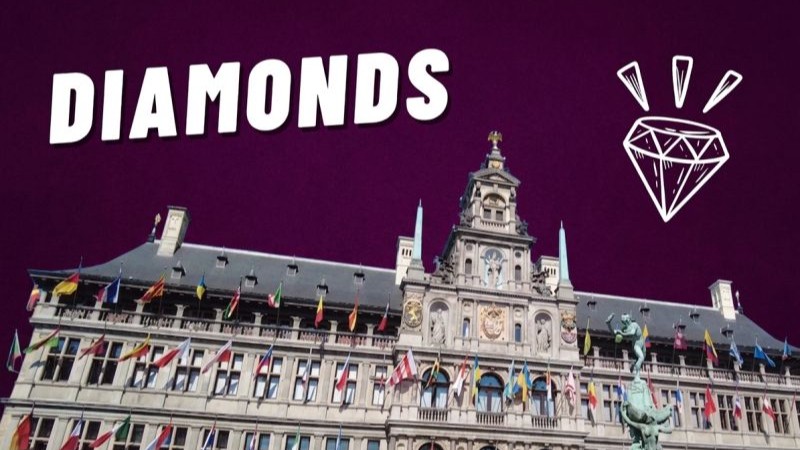
The global diamond industry has begun to turn a corner, with the first half of 2026 delivering a compelling narrative of cautious recovery. While the sector continues to navigate the aftershocks of a prolonged downturn, the latest data suggests that the worst may be behind us.
This detailed market analysis examines the signals emerging from Antwerp, the world’s historic diamond capital exploring what the rebound in polished prices, the ongoing pressure on rough, and the surge in trade volumes mean for industry stakeholders.
After consecutive quarters of correction, polished diamond prices have finally stabilized, registering a notable 12% year-over-year (YoY) increase in Q1 2026. This is the first clear sign of demand recovery since the market slump of 2024-2025. Multiple factors are driving this trend:
Supply Discipline: Major miners, including industry behemoth De Beers, have drastically slashed their 2026 production plans. By curtailing supply, they are helping to balance an oversaturated market.
This disciplined approach is creating a more favorable supply-demand dynamic for polished goods. Concurrently, other major producers like Russia’s ALROSA are also forecasting a significant production decrease of roughly 14% for 2026, further tightening the supply side of the equation.
Quality Over Quantity: The recovery is not uniform across all categories. Industry experts project a “moderate price recovery of 5–12% for cut diamonds through 2026, particularly for stones above 1 ct, D–H color, and VS2 or better clarity”.
Larger stones and higher-quality diamonds are leading the price recovery, as consumer preferences shift towards value and investment-grade pieces. A key industry analyst, predicts that “20 percent of diamonds will account for more than 80 percent of sales value” as the market bifurcates between high-value rare stones and lower-tier commodities.
Investor and Consumer Confidence: The stabilization of polished prices indicates that end-consumer demand, particularly in key markets like the U.S., is showing resilience after a period of low spending.
The fact that demand began improving in summer 2025 and has continued to strengthen through 2026 underscores this positive shift in sentiment. December 2025 marked a pivotal turning point when growth returned to the sector, an upward trajectory that has firmly continued into Q1 2026.
In stark contrast to polished stones, the rough diamond market remains under significant pressure. This disparity highlights a crucial point: rough prices are inherently dependent on polished demand. Until the polished sector’s recovery solidifies further, miners will continue to face a challenging environment.
Why the disconnect persists:
Inventory Overhang: Midstream manufacturers, especially in cutting and polishing hubs like Surat, India, have been sitting on high inventories of rough that they purchased at higher prices. They are reluctant to buy new rough until these existing stocks are cleared.
Liquidity Crunch: Access to bank financing for rough purchases has tightened, forcing dealers to be extremely selective.
Lab-Grown Disruption (A Shifting Paradigm): The continued, though evolving, pressure from lab-grown diamonds (LGDs) has disproportionately impacted the demand for lower-quality, more affordable natural rough stones. However, as the table below shows, the price gap has widened dramatically, and there are signs that the market for LGDs is maturing, which could eventually provide relief to the natural rough sector.
Natural Diamonds:
Polished prices up +12% YoY.
Rough diamond prices down -27% YoY.
Market showing early signs of stabilization.
Lab-Grown Diamonds:
Prices continue a sharp long-term decline.
Ongoing oversupply pressure.
Natural Diamonds: ~$4,200
Lab-Grown Diamonds: ~$1,000 (or lower)
Natural Diamonds: Declining but beginning to stabilize.
Lab-Grown Diamonds: Over 45% of engagement ring sales.
Lab-Grown Diamonds:
High affordability.
Larger stone sizes for the same budget.
Positioned with an ethical/sustainable narrative.
Natural Diamonds:
Recovery expected in high-quality, investment-grade stones.
Demand likely to polarize toward premium segments.
Lab-Grown Diamonds:
Continued price erosion due to oversupply.
Market may bifurcate as consumer sentiment gradually shifts back toward natural diamonds for long-term value.
Sources: BriteCo Report, World Diamond Council.
The volume of goods moving through Antwerp is the clearest testament to the market’s revitalization. The total trade volume in Antwerp grew by an impressive 19% year-on-year in Q1 2026, a powerful indicator of renewed global trading activity.
The detailed breakdown reveals a fascinating story:
Rough Imports: +36% - This massive surge is a powerful signal. While rough prices are still low, manufacturers and traders are betting on the polished price recovery. They are strategically accumulating rough inventory to cut and polish, anticipating that finished diamond prices will continue to rise, making their operations profitable once again.
Polished Imports: +14% - The increase in polished imports reflects growing confidence from international buyers, including U.S. jewelry retailers preparing for the crucial 2026 holiday season. It suggests that the end-market demand is improving, encouraging wholesalers to stock up from key centers like Antwerp.
Rough Exports: +4.4% & Polished Exports: +1.3% - The slower growth in exports compared to imports suggests a "stockpiling" effect. More goods are coming into Antwerp than leaving it, indicating that the city is once again acting as a central bank for diamond inventory, a role it plays during the early phases of a market recovery.
Geopolitical factors have also played an important role. The G7 and EU sanctions on Russian diamonds, which came into full effect in 2024, have forced a massive realignment of trade flows. Antwerp has been successful in capturing a portion of this redirected business, enhancing its status as a compliant and trusted hub.
Furthermore, policy changes, including better access for international traders, easier visa policies to attract top talent, and hiring support for skilled workers, are making Antwerp a preferred trading hub again after a period of perceived decline.
The recovery from the diamond industry’s multi-year slump has been gradual but is now firmly underway. The timeline below outlines the key milestones in this turnaround.
Antwerp is not just a passive beneficiary of improving market conditions; it is an active architect of its own resurgence. The city’s diamond district a dense cluster of three streets housing over 1,470 companies is leveraging several strategic advantages:
A Pro-Trade Environment: Proactive measures to simplify trade, including specialized visa programs for industry experts, have made Antwerp the most accessible hub for international diamond professionals.
Trust & Compliance: In an era of heightened regulatory scrutiny (G7/Russia sanctions), Antwerp’s commitment to compliance and transparency is a significant draw. The city is at the forefront of implementing blockchain and other traceability solutions to secure its supply chain.
Major gemological institutes are adapting to a market with both natural and lab-grown diamonds:
GIA (Gemological Institute of America): The world’s leading authority has shifted its stance, discontinuing the use of the traditional 4Cs grading system for LGDs. It now uses a distinct descriptive terminology to clearly separate natural diamonds from their lab-grown counterparts, emphasizing that its grading system was created for the “continuum of rarity of natural diamonds”.
IGI (International Gemological Institute): In counterpoint to GIA and HRD, IGI has reaffirmed its commitment to applying the universal 4Cs grading system “to all diamonds, whether natural or lab-grown,” providing a consistent benchmark for both markets.
For traders and buyers on a modern platform, these certifications and traceability features are built-in assurances of a diamond's authenticity, quality, and ethical journey.
CaratX, as a modern B2B marketplace, prioritizes secure, transparent, and compliant trading that aligns with these industry standards. Sellers can register on the CaratX marketplace to connect with a global network of vetted buyers here.
Is it a good time to invest in diamonds in 2026? The market is showing clear signs of recovery, with polished prices up 12% YoY. High-quality, investment-grade stones (1 carat+, D-H color, VS2+ clarity) are leading the recovery and may appreciate further. However, lower-quality, smaller stones face continued pressure, partly due to competition from lab-grown diamonds.
Why is Antwerp’s trade volume up if rough prices are down? The 19% surge in total trade volume (driven by a +36% jump in rough imports) indicates that manufacturers are stockpiling raw materials. They are betting that the polished price recovery will continue, making it profitable to cut and polish the cheaper rough stones now.
What’s the future of lab-grown diamonds for industry professionals? The LGD market is maturing. While it holds over 45% of the US bridal market, prices have collapsed (down as much as 96% since 2018), leading to significant oversupply. Some experts believe consumer preferences are shifting back to natural stones for their value retention, suggesting the LGD market may eventually bifurcate into highly affordable fashion/low-end jewelry.
How can I start selling or buying diamonds internationally? Modern B2B platforms offer the most efficient way. For sellers looking to access 18+ international countries, registering on a marketplace like CaratX provides a direct channel to B2B and B2C buyers worldwide. Buyers can shop a curated selection of natural diamonds and gemstones.
What is the most important factor driving the recovery? The central factor is the improvement in end-consumer demand (starting Summer 2025), which has allowed the midstream to clear inventory. This demand, combined with disciplined supply cuts from major miners like De Beers, has finally allowed polished prices to stabilize and rise.
The diamond industry is entering a new, more complex, and more transparent cycle. The Q1 2026 data from Antwerp sends an unequivocal signal that a recovery is underway, led by polished diamond prices and robust trade activity. However, the persistent pressure on rough reminds us that the recovery is fragile and disparate.
For businesses and investors, the path forward involves:
Focusing on high-quality, certified natural diamonds.
Leveraging trusted, compliant, and technologically robust trading hubs like Antwerp.
Utilizing modern, transparent B2B platforms like CaratX to access global markets efficiently,
whether you are looking to sell jewelry internationally, shop for gemstones at unbeatable prices, or source natural diamonds.
Aug, 06, 2022
Aug, 06, 2022
0 Comments
Please login to leave a reply.