

Understanding Diamond Color Hue: The Complete Guide to Fancy Color Diamond Grading
Home
News And Media Understanding Diamond Color Hue: The Complete Guide to Fancy Color Diamond Grading SHOP NOWHome
News And Media Understanding Diamond Color Hue: The Complete Guide to Fancy Color Diamond Grading SHOP NOWMay, 07, 2026 by Archit Mohanty 0 Comments
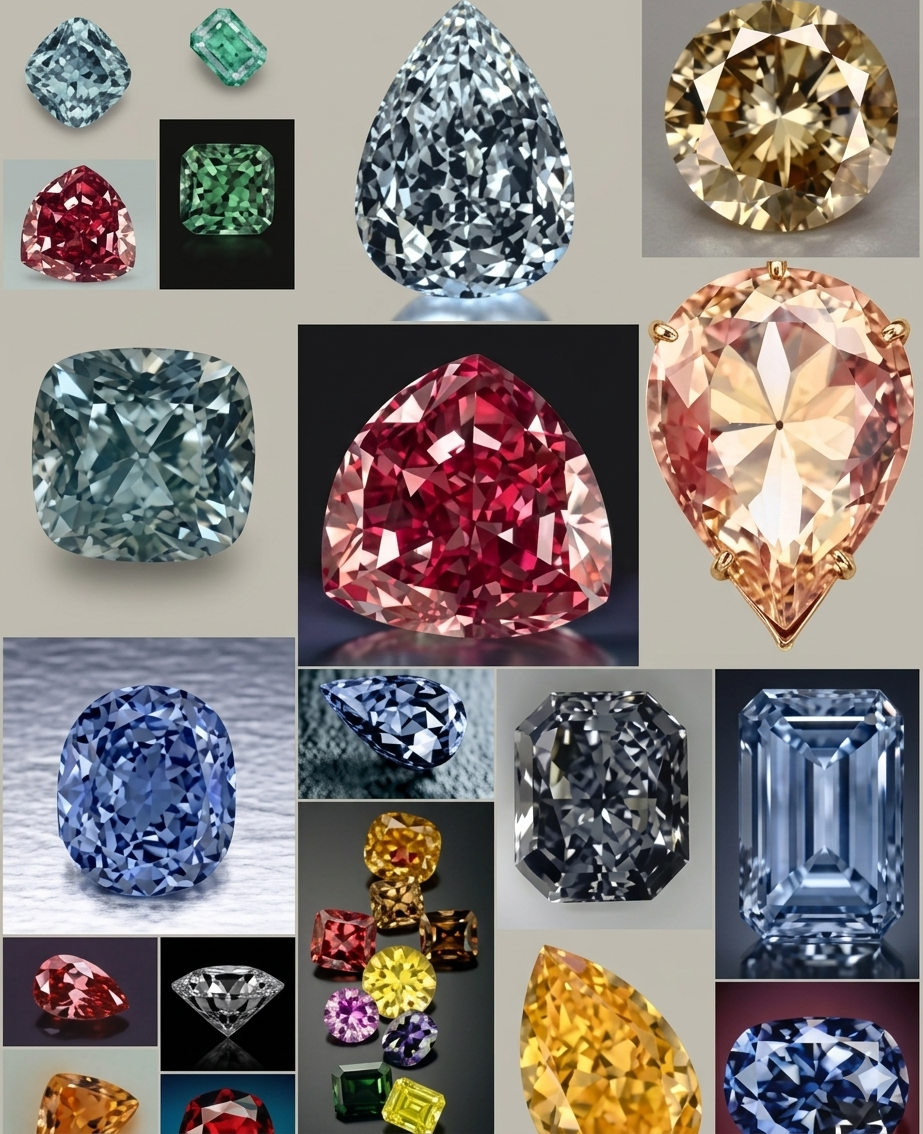
In the world of diamonds, color is king. While most people think of diamonds as colorless, some of the rarest and most valuable gems on Earth actually display stunning vibrant hues from delicate pinks and icy blues to intense yellows and even legendary reds. These extraordinary stones are known as fancy color diamonds, and understanding how their color is evaluated is essential for anyone looking to buy, sell, or simply appreciate these natural wonders.
This guide explains everything you need to know about diamond hue, the most important factor in fancy color diamond grading. You’ll learn how professional gemologists assess color, which hues are rarest and most valuable, and why these unique gems are capturing the attention of investors and collectors worldwide.
Before we dive into hue, it helps to understand what makes a diamond “fancy” in the first place.
The overwhelming majority of diamonds used in jewelry fall within the GIA D-to-Z color range, which measures the degree of colorlessness in a stone. Diamonds graded D (colorless) through Z (light yellow or brown) are considered “normal” color diamonds.
However, nature occasionally produces diamonds whose color intensity exceeds the Z grade or who exhibit entirely different hues altogether such as pink, blue, green, or red. These are called fancy color diamonds. Less than 0.01% of all natural diamonds achieve a high enough color saturation to be classified as fancy.
Instead of being evaluated based on the absence of color, fancy color diamonds are graded on the presence and intensity of their color. This fundamental difference requires a completely separate grading system.
According to the Gemological Institute of America (GIA),the world’s leading authority on diamond grading color is described using three distinct attributes: hu, tone, and saturation.
A systematic assessment of each attribute is essential for professional diamond grading, especially in gemstone classification.
First of all, hue defines the diamond’s characteristic color. In simple terms, it’s what you see at first glance, whether the stone looks pink, blue, yellow, or any other color in the visible spectrum. Understanding a diamond’s hue type is important for both purchase and sale, and appropriate management of its value helps decision-making.
Second, tone refers to the relative lightness or darkness of the color. Tone is measured on a scale from very light to very dark.
Third, saturation describes the depth and strength of the color how pure and intense it appears. A highly saturated diamond displays a rich, vivid color, while a less saturated stone may appear washed out or diluted.
Together, these three dimensions determine a fancy color diamond’s final grade. The GIA’s fancy color grading system, developed in the 1950s and later refined, recognizes 27 distinct hues and uses specific terminology to describe tone and saturation.
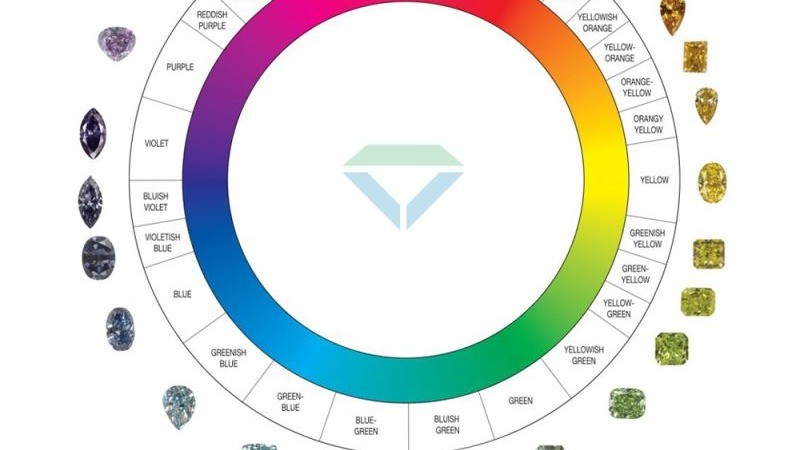
The GIA hue wheel organizes the full spectrum of diamond colors into 27 unique categories. These range from pure primary colors (red, blue, yellow) to blended hues like orangy yellow or bluish green.
The primary hue categories include:
Red
Pink / Purple / Violet
Blue
Green
Yellow
Orange
Brown
Each of these categories can be further subdivided. For example:
Yellow diamonds (common)
Green-Yellow diamonds (secondary green modifier)
Bluish Green diamonds (secondary blue modifier)
Orangy Pink diamonds (orange modifier on pink base)
The GIA system places these 27 hues on a color wheel that allows graders to precisely describe even the most subtle color variations.
Not every fancy color diamond shows a single, pure hue. Many exhibit what are called secondary colors or modifiers.
A modifier appears in the hue name before the primary color, such as:
Purplish pink (pink with a purple secondary hue)
Greenish blue (blue with a green modifier)
Orangy yellow (yellow with orange hints)
Bluish green (green with blue undertones)
The consistent presence of a modifier does not necessarily detract from the diamond’s beauty or value. In fact, some combinations like purplish pink or orangy yellow are highly sought after. However, in general, diamonds with pure, unmodified hues are rarer and command higher premiums than those with secondary modifiers.
Once the hue is identified, gemologists evaluate tone and saturation together to assign a color intensity grade. The GIA uses nine specific fancy grades:
Faint – barely noticeable color
Very Light – a soft wash of color
Light – more obvious but still subtle
Fancy Light – clearly visible color
Fancy – balanced, moderate color presence
Fancy Intense – strong, vivid color with noticeable depth
Fancy Vivid – exceptionally saturated and highly vibrant
Fancy Deep – rich, dark color with strong saturation but reduced brightness
Fancy Dark – very dark color similar to deep but even lower lightness
These grades derive from the combined effect of tone and saturation on the stone’s face-up appearance. The selection of a particular grade depends on the specific hue, because different colors reach their maximum saturation at different tone levels.
Among all grades, Fancy Vivid is generally the most valuable, followed closely by Fancy Intense and Fancy Deep. Achieving the Fancy Vivid grade indicates that a stone displays outstanding color saturation and purity.
Professional color grading is performed under highly controlled conditions to ensure consistency and accuracy.
At the GIA laboratory, trained graders place the diamond face-up in a grooved, matte-white, non-fluorescent tray inside a viewing box. This box eliminates visual distractions and shields external light. The light source is positioned directly above the diamond, and the grader views it approximately perpendicular to the table facet.
Using a set of color comparators known as masterstones the grader brackets the diamond’s hue, tone, and saturation to arrive at a precise grade.
This meticulous process guarantees that your fancy color diamond receives an accurate, unbiased assessment, which is essential both for insurance purposes and for establishing value.
Not all colors appear with equal frequency in nature. Rarity directly drives value, and some hues are exponentially rarer than others.
Red Diamonds are the rarest of all. Fewer than 30 gem-quality red diamonds are known to exist, most weighing less than half a carat. Their color arises from extremely rare structural irregularities within the crystal lattice, not from trace elements. True pure red diamonds are so scarce that many gemologists go their entire careers without seeing one.
Blue Diamonds are also exceptionally rare. Their color comes from trace amounts of boron incorporated into the diamond’s crystal structure deep within the Earth. The Hope Diamond is the most famous example. Blue diamonds primarily come from a handful of mines, including South Africa’s Cullinan mine and India’s Golconda region.
Green Diamonds owe their color to natural radiation exposure over millions of years. This unusual formation process makes them scarce as well. The Aurora Green diamond 5.03 carats, Fancy Vivid Green sold for $16.9 million at Christie’s.
Pink and Purple Diamonds, while more available than reds, are still in critically limited supply. The Argyle mine in Western Australia which produced over 90% of the world’s pink diamonds closed permanently in November 2020. Since the closure, the value of pink diamonds has surged an average of 50% to 60% in many categories. Pink diamonds now represent a finite, essentially extinct resource.
Orange Diamonds are also quite rare, especially those with no secondary modifiers. Pure orange diamonds are among the least commonly seen in the market.
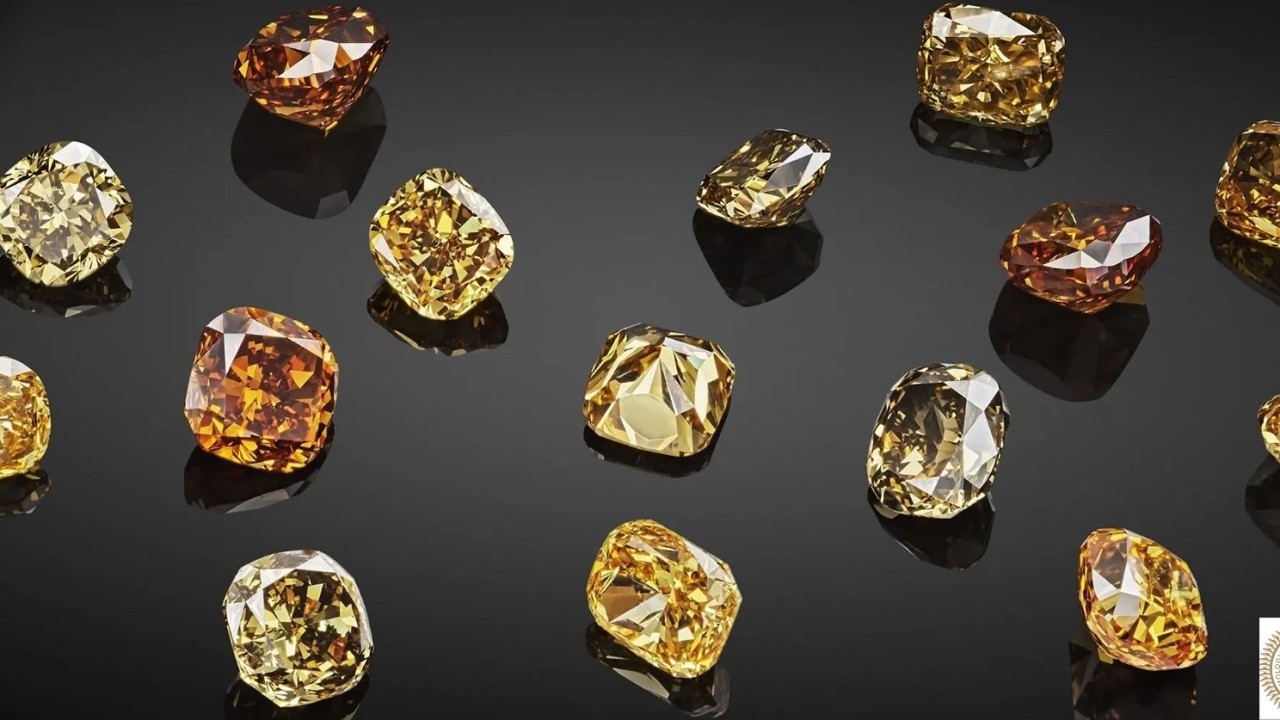
Yellow Diamonds are the most available among fancy colors. Yellow hues occur when nitrogen atoms substitute for carbon in the diamond’s structure. While still rare compared to colorless diamonds, yellow diamonds are far more common than pinks, blues, or greens. This relative abundance makes them more accessible to a wider range of buyers.
Brown Diamonds (often marketed as “champagne” or “cognac” diamonds) are the most common fancy color. Their color results from plastic deformation within the crystal during formation.
While hue is the most important factor in fancy color diamond valuation, it is not the only consideration. Other grading factors also affect price.
Saturation and Tone combine to create the final fancy grade, and as noted, Fancy Vivid and Fancy Intense command the highest premiums. A Fancy Vivid Yellow may be worth two to three times a Fancy Yellow of similar carat size and clarity.
Carat Weight matters greatly, as larger diamonds of any type are rarer than smaller ones. However, color usually outweighs size in importance. A smaller Fancy Vivid Pink diamond may be worth more than a larger Fancy Pink stone.
Clarity is less important for fancy color diamonds than for colorless diamonds. In fact, many fancy color diamonds have visible inclusions that would greatly lower the value of a colorless stone, but the presence of these inclusions is often overlooked in favor of color.
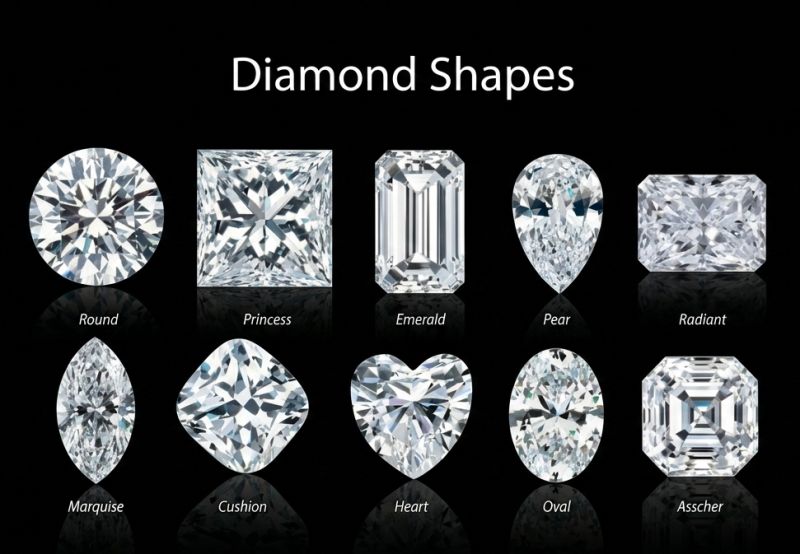
Cut is optimized not to maximize brilliance (as with colorless diamonds) but to present the best face-up color. Fancy color diamonds are often cut in custom shapes that concentrate color rather than light return, including cushion, radiant, and emerald cuts that help intensify the stone’s hue.
Origin is increasingly important, particularly for diamonds from closed mines. Argyle-origin pink diamonds carry an especially high premium today due to the mine’s closure. The GIA now offers origin reports that scientifically determine a diamond’s country of origin.
Treatment disclosure is also critical. Naturally colored diamonds are worth far more than treated ones, and GIA reports prominently disclose any treatments such as HPHT (High Pressure High Temperature) or irradiation. Always ensure that any fancy color diamond you consider comes with a GIA report or equivalent lab certification to verify natural color origin.
The fancy color diamond market has transformed dramatically in recent years, evolving from a niche collector’s interest into a serious global asset class.
According to industry data, prices for fancy colored diamonds surged 205% over two decades leading up to 2026. The Fancy Color Research Foundation (FCRF) reported that Fancy Vivid Pink diamonds saw some of the steepest price hikes in 2023, reflecting their heightened desirability among collectors.
The closure of the Argyle mine effectively capped global supply of pink diamonds permanently. From 2005 to 2025, top-grade pink diamonds appreciated an average of 18.6% annually, with overall growth exceeding 390% during that period. By 2026, at zero functional supply from Argyle, every certified pink stone had become a finite, irreplaceable asset.
Ultra-high-net-worth individuals are increasingly viewing fancy color diamonds especially pinks, blues, and pure reds as portfolio diversifiers, similar to fine art or rare vintage watches.
Whether you are looking to acquire your first fancy color diamond or you want to sell a collection, working with a trusted platform is essential.
When buying, always request a GIA grading report. For rare stones, also request an origin report to verify provenance. Pay attention to the fancy grade and the hue description. Understand that a Fancy Vivid grade is the most valuable, but Fancy Intense and Fancy Deep stones also offer excellent value depending on personal preference.
When selling, having your diamond independently recertified by GIA before listing gives buyers confidence. For rare pinks, blues, or greens, consider professional auction houses or dedicated B2B marketplaces like CaratX that connect you with international buyers.
CaratX provides a global platform for sellers to reach buyers in 18+ international countries.
Sellers can register on the CaratX marketplace to start selling natural diamonds, colored diamonds, jewelry, and gemstones directly to both B2B and B2C buyers worldwide.
Register to sell on CaratX marketplace
Shop natural diamonds on CaratX
Shop gemstones on CaratX at competitive prices
Explore CaratX seller plans for jewelry exports
View CaratX pricing information
Whether you are a collector, investor, retailer, or first-time buyer, CaratX makes international diamond and jewelry trading accessible, transparent, and secure.
Q1: What is the rarest fancy color diamond hue?
Red diamonds are the rarest, with fewer than 30 gem-quality specimens known to exist. Pure blues, pure pinks, and pure greens follow in descending order of rarity.
Q2: Which fancy grade is the most valuable?
Fancy Vivid diamonds command the highest prices. Fancy Intense and Fancy Deep are also highly valuable, while Fancy Light and Fancy are more affordable.
Q3: How can I tell if a diamond’s color is natural or treated?
Always request a GIA Colored Diamond Grading Report. The report will clearly state the “Origin of Color” as “Natural” or “Treated.” Treated diamonds are worth significantly less.
Q4: Are yellow diamonds worth buying?
Yes. Yellow diamonds offer an excellent entry point into fancy color diamonds. They are more affordable than pinks or blues while still providing stunning color and durability. Fancy Vivid Yellow diamonds are particularly valuable and can appreciate over time.
Q5: Does fluorescence affect fancy color diamond value?
For diamonds beyond Z (i.e., fancy color diamonds), fluorescence is less relevant than for colorless diamonds. Of far greater importance is the diamond’s natural hue, its saturation, and its evenness of color.
Q6: Why did pink diamond prices increase so sharply after 2020?
The Argyle mine, which produced over 90% of the world’s pink diamonds closed permanently in November 2020. That closure permanently capped the global supply of pink diamonds, turning them into an essentially finite resource that continues to appreciate in value.
Q7: What is the best way to start collecting fancy color diamonds?
Start with yellow diamonds or light pink diamonds. Work with a reputable seller, always obtain GIA certification, and consider buying through a trusted platform like CaratX that offers transparency and international reach.
Q8: How important is cut for fancy color diamonds?
Cut is important, but it’s evaluated differently than for colorless diamonds. The best cut for a fancy color diamond is the one that presents the richest face-up color, not necessarily the one that maximizes brilliance. Many fancy color diamonds use modified brilliant cuts or step cuts to concentrate color.
Diamond hue is the single most important factor in evaluating a fancy color diamond. Whether you are drawn to the romance of a pink diamond, the depth of a blue diamond, or the brilliance of a yellow diamond, understanding how hue interacts with tone and saturation will help you make an informed decision.
As global supply tightens and demand increases, fancy color diamonds are proving themselves not only as remarkable gemstones but also as serious alternative assets. By learning the GIA grading system and working with trusted partners like CaratX, you can confidently enter this fascinating market whether as a collector, investor, or admirer of nature’s rarest creations.
Ready to explore fancy color diamonds? Visit CaratX today to shop natural diamonds and gemstones, or register as a seller to offer your stones to buyers across 18+ international countries.
Explore diamond inventory on CaratX
Register to sell diamonds and jewelry worldwide
Shop gemstones at competitive prices on CaratX
Learn more about CaratX pricing plans
Image Credit - Fine Grown Diamonds
Jun, 18, 2026
Aug, 06, 2022
Aug, 06, 2022
0 Comments
Please login to leave a reply.