
How Premiumization Is Reshaping the US Diamond Market
Home
News And Media How Premiumization Is Reshaping the US Diamond Market SHOP NOWHome
News And Media How Premiumization Is Reshaping the US Diamond Market SHOP NOWApr, 01, 2026 by Archit Mohanty 0 Comments
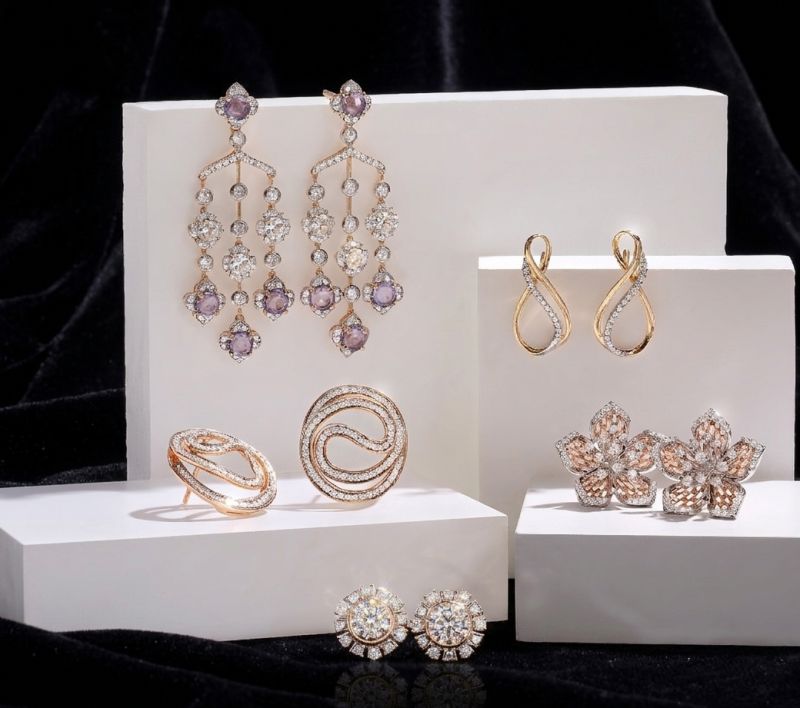
The numbers are in, and they paint a glittering picture of a market in transformation. Valentine’s Day 2026 delivered a remarkable 14% year-over-year surge in jewelry spending during the holiday week, while overall February sales climbed 10.7%. But beneath these impressive top-line figures lies a more nuanced story one that signals a fundamental restructuring of how Americans buy jewelry.
This isn’t simply about consumers spending more money. It’s about who is spending, what they’re buying, and what this shift means for everyone from independent jewelers to international diamond suppliers. Welcome to the era of jewelry premiumization and for sellers ready to capitalize on this trend, platforms like CaratX are becoming essential gateways to global markets.
Let’s start with the raw data that industry analysts at Tenoris, the leading jewelry industry data firm, have documented:
Valentine’s Week Jewelry Spending: +14% YoY
February Total Jewelry Sales: +10.7% YoY
Diamond Jewelry Sales: +12% YoY
Diamond Jewelry Average Transaction Value: +19% (highest ever recorded)
Finished Jewelry Revenue: +13% YoY
Average Spend Per Item: +20%
High-End Jewelry Demand (Jan 2026): +12%
Items Below $1,500: Declining in unit sales
The market is clearly shifting toward premiumization fewer items sold, but at significantly higher value per purchase.
The standout statistic? The average transaction value for diamond jewelry increased by nearly 19%, the largest year-on-year rise ever documented, surpassing even the post-COVID surge of 2022 .
This isn’t inflation alone. This is a behavioral shift.
The term economists use for what’s happening in the jewelry market is K-shaped growth. Picture the letter “K” the upper arm represents the high-end market, soaring upward; the lower arm represents the mass market, struggling or declining.
Upper Arm (Thriving):
Items priced $1,500 and above saw double-digit unit growth.
Luxury and mid-market independents captured most demand.
High-income consumers buying more pieces per transaction.
Tennis bracelets and wedding sets led category growth.
Lower Arm (Struggling):
Unit sales below $1,500 continued to decline.
Lower-priced jewelry facing persistent softness.
Entry-level diamond categories losing volume.
This bifurcation isn’t temporary. According to diamond industry analyst, this pattern has been emerging for three years and now represents a structural reality of the US market .
The concept of premiumization deserves a deeper look. In economic terms, premiumization occurs when consumers shift their purchasing toward higher-quality, higher-priced items within a category even if they buy fewer total units.
First observed during the Great Depression and again after the 2008 financial crisis, the Lipstick Effect describes how consumers during uncertain times gravitate toward affordable luxuries small indulgences that provide emotional comfort without the guilt of major extravagance.
However, today’s jewelry premiumization represents an evolution. Rather than “affordable luxuries,” we’re seeing consumers consolidate spending into fewer, more meaningful purchases with higher lasting value.
As researchers Mason, Moretti, and Raggiotto noted in their 2016 study on masstige (mass prestige) goods: “During hard economic times, people tend to buy less expensive prestige goods” but they do continue buying them, often trading up in quality while reducing frequency.
Fewer transactions, but larger tickets — Your customer count might drop, but revenue per customer rises.
Inventory strategy shifts — Stocking entry-level pieces may no longer drive profitability.
Sales training evolves — Staff must become trusted advisors capable of closing higher-value sales.
Marketing focuses on value, not price — Storytelling, craftsmanship, and longevity replace discount messaging.
One of the most fascinating dimensions of the current market is the divergent paths of natural and lab-grown diamonds.
Natural diamonds retained their premium positioning during Valentine’s Week, with Tenoris noting that “natural diamond jewelry performs better during ‘official’ periods of love”. This suggests that for emotionally significant occasions, consumers still gravitate toward the perceived authenticity and enduring value of mined stones.
Meanwhile, lab-grown diamonds (LGDs) continue carving their own path. According to Lombard Odier, the Swiss private bank, “Lab‑grown and natural diamonds share identical chemical and physical properties and are indistinguishable to the naked eye. When produced using renewable energy, Pandora estimates their carbon footprint to be 95% lower than mined equivalents” .
The market data shows:
LGD fashion jewelry now represents about 15% of fashion sales, nearly double last year’s penetration.
Prices for lab-grown diamond jewelry rose approximately 0.5% during Valentine’s week.
However, the vast majority of LGD demand remains in the $5,000-and-below bracket.
Signet Jewelers, parent company of Kay, Zales, and Jared, reported 6% same-store sales growth across its three largest brands, with lab-grown diamonds playing a meaningful role . The company noted that LGDs are “helping close historical assortment gaps while supporting higher average unit retail.
The US market isn’t moving in isolation. Understanding regional variations helps sellers identify opportunities.
Prioritize compliance and transparency.
Younger buyers increasingly prioritize sustainability credentials alongside aesthetics.
Established auction infrastructure supports vintage and estate jewelry markets.
Accounts for approximately 32% of the global luxury jewelry market.
In China, 37% of gold jewelry purchases are now for personal use rather than gifting a significant generational shift.
Younger buyers prioritize design flexibility, price transparency, and personalization.
Combines luxury affinity with sophisticated buyer knowledge.
Growing receptivity among younger buyers to sustainable materials.
Dubai is positioning itself as a hub for lab-grown diamonds through initiatives like the DMCC’s LGD Symposium.
For sellers looking to expand internationally, platforms like CaratX offer access to buyers across 18+ countries making it possible to tap into these divergent regional trends without establishing physical presence in each market.
With gold prices touching $3,300 per ounce in July 2025, gold jewelry has become an investment category unto itself .
If you’re a jewelry seller, manufacturer, or wholesaler, here’s how to position yourself for the premiumization era:
Shift focus toward $1,500+ price points.
Stock tennis bracelets and wedding sets, the categories showing strongest growth.
Consider reducing entry-level SKUs that may be losing profitability.
Premium buyers research extensively before purchasing.
Invest in high-quality imagery and detailed product descriptions.
Consider platforms like CaratX that connect you with international buyers register here to start selling to 18+ countries
Asia-Pacific offers growth opportunities, particularly for lab-grown and design-forward pieces.
Middle Eastern buyers appreciate sophisticated design and are increasingly open to sustainable materials.
As we look ahead, several factors will shape the continued evolution of the jewelry market:
The affluent consumer segment shows no signs of pulling back. High-end jewelry demand increased 12% in January 2026, and with geopolitical uncertainty persisting, tangible luxury assets like fine jewelry may continue to attract investment-minded buyers.
Natural diamonds will likely maintain their premium positioning for emotional occasions and heirloom purchases. Lab-grown diamonds will continue expanding in fashion jewelry and among younger, sustainability-conscious buyers.
Premiumization is the structural shift where consumers buy fewer jewelry items but spend significantly more per purchase. The strategy for success is no longer about moving volume it’s about capturing value through higher-quality, higher-priced pieces.
Yes particularly for emotionally significant occasions like Valentine’s Day and engagements. Natural diamonds perform better during “official” periods of love, while lab-grown diamonds capture share in fashion jewelry and everyday wear categories.
Lab-grown diamonds are redefining the market structure by offering sustainable, transparent alternatives. Rather than diluting the diamond category, they’re establishing a parallel segment while reinforcing the exclusivity of natural diamonds.
Items priced $1,500 and above saw double-digit unit growth in early 2026. The $5,000-and-below bracket remains the primary demand zone for lab-grown diamonds, while natural diamonds are seeing strong sales in 3-5 carat ranges.
Platforms like CaratX connect sellers with buyers across 18+ countries. You can register to start selling to both B2B and B2C buyers through the CaratX marketplace. Click here to register as a seller
Consumers increasingly expect verifiable proof of ethical sourcing. Blockchain platforms, physical tracers, and digital product passports are moving provenance from “narrative assertion to verifiable evidence” driven by both consumer demand and emerging regulations.
Tennis bracelets and wedding sets saw double-digit demand growth. Stud earrings also showed strong revenue gains. In the natural diamond segment, demand for larger stones (3-5 carats) is increasing.
With gold prices reaching record highs, gold jewelry is increasingly valued as a tangible luxury asset. Consumers are opting for higher karat gold (18-24k) and viewing gold pieces as both adornment and store of value.
The jewelry market is undergoing its most significant structural shift in decades. For sellers who understand the premiumization trend and position themselves to serve high-end buyers with quality products, transparent provenance, and seamless international reach the opportunities are substantial.
CaratX provides the platform to connect with buyers across 18+ international markets. Whether you’re selling natural diamonds, lab-grown gems, or finished jewelry, the CaratX marketplace offers the tools to scale your business globally.
Start selling to international buyers: Register on CaratX Marketplace
Shop natural diamonds: Explore our diamond collection
Discover gemstones: Visit CaratX gemstone marketplace
Learn about seller plans: Launch your products on CaratX
Follow CaratX for more insightful and educational content on the global diamond and jewelry market.
May, 26, 2026
Aug, 06, 2022
Aug, 06, 2022
May, 18, 2026
0 Comments
Please login to leave a reply.