

Understanding Pink Diamond Color Grades: Why Color Changes Everything
Home
News And Media Understanding Pink Diamond Color Grades: Why Color Changes Everything SHOP NOWHome
News And Media Understanding Pink Diamond Color Grades: Why Color Changes Everything SHOP NOWMay, 07, 2026 by Archit Mohanty 0 Comments
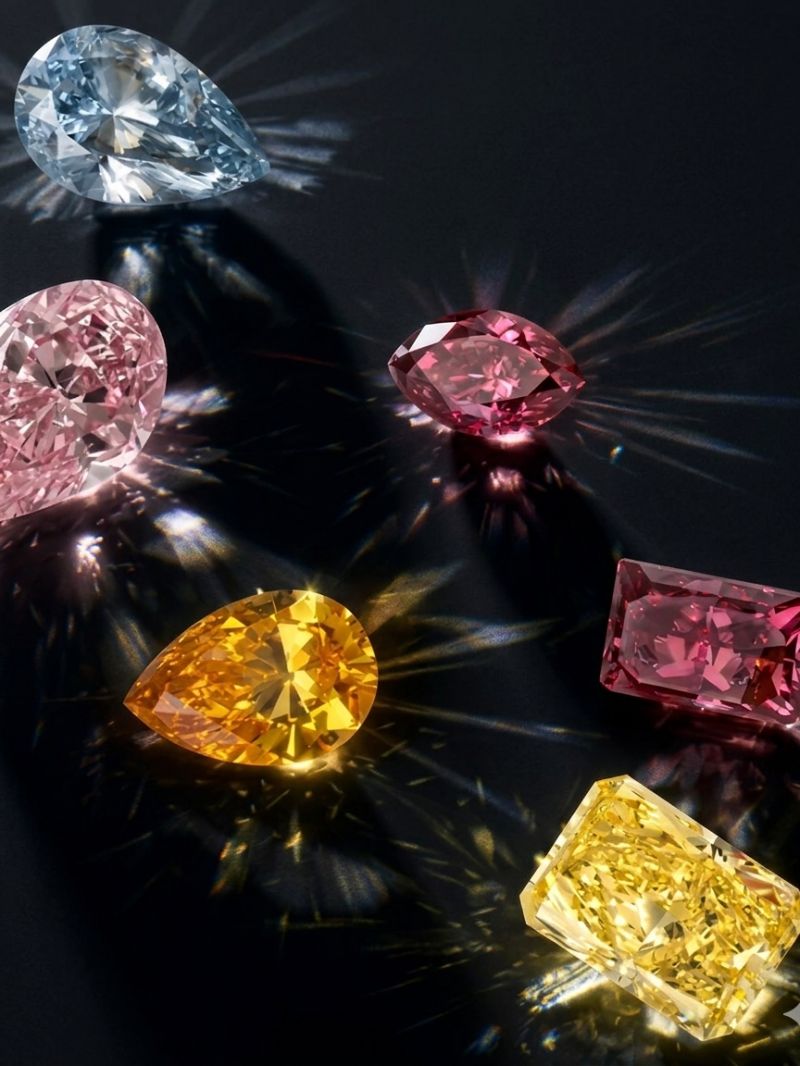
Pink diamonds are among the rarest and most coveted gemstones on Earth. Their delicate rosy hues, ranging from soft blush to vibrant magenta, have captivated collectors, investors, and jewelry enthusiasts for generations. But not all pink diamonds are created equal. In the diamond industry, color intensity is the single most important factor determining rarity, desirability, and ultimately, price.
While the traditional “4Cs” (Carat, Cut, Clarity, Color) apply to all diamonds, the evaluation of color in fancy pink diamonds follows a completely different framework than the D-to-Z scale used for white diamonds. The Gemological Institute of America (GIA), the world’s foremost authority on gemology, has established a specialized grading system specifically for fancy color diamonds one that evaluates color based on its presence rather than its absence.
This guide will walk you through everything you need to know about pink diamond color grading: how the GIA system works, what each color grade means for value and rarity, how pink diamonds have performed as investments, and what to look for when buying one. Whether you are a collector, investor, or jewelry buyer, understanding color is the key to making an informed decision.
Before we dive into color grades, it is important to understand what makes pink diamonds pink in the first place because their origin story is unlike any other diamond.
Most colored diamonds derive their hues from trace chemical elements. Yellow diamonds get their color from nitrogen atoms. Blue diamonds owe their mesmerizing shades to boron. But pink diamonds are different. The color of 99.5% of natural pink diamonds comes not from chemical impurities but from distortion in their crystal structure.
This phenomenon, known as plastic deformation, occurs deep within the Earth’s mantle when immense pressure and heat “squeeze” the diamond’s crystal lattice. This subtle distortion often visible as parallel colored bands called “pink graining”alters the way light travels through the stone, producing pink tones.
What makes pink diamonds exceptionally rare is that plastic deformation is a difficult process to replicate. Unlike nitrogen or boron impurities, there is no known method of replicating plastic deformation in a laboratory to produce naturally equivalent pink diamonds. This means every natural pink diamond is essentially a geological accident a perfect storm of heat, pressure, and chance that occurs only in a tiny fraction of all diamonds.
According to GIA research examining over 90,000 natural pink diamonds graded between 2008 and 2016, approximately 54% of unmodified pink diamonds received grades of faint to light pink, while only a small percentage achieved the rich, vivid colors that command the highest prices.
The GIA’s approach to grading fancy color diamonds is fundamentally different from its approach to colorless diamonds. The D-to-Z scale measures the absence of color; the fancy color system measures the presence of color.
GIA evaluates fancy color diamonds based on three key attributes:
Hue: The diamond’s dominant color (e.g., pink, blue, yellow) and any secondary modifiers (e.g., “purplish pink” or “orangy pink”).
Tone: The relative lightness or darkness of the color.
Saturation: The intensity or strength of the color.
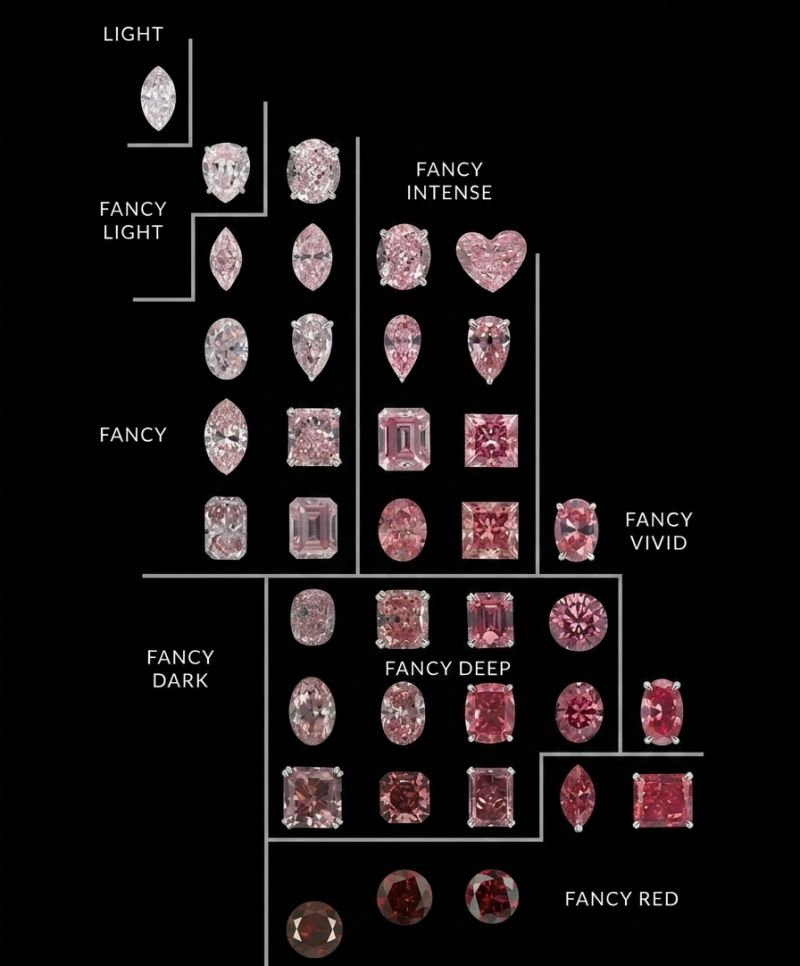
These three attributes combine to determine the diamond’s Fancy-grade term, which describes the overall effect of tone and saturation. The GIA fancy color scale includes nine primary grades, ranging from least to most intense:
Faint diamonds have color that is barely perceptible and often difficult to notice with the naked eye.
Very Light diamonds display a very subtle presence of color, giving only a soft hint of tint.
Light diamonds show a gentle and soft color appearance that is noticeable but not strong.
Fancy Light diamonds feature a delicate yet clearly visible color tone, offering a balanced and elegant look.
Fancy diamonds have a moderate and noticeable color intensity that stands out naturally.
Fancy Intense diamonds display strong, rich color saturation with a more vibrant appearance.
Fancy Vivid diamonds represent the highest level of color intensity and brilliance, making the color appear extremely vivid and striking.
Fancy Deep diamonds carry darker tones combined with strong saturation, creating a bold and luxurious appearance.
Fancy Dark diamonds have very dark tones with deep color concentration, giving them a dramatic and intense look.
For pink diamonds specifically, the most relevant grades for investment-grade stones are Fancy Light, Fancy, Fancy Intense, and Fancy Vivid.
Now let us examine each of the four primary pink diamond color categories in detail, including their characteristics, rarity, and market positioning.
Fancy Light Pink represents the entry level for investment-grade natural pink diamonds. The pink color appears soft and delicate, with a lighter tone that is clearly visible but subtle.
Characteristics: The color is often described as blush-like or pastel. These diamonds typically exhibit lower saturation and lighter tone compared to higher grades.
Rarity: While still extremely rare by any standard, Fancy Light Pink diamonds are the most “available” among the pink color grades. According to GIA data, most natural pink diamonds fall on the lighter end of the color spectrum.
Price Range: Around one carat, pink diamonds at the lower end of the color spectrum may trade in the range of 15,000 to15,000 to 20,000 per carat, while more saturated stones can begin closer to $30,000 per carat.
Target Audience: Ideal for first-time pink diamond buyers, engagement rings, and jewelry where a subtle, romantic pink tone is preferred.
At the Fancy Pink level, the pink color becomes significantly stronger and easier to notice. These stones represent a meaningful step up in both rarity and market value.
Characteristics: The color is moderate and saturated enough to be immediately recognized as pink without close inspection. These diamonds have moved past the “pastel” stage into true pink territory.
Rarity: Fancy Pink diamonds are significantly rarer than Fancy Light stones. They attract steady demand from collectors and luxury jewelry buyers worldwide.
Price Range: Prices for fancy pink diamonds can range from approximately 10,000 to 10,000 to 30,000 per carat, depending on the intensity and secondary color modifiers.
Pure Pink Premium: GIA notes that “pure pinks are more popular than diamonds that are purplish, orangy, brownish, or grayish,” meaning a true, unmodified Fancy Pink commands a premium over stones with secondary hues.
Fancy Intense Pink is where prices begin to rise sharply. This category represents rich, highly visible color saturation that immediately captures attention.
Characteristics: The color is strong and vibrant, with excellent saturation. These diamonds appear unmistakably pink even from a distance and under various lighting conditions.
Rarity: Fancy Intense Pink diamonds are substantially rarer than lower grades. Their rarity increases further when combined with high clarity and excellent cut.
Price Range: For a 1-carat natural stone, prices can range from 20,000 to 20,000 to 500,000+ depending on overall quality. The wide range reflects the significant impact that saturation depth has on value.
Investment Performance: According to industry data, Fancy Intense Pink diamonds have shown strong appreciation, with some reporting that “Fancy Intense and Fancy Vivid grades hold and appreciate in value best”.
Fancy Vivid Pink sits at the pinnacle of the pink diamond color scale. This grade represents the highest level of color intensity possible extremely rich, vibrant, and powerful color that radiates brilliance even from a distance.
Characteristics: The color is maximally saturated, with exceptional brightness. Fancy Vivid Pink diamonds are described as glowing to the human eye, with an unparalleled presence that distinguishes them from all lower grades.
Rarity: Only a very small number of Fancy Vivid Pink diamonds appear in the global market each year. Fancy-color diamonds make up less than 3% of all diamonds examined by the GIA, and within that tiny fraction, Fancy Vivid stones are the rarest of all.
Price Range: Fancy Vivid Pink diamonds can sell for 3 to 5 times more per carat than Fancy Light Pink stones. At major auctions, top examples have achieved over $5.2 million per carat.
Auction Records: The Williamson Pink Star, an 11.15-carat Fancy Vivid pink diamond, sold for $57.7 million at Sotheby’s Hong Kong in October 2022.
According to the International Gem Society (IGS), “All other value factors (clarity, cut, and carat) being equal, color drives a pink diamond’s price-per-carat worth. A single grade of difference can have a significant impact on price”.
No discussion of pink diamonds is complete without addressing the Argyle Mine in Western Australia. For nearly four decades, from 1983 to 2020, the Argyle Mine was the world’s only consistent source of natural pink diamonds. At its peak, Argyle produced over 90% of the world’s pink diamond supply.
The Argyle Diamond Mine operated from 1983 to 2020, making it one of the most historically significant diamond mines in the world.
During its operating years, the mine produced approximately 865 million carats of rough diamonds in total.
Less than 0.1% of the mine’s total production consisted of pink diamonds, highlighting their exceptional rarity.
Despite their rarity, the Argyle Mine supplied more than 90% of the world’s pink diamonds, dominating the global market for decades.
On average, the mine produced around 140,000 carats of pink diamond rough annually, although only a small portion was considered gem quality.
Pink diamonds accounted for just 0.1% of the total global diamond supply, making them among the rarest and most sought-after diamonds in existence.
Source:
When the Argyle Mine permanently closed in November 2020, global supply of pink diamonds was effectively frozen. The immediate and ongoing scarcity has driven dramatic price appreciation:
Argyle pink diamonds sold at tender appreciated by more than 500% over two decades, outperforming all major equity markets.
Since the closure, pink diamonds have shown average growth of 55% in value.
High-quality pink diamonds have shown a 391% value increase since 2005.
Research consistently demonstrates that color is the dominant value factor for pink diamonds by a significant margin.
The study found that “pink diamonds with different color grades could be sold at significantly different prices. Saturation and brightness affect the price of pink diamond greatly, and the price could be reduced by all kinds of modifying colors”.
The same research concluded that color is the most important factor influencing pink diamond price, with its impact “significantly greater than that of carat weight”.
What does this mean for buyers? While clarity, cut, and carat weight remain important, color saturation should be the primary consideration when evaluating pink diamonds for either personal enjoyment or investment purposes.
The table below provides approximate price ranges for natural pink diamonds based on color grade (prices per carat, estimated market conditions):
A Fancy Light Pink diamond weighing 1 carat typically ranges between $15,000 and $30,000. This grade is considered the baseline for pink diamond pricing, with a relative value multiplier of 1x.
A Fancy Pink diamond of the same size generally costs between $20,000 and $50,000. Due to its stronger color presence, it is usually valued at around 1.3x to 1.7x higher than a Fancy Light Pink diamond.
A Fancy Intense Pink diamond can command prices from $50,000 to over $250,000 per carat. Its richer saturation and greater rarity often make it worth 3x to 8x more than the baseline grade.
A Fancy Vivid Pink diamond represents the highest level of color intensity and rarity. A 1-carat stone can range from $200,000 to well over $1,000,000, with market values reaching 10x to 30x higher than a Fancy Light Pink diamond.
Prices vary widely based on carat weight, clarity, cut quality, secondary hues, and provenance (e.g., Argyle-origin stones command substantial premiums). These ranges are illustrative only and not a substitute for professional appraisal.
According to GIA’s pink diamond buying guide, truly fine pink diamonds those with saturated color, high clarity, and notable size are “exceptionally scarce.” The richest and most saturated colors, especially Fancy Vivid Pink and Fancy Intense Pink, are “the rarest and most valuable”.
When selecting a pink diamond, consider the following factors in order of priority:
Prioritize the highest color grade your budget allows. A smaller stone with Fancy Intense color will typically hold better value than a larger stone with Fancy Light color.
GIA grades pink diamonds with modifiers such as “purplish pink,” “orangy pink,” or “brownish pink.” Pure pink is generally most desirable, though purple-pink is also highly valued. Brownish or grayish modifiers reduce value.
Pink diamonds rarely have high clarity. The same plastic deformation that creates pink color often produces graining lines visible under magnification. Most pink diamonds are “not eye clean”. Accept reasonable clarity inclusions and focus on color.
Always purchase pink diamonds with a GIA Colored Diamond Report. As noted by the Fancy Color Research Foundation (FCRF), uncertified pink diamonds from non-Argyle sources recorded only 1% value gain over five years, while certified stones have shown strong appreciation.
If provenance is important to you, Argyle-origin pink diamonds carry a substantial premium due to their historical significance and permanently capped supply.
Pink diamonds have emerged as one of the strongest-performing luxury asset classes of the past two decades.
Key data points from authoritative sources:
Fancy pink diamonds soared 116% in value over the past decade, outpacing blues (81%) and yellows (21%), according to the Fancy Color Research Foundation (FCRF).
The overall fancy-color diamond index increased by 77% from 2009 to 2019.
Pink diamonds show “almost zero correlation with traditional stock markets or the banking sector, making them a crisis-proof hedge for ultra-high-net-worth individuals”
According to the Australian Diamond Portfolio, pink diamonds boast a 391% increase in value since 2005 and a staggering 18.6% average annual appreciation.
The 11.15-carat Williamson Pink Star broke the record price per carat for any diamond or gemstone sold at auction at $5.2 million per carat.
A: Fancy Vivid Pink is the rarest and most valuable pink diamond color grade. Only an extremely small number of Fancy Vivid pink diamonds appear on the global market each year.
A: Fancy Vivid Pink diamonds typically sell for 3 to 5 times more per carat than Fancy Light Pink stones. For exceptional examples, the multiplier can be even higher.
A: Yes, but only through secondary markets, auctions, and specialized dealers like CaratX. No new pink diamonds are being produced from Argyle, making existing stones finite and increasingly valuable.
A: No. Color is the dominant value factor. The plastic deformation that creates pink color often produces inclusions visible under magnification. Most pink diamonds are not eye clean, and reasonable clarity inclusions are acceptable focus on color intensity.
A: Fancy Intense indicates strong, rich color saturation. Fancy Vivid represents the maximum possible saturation with exceptional brightness the most intense and vibrant category in the GIA scale.
A: Yes, laboratory-grown pink diamonds exist, but they cannot replicate the plastic deformation that creates natural pink color. Natural pink diamonds remain significantly more valuable.
A: Pure pink is most desirable, followed by purplish pink. Brownish, grayish, or orangy modifiers typically reduce value.
A: Historical data suggests yes, particularly for Fancy Intense and Fancy Vivid grades. According to multiple studies, pink diamonds have significantly outperformed stocks, gold, and other asset classes over the past 15–20 years, though past performance does not guarantee future results.
At CaratX, we connect buyers and sellers with natural pink diamonds and other fancy color gemstones in a global B2B and B2C marketplace. Whether you are looking to purchase a pink diamond for personal enjoyment, add to your investment portfolio, or expand your jewelry inventory, our platform provides access to verified natural diamonds from trusted suppliers worldwide.
Buy natural pink diamonds — Shop now on CaratX
Sell diamonds and jewelry internationally — Register as a seller to reach buyers in 18+ countries
Sellers register here to start selling to B2B and B2C buyers — www.caratx.com/register
Shop gemstones from our CaratX marketplace at unbeatable prices — https://caratx.com/search-results/gemstones
Learn more about pricing — CaratX pricing and seller plans
Follow CaratX for more insightful and educational content on diamonds, gemstones, and jewelry. Connect with us on social media to stay updated on the latest market trends and investment opportunities.
May, 26, 2026
Aug, 06, 2022
Aug, 06, 2022
0 Comments
Please login to leave a reply.