
Introduction:
For decades, the round brilliant diamond has stood as the undisputed king of engagement rings and fine jewelry. Its unparalleled brilliance and timeless appeal made it the default choice for generations of buyers. But the diamond landscape is shifting beneath our feet. In 2026, we are witnessing something unprecedented in the history of diamond retail: the oval cut is closing the gap with the round like never before.
According to recent market data, round diamonds now account for approximately 26% of total diamond shape demand, while oval cuts have surged to an impressive 25%. This razor-thin margin represents a fundamental change in how consumers approach diamond purchasing. The era of unquestioning round diamond dominance is giving way to a more diverse, expressive marketplace where elongated fancy shapes are claiming their rightful place alongside the classic brilliant.
This guide explores the fascinating dynamics behind this shift, drawing on authoritative industry data, expert insights from the Gemological Institute of America (GIA), and real-world sales statistics from leading retailers. Whether you're a jewelry professional, an engaged couple, or simply a diamond enthusiast, understanding these trends will help you make informed decisions in today's evolving market.
The Numbers Behind the Shift:
Current Market Share Breakdown -
The most striking story of 2026 is the convergence of round and oval diamond popularity. Recent sales data from multiple industry sources paints a clear picture of changing consumer preferences:
Diamond Shape Market Share & Trends (2025)
1. Round Cut
Market Share: 26% – 62.9%
Trend: Still the #1 choice globally
Insight: Dominates across all segments, but share varies by pricing tier and region.
2. Oval Cut
Market Share: 11.6% – 25%
Trend: Fastest-growing fancy shape
Insight: Popular among modern buyers seeking a unique yet elegant look.
3. Emerald Cut
Market Share: 5.7% – 8%
Trend: Stable demand
Insight: Preferred by style-conscious and luxury-focused buyers.
4. Princess Cut
Market Share: 3.3% – 8%
Trend: Declining
Insight: Losing popularity compared to newer fancy shapes.
5. Pear Cut
Market Share: 5.9% – 8%
Trend: Growing
Insight: Rising demand, especially in east-west and modern settings.
6. Marquise Cut
Market Share: 1.1% – 8%
Trend: Resurging
Insight: Gaining traction through vintage-inspired designs.
7. Radiant Cut
Market Share: ~5.3%
Trend: Steady
Insight: Consistent performer with balanced appeal.
8. Cushion Cut
Market Share: ~3.7%
Trend: Sustained interest
Insight: Vintage aesthetics continue to drive demand.
Market share varies significantly between general consumer data and specialized retailers. According to Whiteflash, a leading online diamond retailer specializing in super ideal cuts, round brilliants represent 62.9% of their sales, with oval at 11.6% . Broader market data shows the gap narrowing further, with round at 26% and oval at 25% .
What These Numbers Really Mean -
The discrepancy between these figures reflects important market segmentation. The higher round percentage at specialized retailers like Whiteflash indicates that consumers prioritizing absolute maximum brilliance and cut precision still gravitate toward round diamonds. However, the broader market data suggests that when considering all jewelry purchases including fashion jewelry, right-hand rings, and non-engagement purchases oval cuts are achieving near-parity with rounds.
Together, round and oval diamonds now constitute over 50% of total diamond demand . This concentration at the top underscores the market's continued preference for brilliant-cut stones while revealing a significant appetite for the elongated elegance of oval shapes.
Round Brilliant Diamonds –
Why Round Dominates -
The round brilliant cut's enduring popularity is no accident. As the Gemological Institute of America (GIA) explains, the modern round brilliant cut features 57 or 58 precisely arranged facets designed to maximize brightness, fire, and sparkle. This scientific optimization for light performance remains unmatched by any other shape.
Key Round Diamond Attributes:
Maximum light return: The symmetrical facet arrangement captures and reflects light more efficiently than any other cut
Versatility: Complements any setting style, metal color, and finger shape.
Traditional appeal: Carries cultural weight as the "classic" engagement ring choice.
Predictable performance: Well-cut rounds consistently deliver exceptional brilliance.
The round brilliant's dominance extends beyond aesthetics. According to the Natural Diamond Council's 2026 report, round diamonds accounted for 62% of units sold across 2,500 US-based jewelers, with the average center diamond weighing 1.16 carats . This consistency across thousands of retailers confirms round's continued leadership in the bridal category.
What to Look for in a Round Diamond -
When selecting a round brilliant diamond, cut quality should be your primary consideration. The GIA emphasizes that well-cut round diamonds exhibit significantly more brightness, fire, and scintillation than poorly cut stones of equivalent color, clarity, and carat weight .
Oval Cut Diamonds –
The Rise of Oval -
The oval cut's journey from niche fancy shape to near-parity with round represents one of the most significant shifts in diamond history. According to Vogue India's 2026 trend analysis, ovals have been "boosted by TikTok and Hailey Bieber" and now "symbolize the 'bigger is better' mood" . The so-called "90210 ring" a massive oval solitaire became so widely replicated on social media that it sparked its own algorithmic trend.
Why Oval Cuts Are Winning Hearts:
Elongated silhouette: Creates an illusion of length, making fingers appear longer and more slender
Superior spread: An oval diamond typically appears larger than a round diamond of the same carat weight.
Brilliance factor: Modern oval cuts feature the same 57-58 facet arrangement as rounds, delivering comparable sparkle.
Oval diamonds typically cost 10-15% less than rounds of equivalent carat weight, color, and clarity..
What to Look for in an Oval Diamond -
Oval diamonds require careful evaluation beyond the standard 4Cs. The GIA identifies several critical factors specific to oval shapes :
1. The Bow-Tie Effect Perhaps the most important consideration when buying an oval diamond is the bow-tie pattern a dark area across the diamond's center that resembles a bow tie. According to GIA research, this effect occurs when your reflection blocks light as you look directly at the stone . A well-cut oval will exhibit minimal to no bow-tie pattern .
2. Symmetry Place an imaginary line down the length of the diamond and another across its center. The shape and faceting of all four quarters should be identical. The wings on either side should have the same degree of curve, and the rounded ends should form graceful semicircles .
Oval diamonds come in varying length-to-width ratios. Longer ovals are preferred by some buyers for their dramatic elongation, though they're harder to find because they're less practical to cut. Most buyers gravitate toward ideally proportioned ovals that balance elongation with brilliance.
Unlike marquise and pear shapes, oval diamonds lack sharp points, making them less prone to chipping a practical advantage for everyday wear.
The Fancy Shape Renaissance -
Beyond Round and Oval -
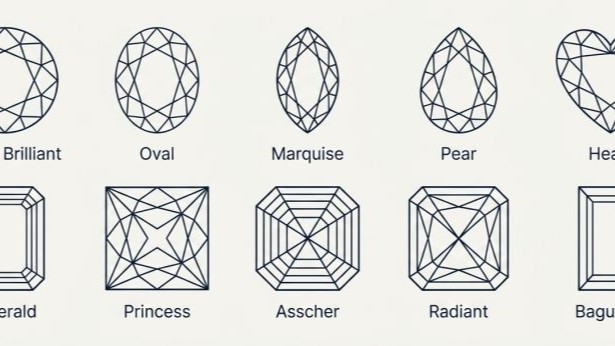
While round and oval dominate the market, the remaining 50% of demand distributes across a diverse array of fancy shapes, each with distinct characteristics and growing audiences.
Emerald Cut:
Emerald cuts represent the pinnacle of understated elegance. With their long, rectangular facets arranged in a step-cut pattern, emerald cuts prioritize clarity and sophistication over raw sparkle. According to the GIA, emerald cuts do not hide inclusions as well as brilliant cuts due to their large, open facets, making high clarity particularly important.
Emerald Cut Appeal:
Clean, architectural lines favored by style-conscious buyers.
Creates an elegant, elongated finger appearance.
Often appears larger than rounds of the same carat weight.
Pairs beautifully with baguette side stones.
Princess Cut:
The princess cut, created in 1981, features a modified brilliant facet arrangement that delivers electrifying sparkle and scintillation in a square format. While its popularity has cooled from peak levels in the 2000s, the princess cut remains a strong contender at 8% market share, particularly among buyers seeking contemporary square shapes.
Critical Considerations:
Pointed corners require protective prongs or bezel settings.
No culet facet means careful mounting is essential.
Modified brilliant faceting helps mask inclusions.
Pear Cut:
The pear shape an irresistible blend of marquise and round brilliant offers distinctive style with practical benefits. Worn with the point toward the fingertip, the pear cut creates a slimming effect and can make the hand appear more elegant.
What to Look For:
Symmetrical wings on either side of the point.
Rounded end forming a proper semicircle.
Minimal to no bow-tie pattern.
V-shaped prong for point protection.
Marquise Cut:
Named for the Marquise de Pompadour, mistress of King Louis XV, the marquise cut is experiencing a significant resurgence. According to Sotheby's jewelry expert Frank Everett, "There was a time when nobody wanted a marquise, and now they are popular again, especially in east-west settings" .
Marquise Advantages:
Maximum perceived size for carat weight.
Dramatic finger elongation.
East-west settings offer modern appeal.
Vintage glamour resonates with antique enthusiasts.
Radiant Cut:
Introduced in 1977, the radiant cut combines the fire of round brilliants with the clean lines of rectangular shapes. With cropped corners and a modified brilliant facet arrangement, radiant cuts deliver exceptional light performance while offering the silhouette buyers love in emerald cuts .
Generational Shifts
The Natural Diamond Council's 2026 report identifies Gen Z as "the fastest-increasing segment" in diamond jewelry . Defined by the Pew Research Centre as those born between 1997 and 2012, these consumers bring different values to diamond purchasing:
Self-purchase acceptance: Over 40% of women's natural-diamond jewelry sales by value are self-purchases
Individuality prioritization: Younger buyers actively seek shapes that stand out from traditional choices
Sustainability awareness: Interest in antique cuts and recycled stones reflects broader values
Digital-first research: Extensive online education precedes purchasing decisions
Yellow Gold's Renaissance -
The metal surrounding your diamond shapes its overall aesthetic, and yellow gold has made a remarkable comeback. According to Modern Luxury, "Yellow gold settings enhance warm tones, creating a softer, modern look" . This warm metal choice pairs exceptionally well with:
Oval diamonds (the Hailey Bieber effect).
Antique cuts that benefit from vintage-inspired settings.
Champagne and warm-toned diamonds.
Bezel Settings Gain Traction -
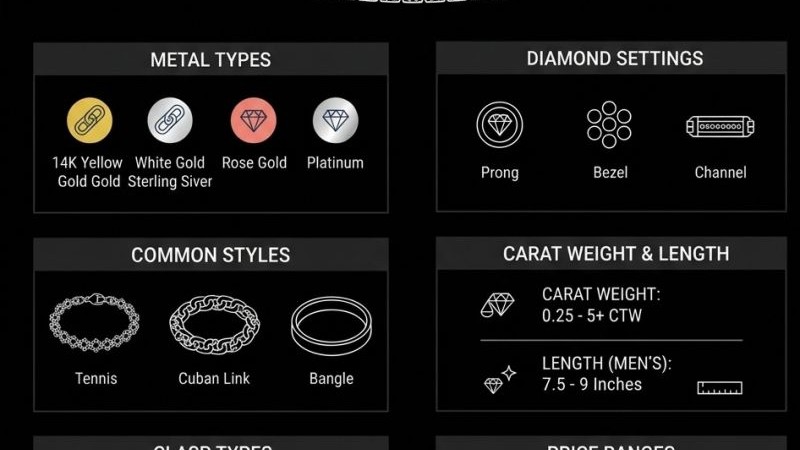
Bezel settings where a metal rim encircles the diamond have become "one of the most requested styles by modern brides" . Benefits include:
Contemporary, clean aesthetic.
Superior stone protection for active lifestyles.
Versatility across all shape categories.
Emphasis on metalwork as design element.
Value Optimization -
For buyers seeking maximum visual impact within budget constraints:
Oval and marquise offer the best perceived size per carat.
Fancy shapes generally cost 10-15% less than rounds of equivalent specifications.
Elongated shapes often allow for slightly lower color grades without noticeable warmth.
Consider antique cuts for distinctive character at competitive prices.
Lifestyle Considerations -
Your daily activities should influence your diamond shape selection:
Active lifestyles: Bezels protect stones; oval lacks sharp points vulnerable to chipping
Frequent hand use: Lower-set profiles reduce snagging risks
Professional settings: Understated shapes like emerald cut may suit conservative environments
Jewelry stacking: Consider how your engagement ring will pair with wedding bands
The Future of Diamond Shapes -
Emerging Trends to Watch
Industry experts identify several trends gaining momentum:
East-West Settings Diamonds set horizontally rather than vertically are "resurging," according to Sotheby's Frank Everett, offering "a subtle but confident alternative to the usual vertical orientation" .
Three-Stone Designs Modern three-stone rings focus on contrast and proportion, often pairing different shapes for balance. Emerald, pear, or baguette side stones with oval, round, or cushion centers create dimension while preserving meaningful symbolism .
Colored Diamonds and Warm Tones "People are much more open to warm diamonds now," notes designer Jenna Katz. "Champagnes, yellows, and even brown tones are beautiful and move away from that overly bright, white look" .
Antique Cuts Taylor Swift's antique cushion engagement ring "introduced an entire generation to Old Mine stones and accelerated the mainstream return of these historical cuts" . These stones offer irregularity, warmth, and scarcity that resonate with modern buyers.
Market Projections -
The Natural Diamond Council anticipates continued growth in the self-purchase segment, with Gen Z driving demand for distinctive designs . As younger consumers prioritize individual expression over tradition, fancy shapes particularly elongated silhouettes are likely to continue gaining share.
Making Your Diamond Purchase on CaratX -
As the diamond marketplace evolves, CaratX stands ready to connect you with exceptional stones from trusted sellers worldwide. Our platform simplifies the journey from education to acquisition, whether you're seeking:
Shop Natural Diamonds -
Browse our extensive collection of certified natural diamonds in all popular shapes. From classic rounds to trending ovals, our marketplace offers competitive pricing and verified quality.
Shop natural diamonds from here → www.caratx.com
Explore Gemstone Alternatives
Looking beyond diamonds? Our curated selection of gemstones offers exceptional value and distinctive beauty.
Shop gemstones from our CaratX marketplace at unbeatable prices → www.caratx.com
Sell Internationally -
For industry professionals, CaratX provides access to 18+ international countries, enabling seamless B2B and B2C transactions.
Sellers register on CaratX marketplace here to start selling to B2B and B2C buyers → www.caratx.com/register
Jewelry Selling Opportunities -
Expand your business globally through our comprehensive seller plan. You can now sell jewelry internationally to buyers through our CaratX seller plan → www.caratx.com/register
Pricing Information -
Understand our transparent fee structure before listing your inventory. More details about our pricing, check here → https://caratx.com/generic-pages/launch-your-products-on-caratx
Frequently Asked Questions
Q: Which diamond shape looks the largest for its carat weight?
A: Oval and marquise cuts offer the best perceived size per carat, typically appearing 10-15% larger than rounds of the same weight . Their elongated silhouettes maximize surface area and finger coverage.
Q: Are fancy shapes more expensive than round diamonds?
A: No fancy shapes generally cost less than rounds of equivalent carat weight, color, and clarity. The price difference ranges from 10-15% for ovals to even greater savings for marquise and pear shapes . This makes fancy shapes excellent value options for budget-conscious buyers.
Q: What is the bow-tie effect, and should I avoid it?
A: The bow-tie effect appears as a dark area across the center of elongated diamonds like oval, pear, and marquise. According to GIA research, a minimal bow-tie is normal, but prominent bow-ties indicate poor cutting that compromises brilliance . Look for well-cut stones where the bow-tie is subtle and doesn't detract from overall sparkle.
Q: Can I wear an oval diamond daily without worrying about damage?
A: Yes oval diamonds lack the sharp points found in marquise and pear shapes, making them more durable for everyday wear. Their rounded edges resist chipping, and they can be set securely in prong or bezel settings .
Q: How do I choose between round and oval?
A: Consider your priorities: choose round if maximum brilliance and traditional appeal matter most. Choose oval if you prefer an elongated silhouette, better finger coverage, and value savings. Trying both shapes on your hand often clarifies preferences.
Q: What setting styles work best with oval diamonds?
A: Oval diamonds are versatile across setting styles. Four-prong settings highlight the elongated shape, while bezel settings offer modern protection. East-west settings create contemporary drama, and halo settings add substantial finger coverage .
Q: Are lab-grown diamonds available in all shapes?
A: Yes, lab-grown diamonds are available in all shapes, including round, oval, emerald, and fancy cuts. CaratX offers both natural and lab-grown options to suit different preferences and budgets.
Conclusion:
The convergence of round and oval diamond popularity represents more than a fleeting trend, it signals a fundamental shift in how consumers approach diamond purchasing. Today's buyers arrive armed with education, inspired by social media, and committed to individual expression.
While the round brilliant maintains its crown for maximum brilliance and traditional appeal, the oval cut has emerged as a worthy challenger, offering exceptional value, modern aesthetics, and the elongated silhouette that flatters so beautifully.
Start your diamond journey today at www.caratx.com