

Diamonds Are Older Than Dinosaurs: A Geologist’s Timeline of Earth’s Hidden Treasures
Home
News And Media Diamonds Are Older Than Dinosaurs: A Geologist’s Timeline of Earth’s Hidden Treasures SHOP NOWHome
News And Media Diamonds Are Older Than Dinosaurs: A Geologist’s Timeline of Earth’s Hidden Treasures SHOP NOWMar, 11, 2026 by Archit Mohanty 0 Comments
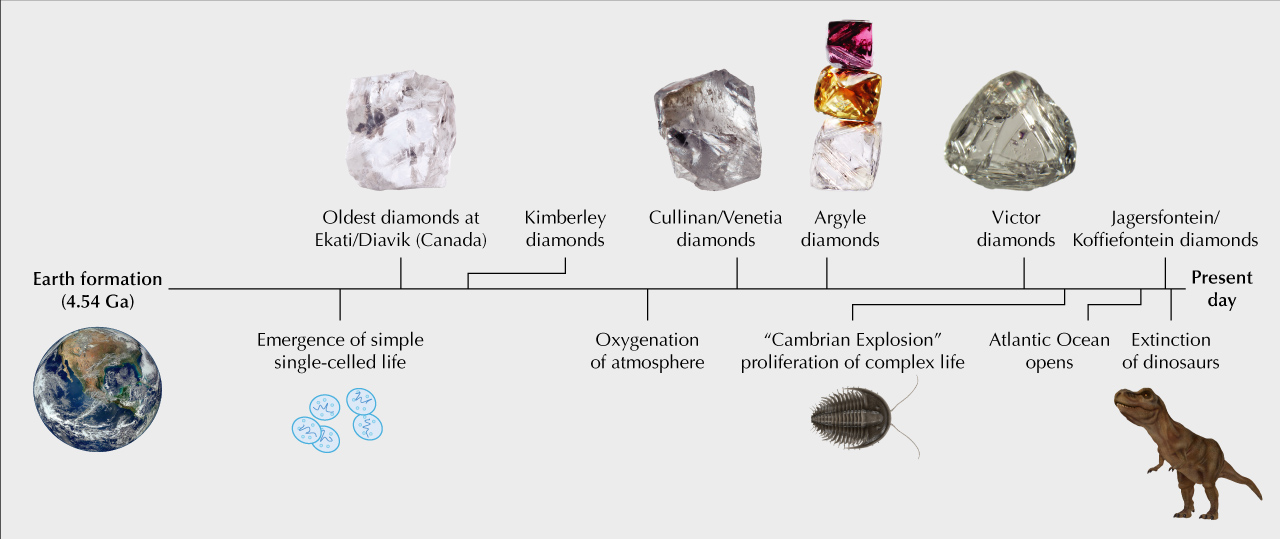
When we look at a diamond sparkling in an engagement ring or adorning a piece of fine jewelry, we see brilliance and luxury. However, few people realize that they are looking at a piece of our planet’s ancient past. The statement is true: Diamonds are significantly older than dinosaurs.
While the mighty T-Rex roamed the Earth a mere 66 million years ago, the diamonds we mine today were already ancient relics, formed long before the first scale appeared on a fish or the first leaf unfurled on land. In this detailed timeline, we will explore the geological journey of a diamond, from a carbon atom trapped in the Earth’s mantle to a coveted gemstone available on a global marketplace like CaratX.
Here is the incredible timeline of diamonds and Earth.
Our solar system was a chaotic swirl of cosmic dust and gas. Approximately 4.54 billion years ago, gravity began to clump these particles together to form our planet. In its infancy, Earth was a molten hellscape.
There were no continents, no water, and certainly no life. However, deep within this magma ocean, the fundamental ingredients for future diamonds carbon were present. As the planet cooled, the conditions deep inside the Earth’s upper mantle slowly began to develop the perfect environment for crystallization.
For a diamond to form, three things are needed: carbon, intense heat (above 1,000 degrees Celsius), and immense pressure (around 45 to 60 kilobars). These conditions exist naturally in the Earth’s lithospheric mantle, roughly 150 to 200 kilometers below the surface.
It is here that most of the world’s natural diamonds began their journey. Geologists and gemologists, including researchers from the Gemological Institute of America (GIA) have used inclusion dating to determine that many diamonds are between 1 and 3.5 billion years old. Some of the oldest stones ever discovered have been found in ancient cratons the stable, archaic cores of continents such as those in Canada.
In fact, the oldest diamonds found in North America were discovered in the Ekati and Diavik mines. These stones formed deep beneath the ancient continent of Laurentia, long before the Atlantic Ocean existed or the Rocky Mountains were born.
While diamonds were forming in the extreme heat of the mantle, something else was stirring on the surface. The first single-celled organisms began to exist in Earth’s oceans. For billions of years, while the continents drifted and reformed above them, the diamonds sat perfectly still in the mantle, waiting for a ride to the surface.
541 Million Years Ago: The Cambrian Explosion Life on Earth suddenly diversified. Complex life forms rapidly developed in the oceans. Trilobites, mollusks, and the first predators appeared. The continents were still clustered together in a landmass known as Gondwana.
This period was crucial for the diamond trade because it saw the formation of kimberlite pipes in some regions. The shifting of tectonic plates caused deep-seated volcanic activity that would eventually transport diamonds upward.
An asteroid struck the Yucatan Peninsula, triggering a mass extinction event that wiped out roughly 75% of life on Earth, including the non-avian dinosaurs.
Yet, the diamonds in the ground remained unchanged. By this time, a diamond that had formed 2 billion years prior had already existed for 1.934 billion years before the dinosaurs evolved, and then persisted through their entire reign and extinction. This is the definitive proof that every natural diamond you see at CaratX is a fragment of a world that predates every creature we know from fossil museums.
Humans have only been mining diamonds for a few thousand years, but the stones themselves are billions of years old. Here is how the major regions fit into the geological timeline:
Kimberley, South Africa (1860s-70s): The discovery of diamonds on the Orange River sparked a rush. These diamonds formed in the ancient Kaapvaal Craton and were brought up via Kimberlite pipes roughly 90 million years ago coincidentally, around the time the dinosaurs were dying out.
Cullinan & Venetia, South Africa: The Cullinan Mine is famous for producing the largest rough gem diamond ever found (3,106 carats). These diamonds are ancient, but the volcanic eruption that brought them up occurred about 1.2 billion years ago.
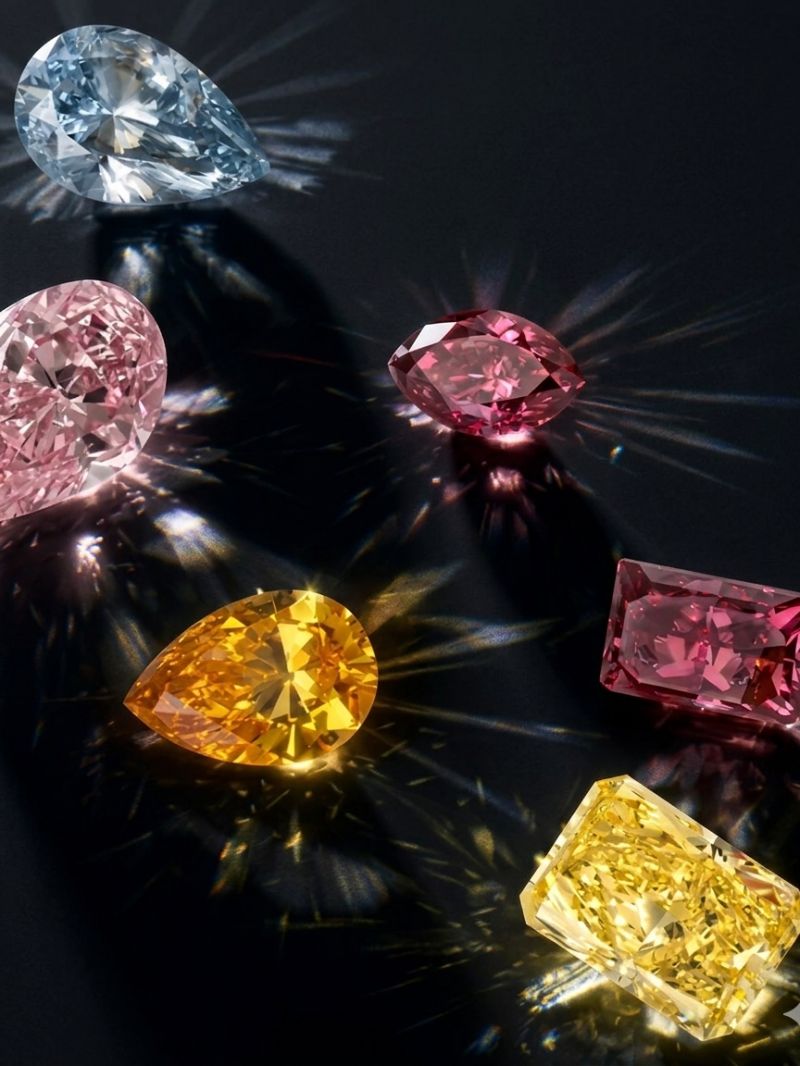
Argyle, Australia: Before its closure, the Argyle Diamond Mine [Insert Link to Australian Geological Survey Org article on Argyle] was the sole source of over 90% of the world's rare pink diamonds. These diamonds are roughly 1.58 billion years old. Their unique pink color is a result of a rare geological event (the collision of continents) that twisted the crystal lattice structure after the diamond had already formed.
Victor Mine, Canada: Located in the James Bay Lowlands, these diamonds are found in the ancient bedrock of the Superior Craton. Canadian diamonds are often marketed as the purest because they are younger geologically (brought up in the last few hundred million years) and contain fewer nitrogen impurities.
Today, the world produces roughly 120 million carats of rough diamonds each year. However, the journey from the mantle to your jewelry box is arduous. Only about 20% of mined diamonds are suitable for gem-quality jewelry; the rest are used for industrial purposes.
Once these rough stones are cut, polished, and certified, they enter the global supply chain. This is where CaratX bridges the gap between ancient geology and modern commerce.
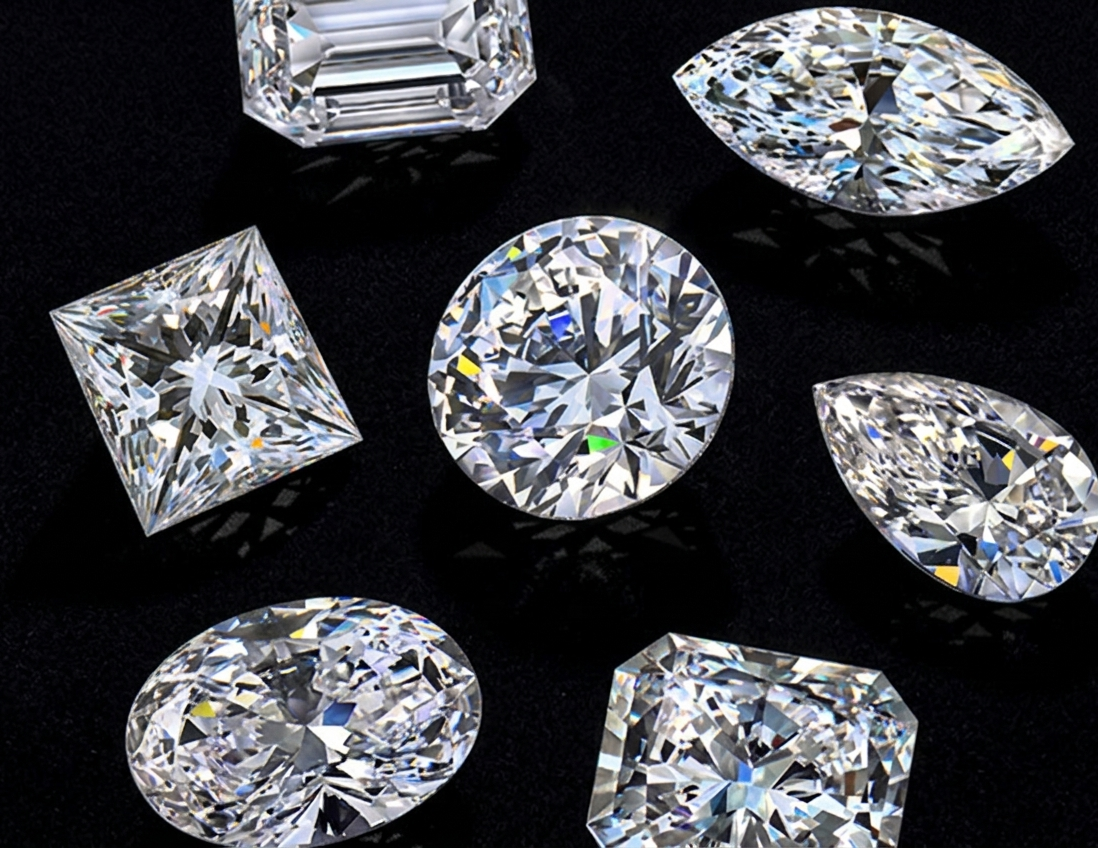
At CaratX , we connect buyers with the timeless beauty of these geological wonders. Whether you are looking for a specific cut for a jewelry collection or investing in loose stones, our platform offers transparency and access to a global inventory.
Because diamonds are a finite resource (they are no longer forming on Earth today), the secondary market and the polished trade are vital. If you are a business looking to enter the international market, CaratX provides the infrastructure.
For Sellers: Are you sitting on inventory that needs to reach a global audience? You can start selling to diamonds in 18+ International countries by registering on the CaratX marketplace. Our platform supports both B2B and B2C sales, allowing you to scale your business beyond local borders.
For Buyers: You don't need to be a geologist to appreciate a good deal. You can shop gemstones from our CaratX marketplace at unbeatable prices - https://caratx.com/search-results/gemstones
For more details about our Pricing and seller plans, check here: CaratX Pricing and Launch Page
Next time you hold a diamond, remember you are holding a piece of Earth’s ancient mantle, a silent witness to the formation of continents, the rise and fall of species, and the entire history of life on Earth. While the dinosaurs are long gone, the diamond endures, as brilliant as the day it was pushed towards the surface by forces of nature we are only beginning to understand.
Follow CaratX for such Insightful and educational content.
Scientists use radiometric dating on mineral inclusions found inside diamonds. These inclusions are tiny pieces of other rocks trapped during the diamond's formation. By dating these inclusions (often using isotopes of uranium and lead), we know the diamond formed 1 to 3.5 billion years ago. Dinosaurs went extinct 66 million years ago.
Natural diamonds form in the Earth's lithospheric mantle, at depths of approximately 150 to 200 kilometers (90 to 120 miles) below the surface. This is the "diamond stability zone."
A Kimberlite pipe is a volcanic chimney that brings diamonds from the mantle to the surface. The magma that forms these pipes travels at high speeds, picking up diamonds along the way. Most commercial diamond mines (like those in Kimberley and Ekati) are located in ancient Kimberlite pipes.
You can purchase certified natural diamonds and gemstones directly from verified sellers on the CaratX marketplace. Visit www.caratx.com to browse current inventory.
Yes. CaratX allows registered sellers to list their diamonds and jewelry for a global audience. You can register your business to sell in over 18 countries at www.caratx.com/register.
While the scientific process of diamond formation could theoretically happen today, the Earth's mantle has cooled significantly. The tectonic activity required to form gem-quality diamonds is not currently active in the way it was billions of years ago. Essentially, the diamonds we mine today are a non-renewable resource.
Image Credit - GIA
May, 26, 2026
Aug, 06, 2022
Aug, 06, 2022

0 Comments
Please login to leave a reply.