

The Diamond Loupe: The 10x Magnification Standard and Why It Matters in Gemology
Home
News And Media The Diamond Loupe: The 10x Magnification Standard and Why It Matters in Gemology SHOP NOWHome
News And Media The Diamond Loupe: The 10x Magnification Standard and Why It Matters in Gemology SHOP NOWMar, 10, 2026 by Archit Mohanty 0 Comments
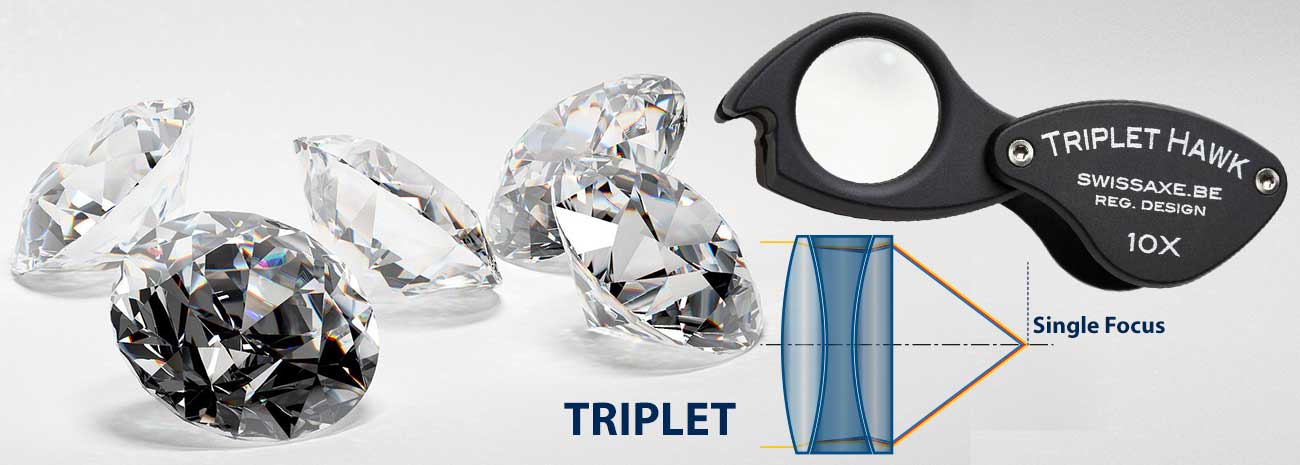
In the world of high-stakes gemology, where a single inclusion can devalue a stone by thousands of dollars, the loupe remains the undisputed king of diagnostic tools. While sophisticated machinery like spectrometers and digital microscopes exist, the humble handheld loupe is the first line of defense for any serious professional.
For centuries, the human eye has relied on magnification to separate treasures from trash. Today, the 10x loupe is not just a tool; it is the international standard for diamond grading as defined by leading authorities like the Gemological Institute of America (GIA).
At CaratX, we bridge the gap between traditional gemological expertise and modern global commerce. Whether you are a seller listing on our platform or a buyer inspecting a potential purchase, understanding how to use a loupe is fundamental to navigating the diamond trade.
A loupe is simply a small magnification device used by jewelers, watchmakers, and printers. However, in the diamond industry, it is the gatekeeper of value.
Unlike a standard magnifying glass, a professional jeweler's loupe is designed to be held close to the eye. It offers a high level of correction for distortion (known as chromatic aberration), ensuring that the user sees the stone with clarity.
You might wonder, "If a little magnification is good, is more magnification better?" The answer, according to international grading standards, is no.
The Standard: The diamond industry universally adopted 10x magnification as the standard for grading clarity. A diamond is considered "eye-clean" if no inclusions are visible to the naked eye, but it is officially graded as Flawless (FL) only if no inclusions or blemishes are visible under 10x magnification by a skilled grader.
The Reason: Using higher magnification (like 20x or 30x) would reveal microscopic features that are not visible to the naked eye in normal wear. Grading at higher magnifications would unfairly penalize stones that are, for all practical purposes, perfect.
According to the International Gem Society (IGS), a 10x triplet loupe (a lens made of three glass pieces fused together) is the preferred choice because it corrects for distortion and color fringing, providing a flat, sharp field of view.
While the "4 Cs" (Cut, Color, Clarity, Carat) are a marketing staple, they are also the technical pillars of grading. Here is how a professional uses a loupe to verify them.
This is the primary use of the loupe. The gemologist tilts the stone to look through the pavilion (the bottom part) to spot:
Crystals: Small mineral crystals trapped inside.
Feathers: Internal cracks or fractures.
Clouds: A hazy group of tiny pinpoint inclusions.
Needles: Long, thin inclusions that look like tiny rods.
A well-cut diamond reflects light perfectly. With a loupe, you can check the meet and point where the facets should come together at sharp, precise points. Misaligned facets indicate poor cutting, which reduces brilliance.
A loupe reveals surface-level issues that might not be visible otherwise:
Nicks and Chips: Damage along the girdle (the outer edge).
Polish Lines: Small surface scratches left from the polishing wheel.
Burn Marks: Whitish or hazy areas caused by excessive heat during polishing.
A loupe provides magnification, but light provides the truth. You cannot grade a diamond in the dark or under a standard ceiling light.
Professionals utilize different lighting environments to see different aspects of the stone. The Gemological Institute of America (GIA) often uses specific lighting conditions to ensure consistency across different graders.
White LED Lighting: This is the standard for modern gemology. It provides a cool, bright light that is excellent for spotting dark inclusions and determining the body color of the diamond.
Diffused Lighting: By passing light through a translucent material (like a white plastic cap over a light source), gemologists reduce glare. This is essential for studying the transparency and potential "milky" appearances in diamonds.
Fiber Optic Lighting (Spot Lighting): This is used to create a pinpoint of intense light. When this light hits the diamond, it exaggerates the scintillation (sparkle) and helps the grader see how light leaks or performs within the stone.
Professionals don't just hold the stone still. They tilt it forward and backward under the light. This technique, often called "rocking," allows light to enter at different angles, illuminating inclusions that might be hiding behind facets.
While a loupe is portable and efficient, professional grading laboratories use a combination of tools.
Loupe Inspection: Used for the initial pass and for verifying "eye-clean" status.
Darkfield Illumination Microscopes: Most labs, including the American Gem Society (AGS) laboratories, utilize binocular microscopes with darkfield illumination.
This involves lighting the diamond from the sides against a dark background, making inclusions glow brightly against a dark field, which is easier on the eyes and more precise for plotting inclusions.
At CaratX, we encourage sellers to have their diamonds certified by reputable labs like GIA or IGI before listing.
You can view our collection of certified natural diamonds here: https://caratx.com/search-results/Natural
Shop Natural Diamonds on CaratX - https://caratx.com/search-results/Natural
A 10× loupe and a gemological microscope are both essential tools used in gemstone and diamond examination, but they serve different purposes.
A 10× loupe provides a fixed magnification of 10 times, which is the industry standard for diamond grading. In contrast, a gemological microscope offers variable magnification, typically ranging from 10× to 60× or more, allowing gemologists to examine very fine internal details.
In terms of portability, a 10× loupe is compact and pocket-sized, making it ideal for jewelers, traders, and buyers who need to inspect stones during buying trips, auctions, or trade shows. A gemological microscope, however, is a stationary, bench-mounted instrument usually found in laboratories or professional gemology workspaces.
When it comes to usage, the 10× loupe is best suited for quick inspections and routine checks, while the gemological microscope is used for detailed gemstone grading, identifying inclusions, and plotting internal features with greater precision.
Lighting is another key difference. A loupe relies on external light sources, such as daylight or a desk lamp.
On the other hand, a gemological microscope includes built-in lighting systems, such as darkfield illumination, overhead lighting, and fiber-optic lighting, which help reveal internal characteristics more clearly.
Finally, there is a significant difference in cost. A 10× loupe typically costs between $20 and $200, making it affordable for most jewelers and traders. In comparison, a gemological microscope can cost anywhere from $1,000 to over $10,000, depending on its features and professional capabilities.
At CaratX, we are building the future of diamond and jewelry trade. We empower sellers to reach buyers in over 18 countries, but we also emphasize the importance of quality and transparency.
If you are a seller, understanding tools like the loupe ensures you can accurately describe your inventory. Misrepresenting a diamond's clarity can lead to returns and chargebacks. When you register with us, you gain access to a global B2B and B2C audience that expects high standards.
For Sellers: Ready to expand your business? Register your store today to start listing your diamonds and jewelry.
Sellers Register on CaratX Marketplace - www.caratx.com/register
For Buyers: Looking for gemstones or finished jewelry? Our marketplace offers competitive pricing on a wide variety of stones.
Shop Gemstones on CaratX Marketplace - https://caratx.com/search-results/gemstones
One of the most critical uses of a loupe and strong lighting is the detection of treatments. While some treatments (like fracture filling) are acceptable if disclosed, they drastically reduce the value of a stone if sold as natural and untreated.
Fracture Filling: Under a loupe with a bright light, filled fractures often display a "flash effect" flashes of rainbow or spectral colors that are not present in natural, untreated feathers.
Laser Drilling: To remove dark inclusions, manufacturers sometimes use a laser to drill a tiny tunnel to the inclusion and then bleach or dissolve it. Under magnification, a laser drill hole looks like a tiny, straight, transparent tunnel. If the tunnel is not filled, it will appear as a white tube.
HPHT Treatment (High Pressure High Temperature): While difficult to spot with a loupe alone (often requiring spectroscopy), HPHT-treated diamonds sometimes show a different fluorescence pattern or graining that a trained eye might catch under UV lighting combined with magnification.
To truly master diamond grading, one must look to academic and institutional sources. Here are some highly authoritative resources that discuss gemological tools and standards:
Gemological Institute of America (GIA): As the world’s foremost authority, GIA’s resources are the gold standard. Their research on diamond clarity and the history of the 10x standard is foundational. Learn more at GIA.edu
American Gem Society (AGS): The AGS Laboratories are known for their rigorous cut grading standards. Their articles on light performance provide deep insight into how lighting affects a diamond's appearance.
In an industry built on trust and beauty, the loupe serves as the ultimate truth-teller. It allows a buyer to verify the claims of a seller and allows a seller to confidently stand behind their product.
Whether you are peering through a 10x triplet loupe at an estate sale or examining a certified diamond listing on CaratX , the principles remain the same: magnification and light reveal the soul of the stone.
By adhering to these international standards, CaratX ensures that every transaction on our platform is built on a foundation of transparency. Whether you are buying or selling, you are participating in a global market that values precision.
Ready to join the global diamond trade?
Start Selling: www.caratx.com/register
Start Shopping: www.caratx.com
Q: Why is 10x magnification the standard and not 20x? A: The 10x standard was adopted by the GIA and CIBJO (World Jewellery Confederation) to ensure consistency.
Higher magnification reveals "features" that are not visible to the naked eye in normal wear. Using 20x would classify stones as imperfect that are actually "eye-clean," making the grading system too strict for the jewelry market.
Q: Can I use a cheap plastic loupe to grade diamonds? A: It is not recommended. Cheap loupes (usually single lenses) suffer from distortion and chromatic aberration (color fringing), which can obscure inclusions or create false ones. Professionals use a "triplet" loupe (three lenses bonded together) to ensure a distortion-free, color-corrected image.
Q: What is the difference between a "loupe clean" diamond and a "flawless" diamond? A: "Loupe clean" is a general trade term meaning that no inclusions are visible under 10x magnification. However, the official GIA grade of Flawless (FL) is stricter: it means no inclusions and no surface blemishes are visible under 10x by a skilled grader.
Q: Does CaratX verify the diamonds sold on the marketplace? A: CaratX is a marketplace that connects buyers and sellers. We encourage all sellers to provide certification from reputable laboratories (like GIA, IGI, HRD) for their diamonds. Buyers should always check the certification details provided in the listing.
View our listings here - www.caratx.com/register
Q: How does lighting affect the color of a diamond? A: Color grading is done under controlled lighting conditions specifically, D65 daylight-equivalent lighting (often fluorescent or LED without UV). Using warm, incandescent light can make a slightly yellow diamond look whiter, which is why professional grading environments strictly control the light source.
Image Credit - A. KRUSS Gemmologie Shop
May, 26, 2026
Aug, 06, 2022
Aug, 06, 2022
0 Comments
Please login to leave a reply.