

Understanding Today’s Diamond Inventory Landscape
Home
News And Media Understanding Today’s Diamond Inventory Landscape SHOP NOWHome
News And Media Understanding Today’s Diamond Inventory Landscape SHOP NOWApr, 02, 2026 by Archit Mohanty 0 Comments
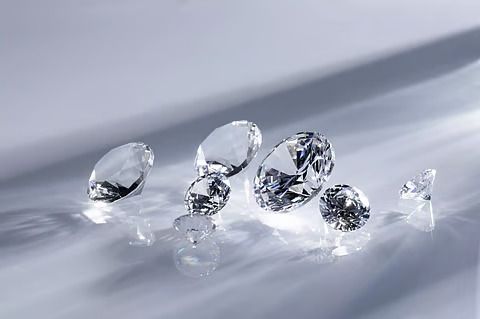
To grasp the current dynamics, one must first understand the composition of global diamond supply. The majority of polished diamonds available on the market fall into the mid-quality, mid-price range.
A detailed analysis of global inventory shows that G–J color diamonds, across clarity grades from IF through VS and SI, make up 58.4% of total supply. This segment dominates for a simple reason: it offers the most balanced combination of pricing and availability, making it the default choice for many mainstream retailers and wholesalers.
Inventory Share: 14.6%
Search Demand Share: 20.9%
Supply-Demand Balance: Severe shortage in the market Estimated 30–40% unmet demand.
Insight: Strong buyer interest Limited supply driving premium pricing.
Inventory Share: 58.4%
Search Demand Share: ~50%
Supply-Demand Balance: Oversupply in the market Slower inventory movement.
Insight: Most competitive segment Pricing pressure due to excess availability.
Inventory Share: 27.0%
Search Demand Share: ~29.1%
Supply-Demand Balance: Market stagnation Heavy discounting required to sell.
Insight: Weak demand Buyers shifting toward better quality or alternatives.
However, the dominance of this mid-segment masks a more complex reality. As noted in industry analyses, long-term demand remains intact, particularly at higher price points, but survival will depend on sharper differentiation, renewed marketing focus, and a conscious effort to protect the luxury perception that has underpinned the category for decades.
While mid-range diamonds dominate supply, buyer behavior tells a very different story. Search data reveals a clear and growing preference for the highest echelons of diamond quality. D–F color diamonds with IF–VVS clarity account for 20.9% of all buyer searches yet they represent only 14.6% of total available inventory.
This gap between what buyers want and what is available is not a minor discrepancy. It signals a supply shortage for top-quality diamonds that is likely to persist. Across several premium categories, search demand for high-end natural diamonds exceeds supply by an estimated 30% to 40%. This imbalance is not a temporary blip, it reflects a fundamental shift in consumer priorities.
High-quality diamonds in the D–F and IF–VVS ranges are not just in high demand, they are selling faster. Industry data confirms that these premium stones often experience quicker turnover compared to average inventory, meaning they spend less time on the market and command stronger pricing power. Rapaport's market commentary further reinforces this trend, noting that demand is increasingly split, with 2-carat and larger stones showing notable resilience while smaller goods face steeper declines.
Despite the excitement around premium stones, it would be a mistake to dismiss the mid-range. G–J VS–SI diamonds remain the core of global trading volume, they are the engine that keeps the wholesale market running. However, this segment is not immune to the broader trend. These stones are seeing slower movement than in previous years, and sellers are increasingly forced to offer higher discounts to move inventory.
The sheer volume of mid-quality supply means that differentiation through certification, cut quality, or competitive pricing has become essential for success in this tier.
At the bottom of the pyramid, lower-quality diamonds are facing significant headwinds. These stones are experiencing slower movement and substantially higher discounts, as buyers increasingly reject inferior goods in favor of quality. In a market where even mid-tier stones face pressure, lower-quality inventory has become increasingly difficult to sell without steep markdowns.
No discussion of the diamond market today is complete without addressing the lab-grown phenomenon. The impact has been dramatic: lab-grown diamonds have crossed the 50% market share in U.S. engagement rings by unit sales, a stunning reversal from just 3% in 2018. Prices for lab-grown stones have collapsed, falling 74% between 2020 and 2024, driven by a more than 300% expansion in global production capacity.
While this has put significant pressure on the lower end of the natural diamond market, it has had a paradoxical effect at the top. As one industry analysis notes, "lab-grown diamonds aren't merely disrupting the market; they're forcing a fundamental redefinition of luxury, authenticity, and consumer psychology". The availability of cheap, mass-produced synthetics has actually clarified the value proposition of premium natural diamonds, making their rarity, geological authenticity, and investment potential more salient to discerning buyers.
The Gemological Institute of America's (GIA) decision to abolish traditional 4Cs grading for lab-grown diamonds effective late 2025 has further widened the gap. By assigning lab-grown stones only broad descriptive ratings like "good" or "standard," GIA has reinforced the message that natural diamonds alone merit the precise, granular quality assessment that underpins their value.
The message for diamond sellers is unambiguous. Success in this market requires:
Prioritizing GIA-certified premium inventory – D–F color, IF–VVS clarity stones are the most sought-after and will command the strongest pricing. For sellers looking to optimize their portfolio, CaratX offers access to high-quality GIA-certified diamonds that meet the most demanding buyer specifications.
Differentiating mid-range offerings – With G–J VS–SI diamonds in abundant supply, success depends on superior cut quality, competitive pricing, and transparent certification.
Avoiding accumulation of lower-quality goods – These stones are increasingly difficult to move without significant discounts, and inventory carrying costs can quickly erode margins.
The days of local or regional selling are over. Sellers need access to international buyers across multiple markets to maximize velocity and pricing.
Sellers register on CaratX marketplace here to start selling to B2B and B2C buyers in 18+ international countries, gaining exposure to a global audience actively seeking premium inventory.
For buyers, whether retailers, wholesalers, or end consumers, the current environment presents both opportunities and risks. Premium natural diamonds offer:
Store of value potential – Top-quality natural diamonds have historically demonstrated resilience, with D–F color stones maintaining stronger pricing through market cycles. Investment-grade diamonds continue to attract attention from sophisticated investors exploring alternative assets.
Scarcity-driven appreciation – With De Beers cutting production forecasts from 30–33 million carats to just 20–23 million carats in 2025, the supply of new premium rough is contracting significantly.
Curate your inventory aggressively. Reduce exposure to lower-quality goods and focus on GIA-certified premium stones.
Leverage global marketplaces. Platforms like CaratX provide access to international buyers seeking exactly the premium inventory that is in shortest supply.
Start selling globally with CaratX and reach buyers across 18+ countries.
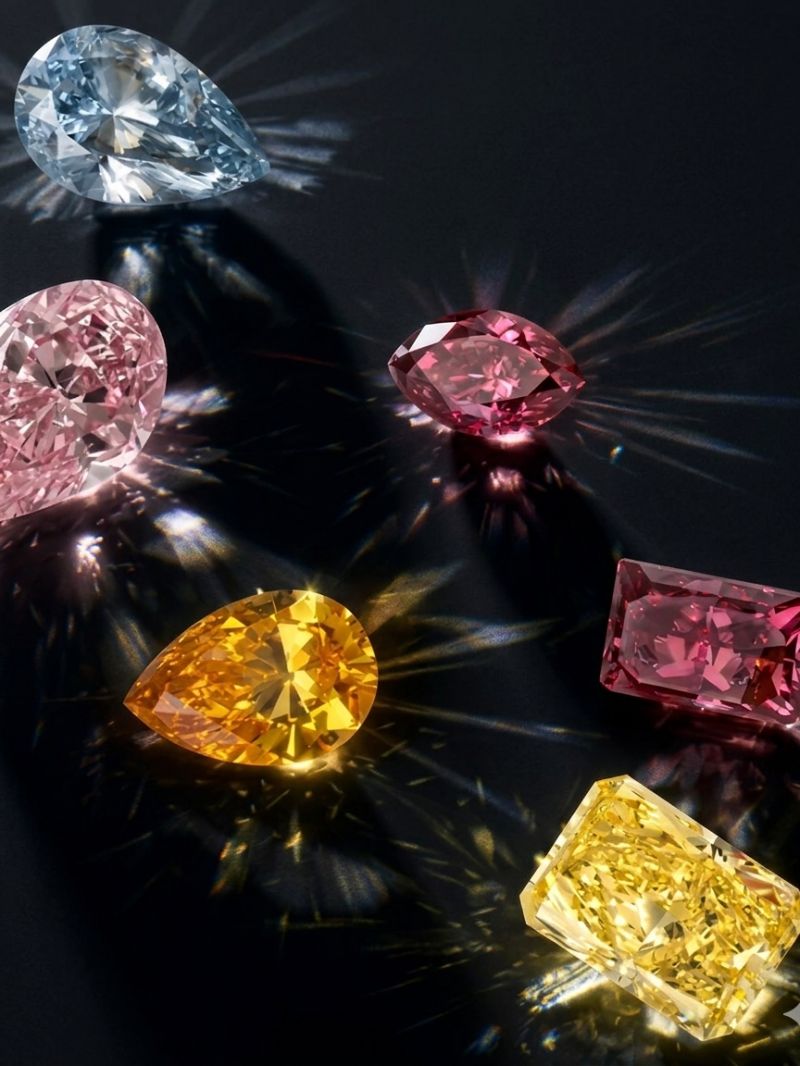
Beyond white diamonds, fancy colored diamonds particularly pink, blue, and yellow stones are fetching premium prices and may offer additional opportunities.
Shop gemstones on CaratX to expand your product range.
Prioritize certified stones. GIA grading reports provide the objective quality assessment that underpins value and facilitates resale.
Focus on the 4Cs. Understanding the GIA's internationally recognized 4Cs (Color, Clarity, Cut, and Carat Weight) is essential for making informed purchasing decisions. The GIA's official Diamond Clarity Scale includes 11 grades, with most diamonds falling into the VS or SI categories.
The D-to-Z color scale ranges from colorless (D–F) to light yellow or brown (S–Z). CaratX's buyer's guide to loose diamonds provides a comprehensive walkthrough of these quality factors.
Look beyond the 4Cs. Cut quality often called the 4th C has the greatest impact on a diamond's brilliance and sparkle. An "Excellent" cut grade can make a significant difference in a stone's visual performance, regardless of its color or clarity.
Premium natural diamonds are not just beautiful they are rare, finite, and increasingly recognized as a distinct asset class.
Yes, but with important caveats. Premium-quality natural diamonds (D–F color, IF–VVS clarity, 2 carats and above) have shown resilience and are benefiting from supply constraints and shifting consumer preferences. However, lower-quality stones have underperformed, and investors should view diamonds as a long-term store of value rather than a short-term speculative asset.
The global diamond market is projected to grow from USD 106.76 billion in 2026 to USD 153.1 billion by 2034, reflecting continued demand, particularly for premium segments.
Lab-grown diamonds are chemically and physically identical to natural diamonds, but they lack scarcity. Their prices have fallen dramatically a 1.0-carat D/VVS2/3EX lab-grown diamond now retails for approximately USD 280–320, compared to roughly USD 7,050 at wholesale for a comparable natural stone.
Lab-grown diamonds do not hold value over time, whereas premium natural diamonds have historically maintained their worth.
The Kimberley Process (KP) is an international certification scheme established in 2003 to prevent the trade of conflict diamonds. It certifies rough diamonds as "conflict-free" based on internal controls required from member states.
While the KP has faced criticism for being slow to adapt, it remains the foundational framework for ethical diamond sourcing. Sellers on CaratX are encouraged to maintain compliance with these standards.
Selling diamonds internationally requires access to global buyers, competitive pricing, and efficient logistics. CaratX simplifies this process by connecting sellers with B2B and B2C buyers across 18+ countries.
Sellers register here to list their inventory, manage pricing, and access a worldwide customer base - www.caratx.com/register
Seller selling to B2B and B2C buyers in 18+ countries by registering here - www.caratx.com/register
CaratX Marketplace - www.caratx.com, Browse and shop natural diamonds and gemstones.
Lab-Grown Diamonds Education - https://caratx.com/blog-category-posts/news-and-media
Diamonds Pricing Information - https://caratx.com/generic-pages/launch-your-products-on-caratx
Seller plan details and fees - https://caratx.com/generic-pages/launch-your-products-on-caratx
The diamond market is not in decline, it is in transformation. For sellers and buyers who understand the new dynamics and act strategically, the opportunities have never been clearer.
Follow CaratX for more insightful and educational content on the global diamond trade.
May, 26, 2026
Aug, 06, 2022
Aug, 06, 2022
0 Comments
Please login to leave a reply.