
The natural diamond market today is beginning to show clear signs of stabilization after several turbulent years. While the broader commercial segment continues to face headwinds, premium categories across key global markets are experiencing renewed demand from discerning buyers who increasingly prioritize rarity, certification, and quality over volume.
2026 Price Trends:
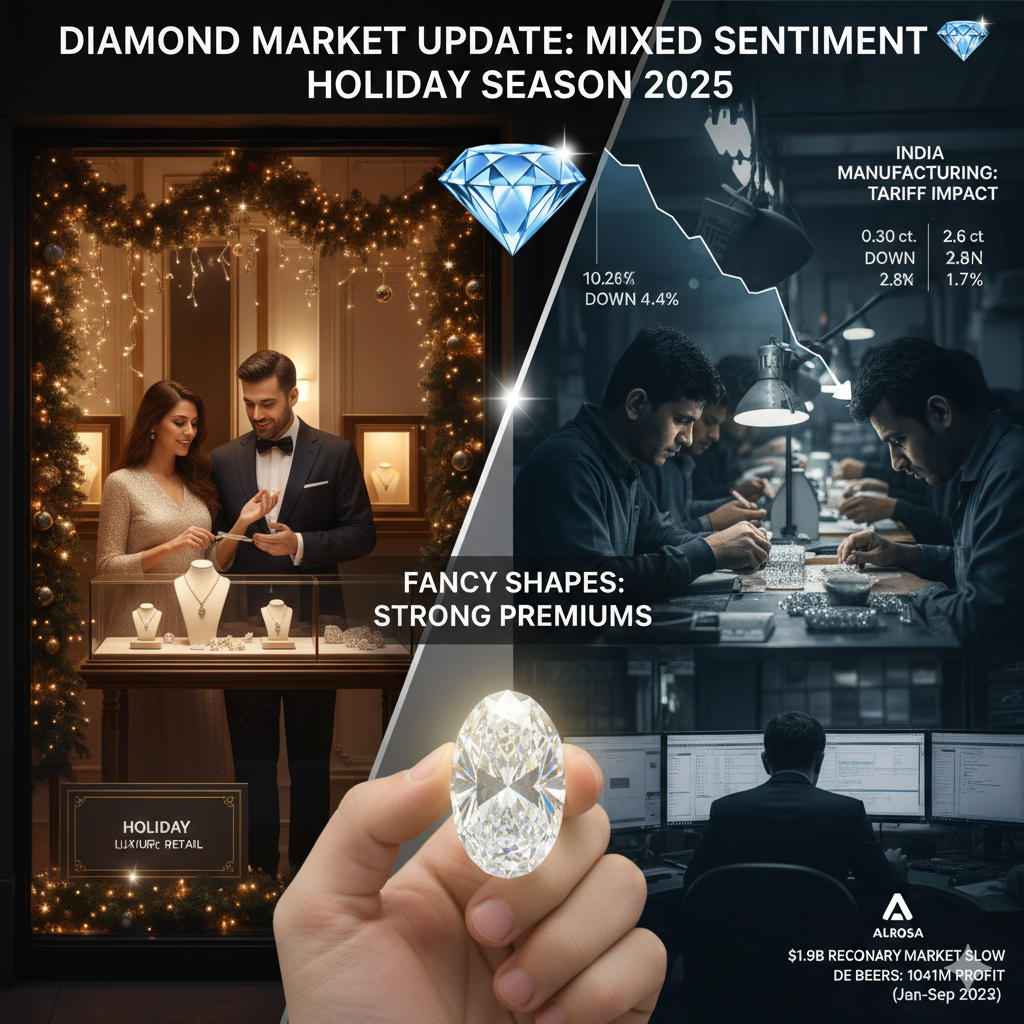
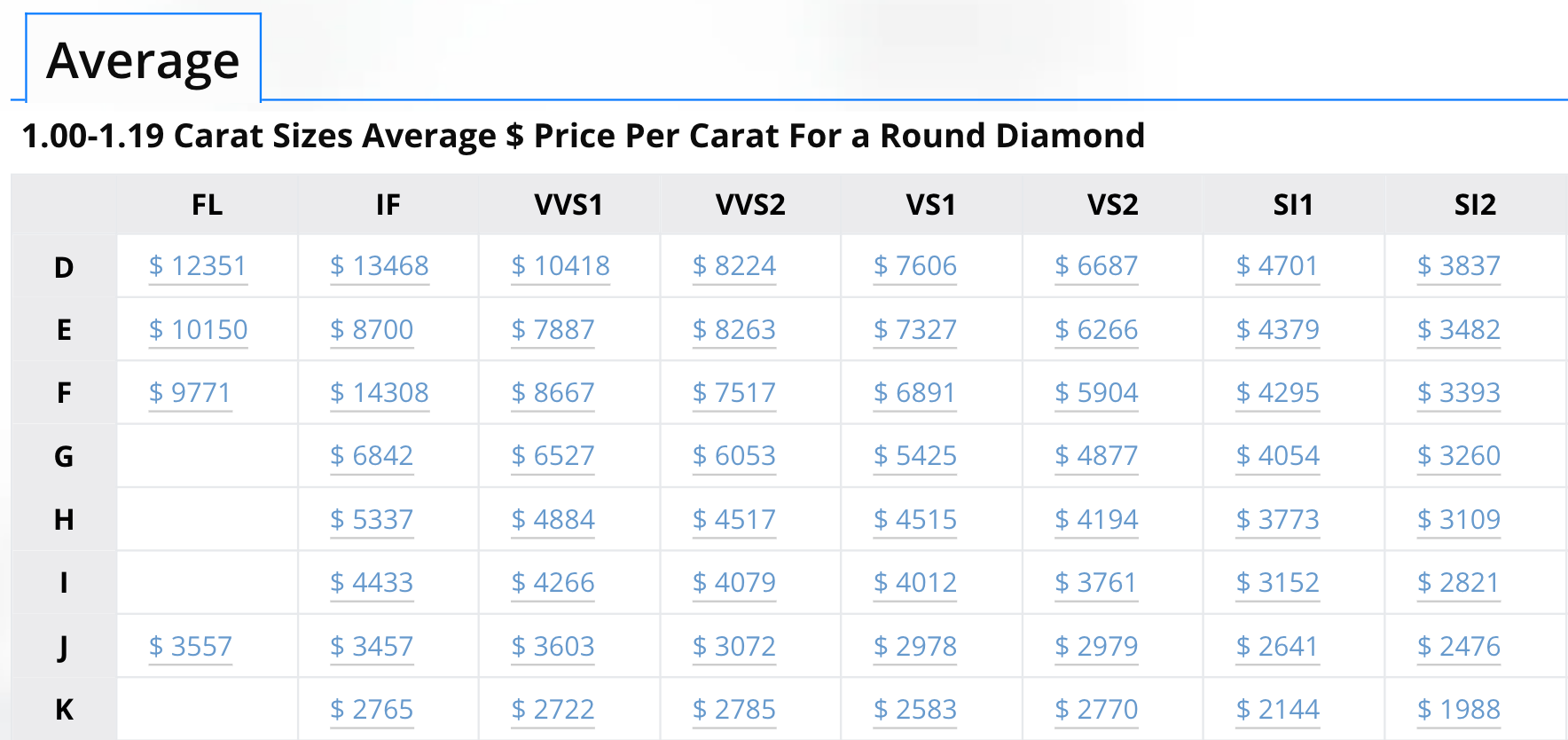
The market narrative in 2026 is one of bifurcation. On one hand, commercial natural diamond prices remain approximately 15–30% lower than their 2022 peaks. On the other, premium stones particularly those in the D–F color range with VS clarity or higher are demonstrating stable performance, with some categories seeing recovery of up to 5%. This split is part of what industry experts refer to as an "uneven recovery".
The Rapaport Diamond Index (RAPI) , the global industry benchmark, increased for 3‑carat diamonds by 0.3% in 2025, while 1‑carat stones fell by 9.9% and 0.30‑carat plunged by 20.3%. In February 2026, the RAPI for 0.30‑, 0.50‑, and 3‑carat diamonds rebounded by 1%, 0.3%, and 0.2%, respectively, confirming that larger, higher‑quality goods are indeed finding their footing more quickly. However, prices for sub‑1‑carat goods remain under pressure, as they compete directly with lower‑cost lab‑grown alternatives.
The Zimnisky Global Rough Diamond Price Index further illustrates a nuanced recovery. In the first quarter of 2026, 5–9‑carat rough diamonds increased by a low‑to‑mid‑teens percentage, a clear indicator that buyers are selectively returning to the top end of the market.
Regional Spotlight: Where Premium Demand is Accelerating
United States -
The United States remains the world’s largest and most influential diamond jewelry market. According to Vyansa Intelligence, the US jewelry market is projected to reach USD 83.2 billion by 2032, growing at a CAGR of approximately 1.02%.
The luxury fine jewelry segment is expanding even faster, at a projected CAGR of 4.60% from 2026 to 2035. It is within this environment that high‑quality natural diamonds are seeing demand growth rates of between 2% and 4%, driven by affluent consumers seeking store of value and emotional resonance.
Europe -
Europe’s recovery has been more measured but is nonetheless under way. After a period of macroeconomic uncertainty, the region is showing moderate improvement of 1% to 3% in select quality categories. Industry presentations from CIBJO (The World Jewellery Confederation) have highlighted that excess demand for the best quality, rarest diamonds will persist.
Dubai & The UAE -
The United Arab Emirates, and Dubai specifically, have become critical luxury diamond trading hubs. Despite temporary disruptions caused by regional geopolitical events in February 2026, luxury diamond trade activity is estimated to be growing between 5% and 8%, fueled by the UAE’s position as a safe‑haven trading center. The UAE jewellery market as a whole is expected to grow at a CAGR of 8.9% through 2032.
India -
Possibly the most exciting growth story is unfolding in India. De Beers CEO Al Cook recently reported that diamond demand in India has grown by approximately 11% over the past 12 months, marking the fourth consecutive year of double‑digit expansion. It is estimated that the Indian natural diamond jewelry market will double in size by 2030, reaching approximately $20 billion.
A significant driver of this demand is the bridal jewelry segment, which is rising between 6% and 10%, fueled by a strong cultural preference for natural diamonds in wedding and engagement jewelry.
Diamond Shapes:
Round Brilliant: Still dominates with an estimated 55–60% market share in 2026. The round brilliant’s superior light performance and universal recognition cement its top position.
Oval Brilliant: Currently one of the fastest‑growing fancy shapes. Data shows oval diamonds now represent roughly 13% of sales, and some surveys suggest oval is now almost as popular as round (25% vs 26% of couples) in certain markets.
Cushion & Radiant Cuts: These softened, elongated shapes are gaining popularity for their romantic appeal and finger‑lengthening effect.
Emerald Cut: Remains a staple in the luxury segment due to its clean, sophisticated, step‑cut appearance, prized by connoisseurs who favor transparency over sparkle.
Diamond Colors & Clarity: Segmented Demand
The color segmentation in 2026 is more distinct than ever:
D–F Color (Colorless): These stones continue to perform strongly in premium markets because of their exceptional rarity and high perceived value. For serious investors and luxury buyers, D‑F remains the standard.
G–H Color (Near Colorless): The highest‑demand category globally. G‑H stones deliver an optimal value proposition, balancing an essentially colorless appearance with more accessible price points.
I–J Color (Faint Tint): Still serve the larger commercial market, particularly for stones above 1 carat where the color is less visible to the naked eye.
Fancy‑Color Diamonds: Attracting strong collector and luxury interest because of their extraordinary rarity and individuality. Fancy vivid yellows, pinks, and blues are achieving strong pricing.
Carat Weight Dynamics:
1.00 – 2.00 Carats: Remain the core demand category globally. However, industry observers note that the "battleground" is intensifying, with a 1‑carat natural diamond now competing directly against a 2‑carat lab‑grown diamond at a similar price point.
2 – 3 Carats: Demand for this size is increasing steadily, particularly in the United States and the Middle East. Buyers in these markets increasingly seek larger visual impact and stronger luxury positioning. According to a 2026 jewelry survey, the average center diamond weight in units sold is now 1.16 carats, with specialty jewelers seeing 2.1% growth in natural diamond sales.
3+ Carats: Prices for 3‑carat diamonds have shown greater resilience, increasing by 0.3% in 2025 while smaller sizes fell sharply. For stones over 5 carats, prices increased an estimated 4–6% in March 2026 alone.
Lab‑Grown Diamonds:
The rapid ascent of laboratory‑grown diamonds (LGDs) continues to reshape the market.
However, it is increasingly clear that LGDs and natural diamonds are not perfect substitutes. They serve different consumer segments and purchase occasions:
Natural diamonds remain the preferred choice for luxury gifting, heirlooms, high‑value bridal, and collectible investments.
LGDs are expanding the entry‑level market and fashion jewelry segment, with their prices continuing to decline. LGD prices fell 40% in 2025 and another 14% in early 2026.
As LGD prices fall, natural diamonds emphasize their heritage, scarcity, and institutional certification as sources of durable value. The natural diamond market is still expected to grow at approximately 5–10% annually over the next decade as the two markets find their natural equilibrium.
Why Sell with CaratX?
At CaratX, we provide a secure, globally connected B2B and B2C marketplace for natural diamonds, gemstones, jewelry, and pearls. Whether you are a wholesaler, manufacturer, retailer, or individual seller, CaratX offers the infrastructure to expand your reach to buyers in over 18 countries.
Choose CaratX for:
Global buyer access: Tap into premium demand from the United States, Europe, the Middle East, and India.
Data‑driven insights: Use our analytics to identify real‑time demand for specific colors, clarities, and carat weights.
Flexible inventory management: From loose diamonds to finished jewelry and gemstones, manage your entire catalog under one dashboard.
Trusted certification: Buyers on CaratX rely on certification from GIA, IGI, and other leading laboratories shop natural diamonds here.
Start selling today and connect with premium buyers who value rarity, quality, and certification.
Sellers, register here to start selling to B2B and B2C buyers: www.caratx.com/register
Shop natural diamonds from our marketplace: https://caratx.com/search-results/Natural
Shop gemstones at unbeatable prices: https://caratx.com/search-results/gemstones
Launch your products on CaratX – see pricing and plans: https://caratx.com/generic-pages/launch-your-products-on-caratx
Frequently Asked Questions (FAQ)
Q1: Are natural diamond prices finally going up in 2026? A: It depends on the segment. Premium natural diamonds (D–F color, VS clarity+, 2+ carats) are seeing improved pricing, with 3‑carat RAPI gaining +0.3% in 2025 and 5+ carat stones up 4–6% in March 2026. Commercial goods (below 1 carat) remain under pressure.
Q2: Is the diamond market “recovering” or just “stabilizing”? A: Most experts use the word “stabilizing.” As one industry panel noted, price stability is expected to return by mid‑2026, but stability should not be mistaken for a return to 2021–22 growth rates. The industry has permanently downsized.
Q3: Which diamond shapes are trending in 2026? A: Round brilliant remains dominant (~55–60%). Oval is the fastest‑growing fancy shape, accounting for approximately 13% of sales. Cushion, radiant, and emerald cuts are also gaining significant popularity, especially for engagement jewelry.
Q4: Is India really that important for the diamond market? A: Yes. The Indian natural diamond jewellery market is expected to reach ₹1.5 lakh crore (approx. $20 billion) by 2030, driven by 11% annual demand growth. Domestic demand grew 11% last year the fourth consecutive year of double‑digit growth.
Q5: Why should I buy natural diamonds instead of lab‑grown? A: Natural diamonds offer proven long‑term value retention, a finite and depleting supply, emotional heritage (billions of years in the making), and full traceability through the Kimberley Process. Lab‑grown diamonds are a product of technology, not a store of transgenerational value.
Q6: How can I start selling internationally on CaratX? A: Simply register for a seller account, list your inventory whether loose diamonds, jewelry, or gemstones and start connecting with B2B and B2C buyers in over 18 countries. Use our seller dashboard to track analytics, manage orders, and expand your global footprint.
Follow CaratX for more insightful, data‑driven, and educational content on the global diamond, gemstone, and jewelry industry.
Register as a CaratX Seller Today – and start selling to premium buyers in over 18 countries.
Image Credit - Just Dial