

The Journey of a Diamond: From Rough Stone to Finished Brilliance
Home
News And Media The Journey of a Diamond: From Rough Stone to Finished Brilliance SHOP NOWHome
News And Media The Journey of a Diamond: From Rough Stone to Finished Brilliance SHOP NOWMar, 19, 2026 by Archit Mohanty 0 Comments
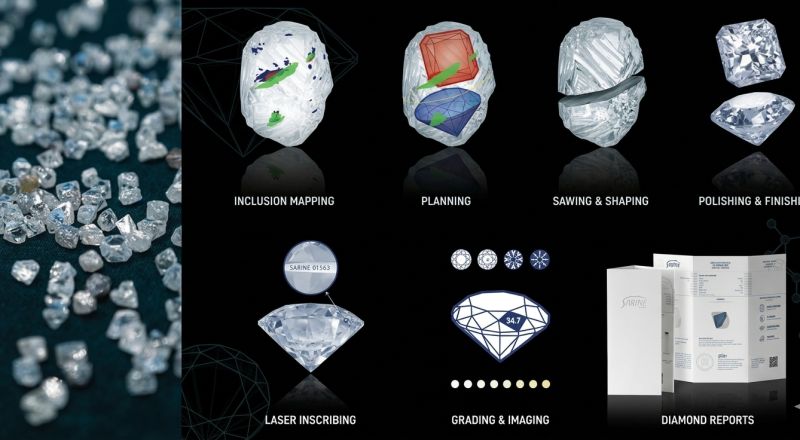
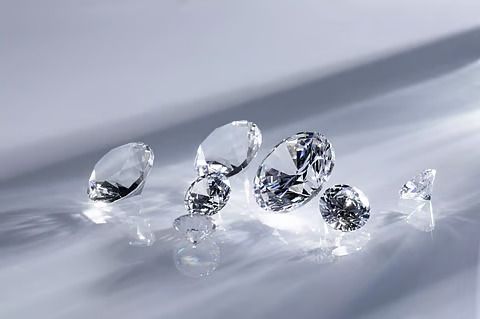
The path from a rough stone pulled from the earth to the dazzling gem adorning an engagement ring is one of the most complex and fascinating manufacturing processes in the world. Diamond manufacturing is the meticulous art and science of transforming a rough diamond into a polished gemstone ready for jewelry.
It is a high-stakes process that combines cutting-edge technology, mathematical precision, and centuries-old craftsmanship to unlock the beauty and value hidden within each carbon crystal.
While diamonds are formed billions of years ago deep within the earth, their true potential is only realized through human ingenuity. This blog post will take you deep into the global hubs of diamond processing and walk you through each critical step of the journey.
The diamond manufacturing industry is globally distributed, but a staggering majority of the world’s rough passes through one city. According to industry reports, around 90% of the world’s diamonds are cut and polished in Surat, India. This city, along with Mumbai, forms the backbone of the global diamond trade.
Other major manufacturing hubs include:
Antwerp, Belgium: Known as the world's diamond capital, it is a major trading hub for rough and polished stones.
Tel Aviv, Israel: Renowned for its advanced cutting techniques and innovation in the high-end polished market.
New York, USA: A hub for large, high-value stones and the retail jewelry trade.
Dubai, UAE: A rapidly growing center for trading and light manufacturing.
These hubs process millions of carats annually. However, the process is one of significant sacrifice. A single rough diamond can lose 40% to 60% of its total weight during the cutting and polishing phases. This loss is necessary to create the facets that allow the diamond to perform its optical magic: reflecting light (brilliance), dispersing it into spectral colors (fire), and creating patterns of light and dark (scintillation).
The transformation from a rough, unassuming pebble to a brilliant gem is broken down into several key stages.
Before a saw or laser ever touches the rough diamond, experts spend hours or even days planning the cut. This is arguably the most important step. Using advanced software like Sarine or OctoNus, planners map the rough stone in 3D.
They analyze inclusions (internal flaws) and the crystal structure to determine the optimal shape(s) that can be cut from the single piece of rough. The goal is simple: maximize the final value and minimize waste. A miscalculation here can cost thousands of dollars.
Once the plan is set, the diamond must be separated. For larger stones or those with specific grain lines, cleaving is used. This ancient technique involves cutting a small groove in the diamond and striking it with a steel blade to split it along its grain. It is incredibly risky but necessary for specific crystal structures.
More commonly today, sawing is used. Industrial lasers or phosphor-bronze blades embedded with diamond dust are used to cut the diamond. This step divides the rough into smaller, more manageable pieces for shaping.
After the diamond is sawn into a rough outline, the next step is to create the basic profile of the final gem. For a round brilliant diamond, this is called bruting. Two diamonds are placed on spinning axles opposite each other.
They grind against one another to create a rough circular shape and define the girdle (the widest part of the diamond). This process relies on the simple fact that diamond is the hardest material; it can only be shaped by another diamond.
This is where the diamond truly begins to come to life. Faceting is the process of adding the small, flat surfaces (facets) onto the diamond. A standard round brilliant cut diamond has 57 or 58 facets. These facets are strategically placed to act as mirrors, capturing light and reflecting it back through the top of the stone (the table).
Blocking: The first 17 or so facets (crown and pavilion mains) are cut to establish the symmetry and angles.
Brilliantearing: The remaining smaller facets (stars and lower halves) are added to maximize light performance. This step requires immense skill. The angle of each facet must be precise to within a fraction of a degree. If the angles are too shallow or too deep, light will leak out of the bottom of the diamond, making it look dark and lifeless.
The final step is polishing. While faceting creates the shape, polishing removes the tiny surface irregularities left from the cutting process. Using a rotating cast iron scaife charged with diamond powder and oil, the diamond is polished to a mirror-like finish. This creates the smooth surface necessary for the diamond's signature adamantine luster.
It’s a painstaking process. Depending on the size, quality, and complexity, a single diamond can take a skilled worker several hours to several weeks to finish.
The diamond industry is no longer just about manual dexterity. Technology plays a huge role. AI-powered inclusion mapping, automated polishing machines, and laser inscription are now standard.
Technologies like Heart of Diamond and Sarine Light allow cutters to see inside the stone with unprecedented clarity. For the end consumer, this data often culminates in a digital "fingerprint" of the diamond, providing transparency that was unheard of a generation ago.
If you are looking to source diamonds that have passed through these rigorous manufacturing standards, platforms like CaratX bridge the gap between these global manufacturing hubs and the buyer.
Whether you are looking for investment-grade stones or gems for a bespoke jewelry piece, you can view polished diamonds that represent the culmination of this entire journey - https://caratx.com/shop
Even if a diamond has perfect color and clarity (like a D Flawless), poor manufacturing (cut grade) will ruin its beauty. The Gemological Institute of America (GIA) emphasizes that the cut is the most important of the 4Cs because it directly influences the stone's interaction with light. A poorly cut diamond will appear dull, while an excellently cut diamond will be vibrant and fiery.
This is why buying from a trusted source is crucial. When you shop natural diamonds on a verified marketplace, you often get access to grading reports from authorities like GIA or IGI that certify the cut quality, ensuring you are getting the brilliance you pay for.
The journey doesn't end at polishing. The finished diamonds then enter a complex supply chain involving dealers, manufacturers, jewelry designers, and retailers. For businesses, entering this global market can be challenging due to logistics, trust, and compliance issues.
This is where modern B2B and B2C platforms are changing the game. If you are a manufacturer in Surat or a jeweler in New York, you can now bypass traditional barriers.
For instance, sellers can register on CaratX to access a global customer base in over 18 countries. This platform allows for the transaction of diamonds and jewelry, connecting the end of the manufacturing line directly to the point of sale.
For those involved in the later stages of manufacturing like jewelry setting and finishing the ability to sell jewelry internationally opens up massive revenue streams. The demand for ethically sourced and beautifully manufactured diamonds is global.
By listing products on an international marketplace, manufacturers can capture value that was previously lost to middlemen.
If you are a seller looking to scale, understanding the pricing and seller plans of these platforms is the first step toward global expansion. The digital infrastructure now exists to support everything from rough procurement to final sale.
Q1: How much weight is lost when cutting a diamond? A: It is common for a rough diamond to lose between 40% and 60% of its original weight during the cutting and polishing process. This weight loss is the trade-off for achieving optical perfection.
Q2: Why is Surat, India, the center of diamond manufacturing? A: Surat became a hub due to a combination of skilled low-cost labor, family-run businesses with generations of experience, and government support for the gem and jewelry industry. It handles an estimated 90% of the world's rough diamonds.
Q3: What is the hardest part of diamond manufacturing? A: The planning stage is often cited as the most difficult and stressful. A mistake in planning can result in a significantly smaller polished diamond or one with visible inclusions, drastically reducing its value.
Q4: How long does it take to cut a diamond? A: It varies greatly. A small, simple 1-carat diamond might take a few days, while a large, complex, or fancy-shaped diamond (like an emerald cut or a heart shape) can take weeks.
Q5: Where can I buy certified polished diamonds online? A: You can explore a wide range of certified natural diamonds and gemstones on marketplaces like CaratX , which connects vetted sellers with international buyers.
Aug, 06, 2022
Aug, 06, 2022
0 Comments
Please login to leave a reply.