

Beyond the Naked Eye: The Definitive Guide to Diamond Color and Its Impact on Value
Home
News And Media Beyond the Naked Eye: The Definitive Guide to Diamond Color and Its Impact on Value SHOP NOWHome
News And Media Beyond the Naked Eye: The Definitive Guide to Diamond Color and Its Impact on Value SHOP NOWMar, 19, 2026 by Archit Mohanty 0 Comments
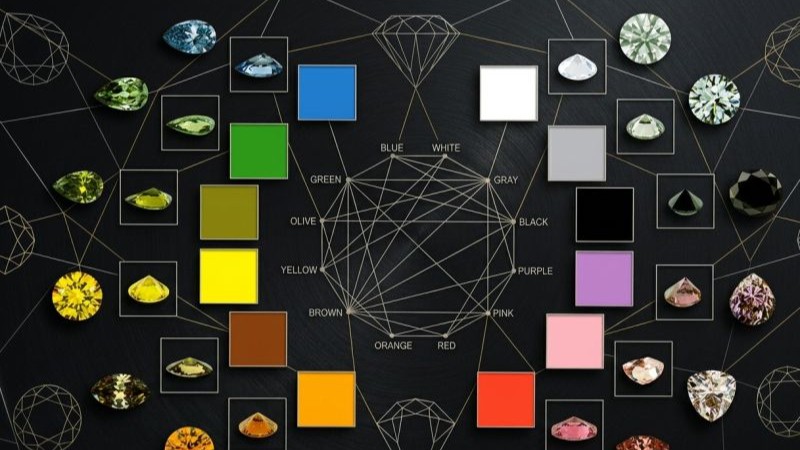
In the world of fine gemstones, no single factor influences the perception of beauty and the mathematics of pricing quite like diamond color. It is one of the "Four Cs" of diamond grading alongside Cut, Clarity, and Carat Weight but color is unique because it deals with the absence of hue. For the vast majority of diamonds, the goal is to achieve a pure, icy white appearance.
However, the relationship between color and value is not linear; it is a dynamic curve where a single grade difference can mean a swing of thousands of dollars. Whether you are a seasoned investor, a retailer, or a consumer looking for the perfect engagement ring, understanding the nuances of the diamond color scale is essential to making an informed purchase.
At CaratX, we bridge the gap between global diamond sellers and buyers, offering a transparent marketplace to trade these stunning assets. In this guide, we will dissect the science, the grading, and the economics of diamond color.
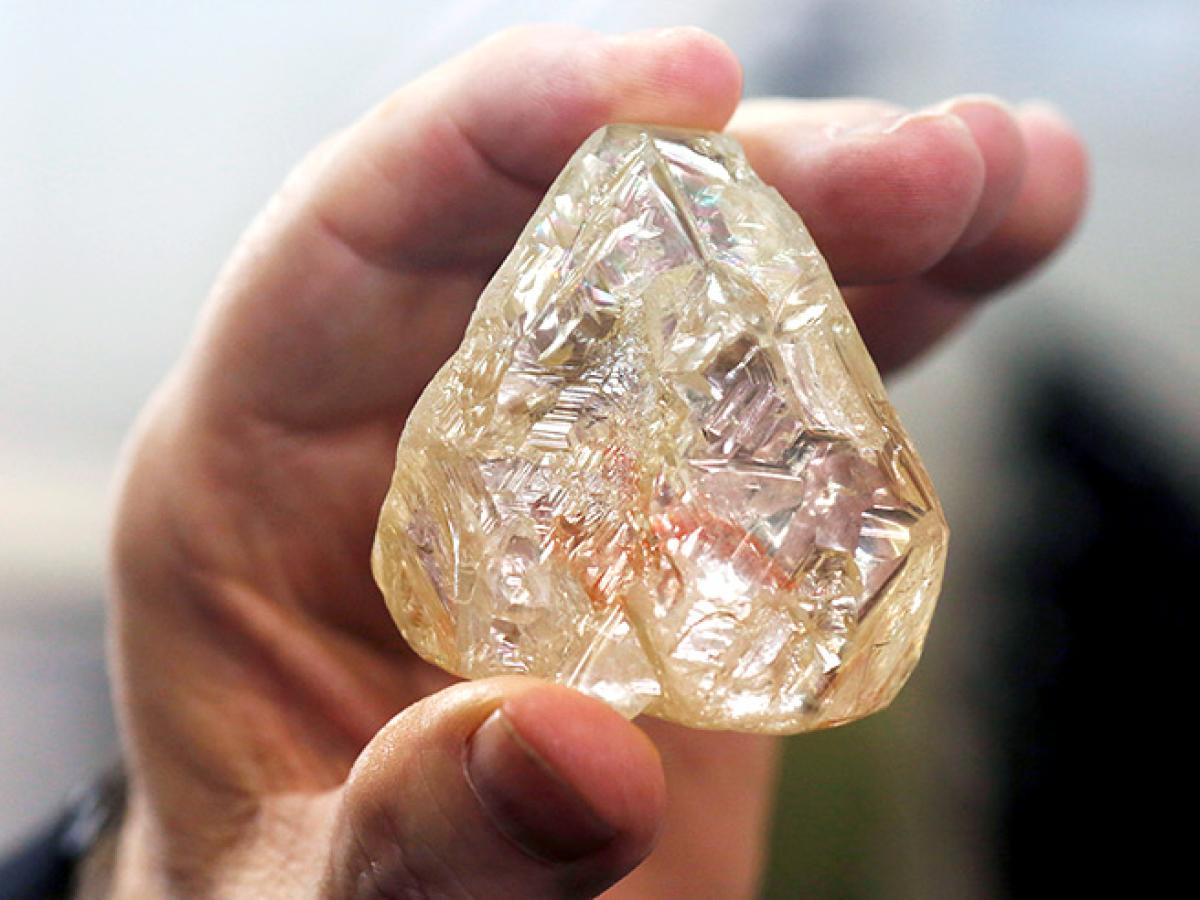
To understand diamond color, one must first understand what a diamond is chemically: a crystal lattice formed almost entirely of carbon. Ideally, a perfect diamond structure would allow light to pass through completely without absorption, resulting in a colorless stone. However, nature is rarely perfect.
During the billion-year formation process deep within the Earth's mantle, trace elements can become trapped within the crystal structure.
Nitrogen atoms are the most common impurity. When nitrogen absorbs blue light, the diamond emits a yellow or brown tint. The more nitrogen present, the more intense the yellow hue.
Boron impurities result in a blue-gray color.
Hydrogen can result in violet or gray hues.
The Gemological Institute of America (GIA), the foremost authority in gemological research, established the alphabetical color grading scale to standardize how these subtle tints are measured. According to GIA’s 4Cs research, the scale ranges from D (completely colorless) to Z (light yellow or brown).
GIA gemologists evaluate color under controlled lighting conditions, comparing the diamond against "master stones" of known color grades. The diamond is placed table-down to observe the body color through the pavilion. Here is how the spectrum breaks down:
Diamonds in this range are the rarest of the rare, constituting only about 2% of the world's diamonds. They possess no discernible hue, even under 10x magnification by a trained professional.
D Color: The absolute highest grade. Absolutely colorless. These stones exhibit maximum fire and brilliance because there is no color to obstruct light refraction.
E Color: Only minute traces of color can be detected by an expert, but to the naked eye, it is indistinguishable from D.
F Color: Still considered colorless, with slight traces of color detectable only by a gemologist.
This is the sweet spot for value and the most popular category for engagement rings worldwide. To the untrained eye, these diamonds face-up white.
G & H Color: These offer an excellent balance. The warmth is virtually undetectable unless compared side-by-side with a D color diamond.
I & J Color: A very faint warmth can be detected, particularly in larger stones or certain shapes. However, when set in yellow or rose gold, this warmth is masked by the metal, making them appear whiter.
As you move down the scale, the tint becomes the defining characteristic.
K-M (Faint Color): A yellow or brown tint is visible to the naked eye. These stones offer a vintage aesthetic but are significantly lower in price.
N-Z (Very Light to Light Color): Color is readily apparent. These stones are rarely used as the centerpiece in white diamond jewelry unless a specific "champagne" look is desired.
Internal Link: Explore our curated selection of diamonds in the Near Colorless range at the CaratX Marketplace to see the balance of beauty and value yourself.
The premium for colorless diamonds is exponential. A D-color diamond is not just marginally more expensive than an E; it can command a significant premium due to its scarcity. According to industry pricing data, the price curve steepens dramatically at the top of the scale.
For a 1-carat round brilliant diamond:
The percentage jump from an H color to a G color might be 5-10%.
The jump from an F color to an E color can be 15-20%.
The jump from an E to a D can be over 20% on top of that.
This is compounded by Carat Weight and Clarity. A flawless 2-carat D-color diamond is exponentially rarer (and more expensive) than a 1-carat D-color diamond. The American Gem Society (AGS) confirms that cut and color work in tandem to determine light performance, which ultimately dictates visual appeal and value.
While the D-Z scale penalizes color, there is a universe where the rules flip entirely: Fancy Color Diamonds. These diamonds fall outside the normal grading range because their hue is too strong. They make up less than 0.1% of diamond production.
In this category, intensity is king. Diamonds are graded on the depth and saturation of their hue (Fancy Light, Fancy, Fancy Vivid, etc.).
The Rarity Factor: The formation process for a pink or blue diamond requires specific geological conditions (like plastic deformation for pinks) that are far rarer than nitrogen absorption for yellows.
Value Drivers: A "Fancy Vivid Pink" diamond is worth exponentially more than a "Faint Pink" diamond. The most famous example is the Hope Diamond (blue) or the Pink Star, which sold for over $71 million.
This inverse relationship is crucial for investors. While color subtracts value in the "white" diamond market, it adds massive value in the "fancy" market.
As a buyer, you can use your knowledge of the color scale to "trade up" in size or clarity for the same budget.
1. Shape Matters Different diamond shapes hide color differently.
Round Brilliants: The 58 facets act as prisms, reflecting light back to the eye and dispersing color. They are the most forgiving of lower color grades.
Emerald and Asscher Cuts: These step cuts have large, open tables and fewer facets. They act like clear windows, showing the body color of the stone much more readily. If you are buying an emerald-cut diamond, consider going higher on the color scale (G or above).
Cushion and Oval Cuts: These can trap color in the pavilion, making them somewhat forgiving.
2. Metal Setting Strategy You can leverage the metal of your setting to optimize the perceived color of the diamond.
Platinum/White Gold: These stark white metals reflect into the stone. If you set an L-color diamond in platinum, the yellow body color will be reflected back and become more apparent.
Yellow/Rose Gold: These metals absorb yellow light. Setting an J or K color diamond in a yellow gold bezel or prongs will make the diamond face up whiter, as the metal masks the tint.
Looking to set your diamond? Sellers on CaratX can register to offer bespoke jewelry settings to buyers internationally. Register your business here to expand your reach.
There is a psychological component to diamond buying known as the "D-Flator." Some consumers insist on a D-color diamond because they want the "best," even if the human eye cannot differentiate it from an F or G color in a normal setting.
This is where laboratory certification becomes critical. An ungraded diamond might look white, but a GIA or AGS report confirming a G-color provides objective proof of its quality and value retention.
This is why platforms like CaratX emphasize certified diamonds, ensuring that what you see (or pay for) is exactly what you get. For more on the importance of certification, you can view our seller pricing and listing standards.
Another factor that interacts with color is Fluorescence.
Approximately 25-35% of diamonds exhibit fluorescence, a glow when exposed to ultraviolet light.
In diamonds with lower color grades (I-M), medium to strong blue fluorescence can actually improve the face-up color by counteracting the yellow tint, making the stone look whiter.
This is often referred to as a "negative" reaction (negative in the sense of subtracting the yellow), and these stones can sometimes be purchased at a discount compared to non-fluorescent stones of the same grade.
In high-color diamonds (D-F), strong fluorescence is generally avoided by purists as it can theoretically cause a hazy or "milky" appearance, though this is rare.
Diamond color is a fascinating interplay of geology, physics, and economics. For the white diamond, less is more. For the fancy diamond, more is more. Understanding this paradox is the key to unlocking the best value.
Whether you are seeking investment-grade D-Flawless stones or high-volume G-H SI goods, the global market is complex. CaratX simplifies this complexity, providing a direct line to vetted sellers and buyers across 18+ countries.
Start Shopping: Browse our collection of natural diamonds and gemstones at www.caratx.com.
Start Selling: Ready to list your inventory? Join our global B2B and B2C network. Register here.
Sell Internationally: Take advantage of our export-friendly seller plans. Learn more about international selling.
Q: Is it worth buying a diamond with a color grade of I or J? A: Absolutely. If set in yellow gold or rose gold, an I or J color diamond will face up white to the untrained eye. This allows you to allocate more of your budget to carat weight or cut quality.
Q: What is the best color grade for an engagement ring? A: The best grade depends on your budget and metal choice. For white gold/platinum, G-H offers the best value. For yellow gold, J color is a fantastic option. For the purist who wants icy white in any metal, D-F is the target.
Q: Does the shape of the diamond affect how I see color? A: Yes. Round brilliants hide color best. Emerald and Asscher cuts show color the most, so you should buy a higher color grade for those shapes.
Q: What are "Fancy" color diamonds? A: Fancy color diamonds are natural diamonds that exhibit a distinct hue (like pink, blue, or intense yellow) that is strong enough to be outside the normal D-Z scale. In these diamonds, stronger color saturation increases the value.
American Gem Society (AGS). "The 4Cs of Diamond Quality." American Gem Society. Retrieved from https://www.americangemsociety.org/4cs-of-diamonds/
International Gem Society (IGS). "Diamond Fluorescence: Good or Bad?" International Gem Society. Retrieved from https://www.gemsociety.org/article/diamond-fluorescence/
Aug, 06, 2022
Aug, 06, 2022
0 Comments
Please login to leave a reply.