
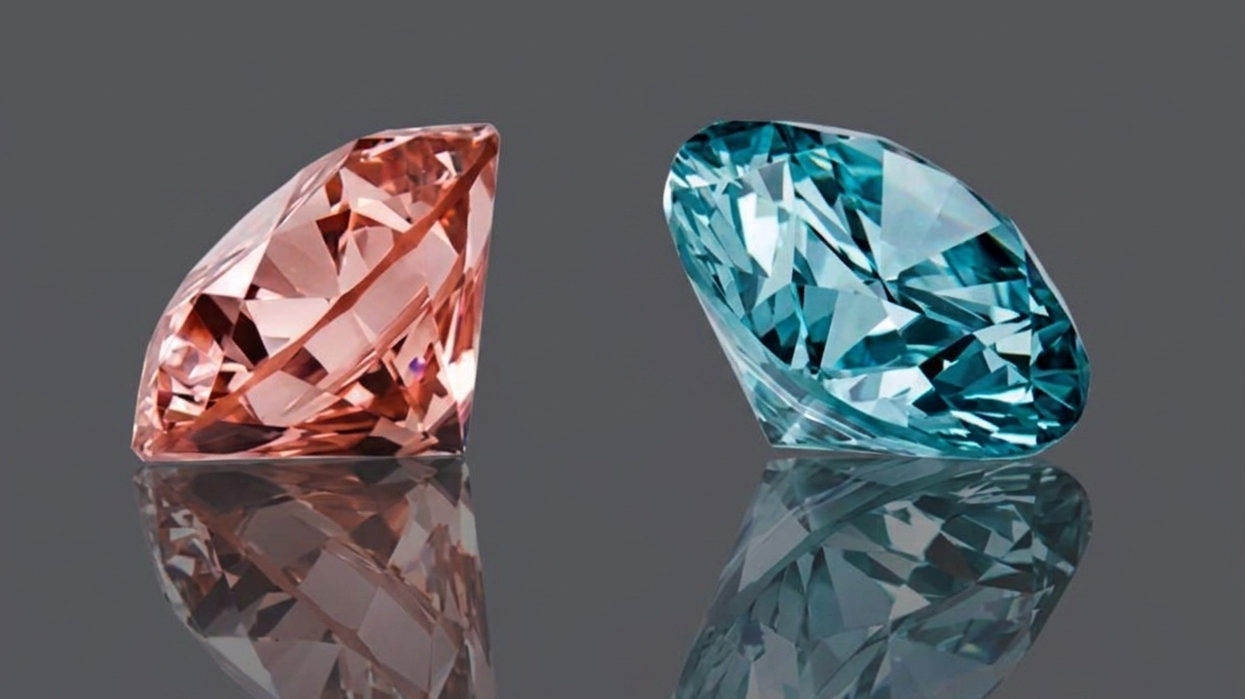
The fancy-color diamond market has entered 2026 with a clear theme selectivity. While short-term price fluctuations have emerged across certain pink and blue diamond categories, the long-term value trajectory for natural fancy color diamonds remains exceptionally strong. As global economic uncertainty persists, ultra-high-net-worth investors and collectors are increasingly turning to these rare geological wonders as both luxury assets and long-term stores of value.
Pink Diamonds in 2026: A Market of Mixed Signals
According to the latest Q1 2026 data from the Fancy Color Research Foundation (FCRF), pink diamond prices experienced a modest year-over-year decline of approximately 0.8%, with a sequential dip of 0.3% compared to Q4 2025. However, these aggregate figures mask a more nuanced reality beneath the surface. Category-level performance varied significantly, demonstrating that the pink diamond market is becoming increasingly quality-selective.
Among the strongest outperformers in Q1 2026 was the 1-carat Fancy Intense Pink category, which saw prices increase by approximately 1.9%. This resilience in the smaller, high-quality category signals a flight to liquidity and affordability within the pink spectrum, even amid broader market caution.
However, several larger and more vivid pink diamond categories experienced corrections, reflecting selective buying pressure:
2-carat Fancy Vivid Pink diamonds declined approximately 2.2%.
5-carat Fancy Vivid Pink diamonds fell around 1.9%.
3-carat Fancy Pink diamonds slipped approximately 1.7%.
3-carat Fancy Vivid Pink diamonds moved down around 1.5%.
The divergence between the 1-carat Fancy Intense Pink (up 1.9%) and larger Fancy Vivid Pink categories (down 1.5–2.2%) reveals a market that is highly discriminating. Buyers are focusing intensely on:
Color intensity – The saturation and purity of pink hue.
Rarity – Limited supply, especially post-Argyle.
Certification – GIA reports and origin verification.
Overall visual appeal – The stone's brilliance and absence of modifying hues.
Liquidity – The ease of resale in a niche market.
As one industry expert noted, "We're continuing to see a very selective market," with quality and color intensity driving value preservation even as broader price indices soften.
According to GIA researchers, the color of 99.5% of pink diamonds comes from distortion in their crystal lattice from plastic deformation occurring during or after crystal growth, rather than from trace elements like nitrogen (which causes yellow) or boron (which causes blue). This unique formation mechanism makes pink diamonds among the most fascinating objects in gemology.
Blue Diamonds in 2026:
Blue fancy-color diamonds performed slightly better than their pink counterparts during Q1 2026. Blue diamond prices declined approximately 0.5% year-over-year, a shallower drop than pinks, and actually increased by approximately 0.3% compared to Q4 2025 making them the only major fancy color category to post a positive sequential gain.
The strongest-performing blue category in Q1 2026 was the 1-carat Fancy Blue diamond, which saw prices climb approximately 1.3% a notable achievement in a cautious market environment.
From a geological perspective, the unique characteristics of blue diamonds contribute to their enduring value. According to the GIA, natural blue diamonds form deep within the Earth's mantle, between 150 to 800 kilometers below the surface, reaching the surface through violent volcanic eruptions.
What Makes Blue Diamonds So Rare?
Blue diamonds owe their mesmerizing color to the presence of boron atoms that substitute for carbon in the diamond's crystal structure. The rarest blue diamonds are classified as Type IIb, a category that accounts for only a minute fraction of global diamond production.
The Long-Term Perspective: Since 2005
While short-term fluctuations capture headlines, the true story of fancy-color diamonds emerges over multi-decade time horizons. According to FCRF market tracking data spanning from 2005 to the present:
Since 2005, Pink Diamonds have recorded the highest price growth, increasing by approximately 389%, making them one of the strongest-performing luxury assets in the diamond market.
Blue Diamonds have also shown remarkable appreciation, with prices rising by approximately 241% over the same period, driven by their rarity and collector demand.
Meanwhile, Yellow Diamonds experienced a comparatively moderate increase of approximately 48% since 2005, supported by growing consumer interest and broader market accessibility.
To put these returns in context:
Gold has returned approximately 350–400% over a similar period (depending on entry point).
S&P 500 has delivered approximately 200–300% total return over 2005–2025.
Fine Art and Classic Cars have shown strong but volatile returns.
Real Estate has delivered regionally variable returns.
Pink diamonds, in particular, have outperformed many traditional asset classes over the past two decades, with some reports suggesting an average annual appreciation of 18.6% for investment-grade pink diamonds.
The Natural Diamond Council has also reported that over the last 20 years, fancy colour diamond prices have grown at a compound annual growth rate of 5.7%, demonstrating consistent, if not explosive, long-term appreciation.
However, it is crucial to note that these are average figures. Individual diamond performance varies significantly based on:
Color intensity (Fancy Vivid commands the highest premiums)
Carat weight (larger stones have higher per-carat prices but lower liquidity)
Clarity (less important than for colorless diamonds, but still relevant)
Certification (GIA reports are the industry gold standard)
Provenance (Argyle origin carries a premium for pinks)
Supply-Side Dynamics: The Argyle Legacy
Perhaps no single event has shaped the modern fancy-color diamond market more than the closure of the Argyle mine in Western Australia in November 2020. For decades, Argyle was the world's most consistent source of fancy pink, blue, violet, and brown diamonds, producing over 90% of the world's natural pink diamonds and more than 865 million carats of rough diamonds over its 37-year operational history.
The Argyle mine's closure permanently froze global supply of natural pink diamonds at a time when global demand, particularly from emerging markets like India and the Middle East, continues to rise. This structural supply-demand imbalance supports long-term price appreciation even amid short-term corrections.
The lessons learned from this closure continue to inform mining industry practices worldwide.
For blue diamonds, while no single mine dominated supply to the same extent as Argyle did for pinks, significant production comes from South Africa's Cullinan mine (source of the famous Cullinan diamond and many notable blue diamonds), Botswana's Orapa mine, and historically from India's Golconda region.
In April 2026, a 41.82-carat rough blue diamond was recovered from South Africa's Cullinan Mine, with industry estimates suggesting a potential value of $40 million proof that significant discoveries still occur, but at a frequency that does not threaten the overall rarity of blue diamonds.
How to Evaluate Investment-Grade Pink and Blue Diamonds -
For serious collectors and investors, understanding the evaluation framework for fancy-color diamonds is essential. Unlike colorless diamonds, where cut, clarity, and carat weight dominate valuation, color is the primary value driver for fancy-color diamonds.
The GIA Colored Diamond Grading System
The Gemological Institute of America (GIA) , the world's foremost authority on diamond grading, classifies fancy-color diamonds on a nine-point scale, from least to most intense:
Faint → Very Light → Light → Fancy Light → Fancy → Fancy Intense → Fancy Vivid → Fancy Dark → Fancy Deep
Within this system, Fancy Vivid represents the highest saturation of color and typically commands the highest prices per carat. The GIA recognizes 27 distinct hues for fancy colored diamonds and evaluates color based on three attributes: hue, tone, and saturation.
For pink diamonds specifically, the Argyle mine developed its own proprietary grading system that is still widely referenced in the secondary market: purple-pink, pink, pink-rose, and pink-champagne categories that reflect the unique color characteristics of Australian pink diamonds.
Key Investment Criteria for Pink Diamonds -
Color Origin: Ensure the diamond is certified as "Natural Color" by GIA. Treated or HPHT-processed diamonds have significantly lower value.
Intensity Grade: Fancy Intense and Fancy Vivid pinks have historically shown the strongest appreciation.
Carat Weight Sweet Spot: 1-carat to 3-carat stones offer the best balance of liquidity and value appreciation. Larger stones (5+ carats) are rare but less liquid.
Absence of Modifying Hues: Pure pink or purplish-pink diamonds are generally more valuable than brownish-pink or grayish-pink stones.
GIA Report: A full GIA Colored Diamond Grading Report is non-negotiable for investment-grade purchases.
Argyle Provenance: Pink diamonds with documented Argyle origin command a premium, especially those with Argyle-specific grading certificates or the coveted Argyle pink diamond packaging.
Key Investment Criteria for Blue Diamonds -
Boron-Based Color: GIA's origin determination can confirm natural color origin (trace amounts of boron substituting for carbon).
Type IIb Classification: Blue diamonds that are classified as Type IIb (rare diamonds with no measurable nitrogen impurities) are the most sought after.
Intensity Matters: Fancy Vivid Blue diamonds are exceptionally rare and command the highest per-carat prices.
Secondary Hues: Greenish-blue and grayish-blue diamonds are less valuable than pure blue or slightly violetish-blue stones.
Carat Weight: Blue diamonds are so rare that even small stones (0.5–1 carat) with strong color can be investment-worthy.
Auction Market Validation: 2026's Record-Breaking Sales
The auction market in early 2026 has provided powerful validation for the enduring value of top-tier fancy-color diamonds. Despite short-term price index softness, exceptional stones continue to achieve remarkable prices, underscoring the bifurcated nature of the market generic fancy colors may soften, but rarefied masterpieces set records.
Pink Diamond Auction Highlights (2026) -
The Williamson Pink Star, weighing 11.15 carats, was auctioned by Sotheby's in Hong Kong for an extraordinary $57.7 million, achieving approximately $5.2 million per carat and setting a new per-carat price record for a pink diamond. This sale surpassed the previous benchmark of roughly $4 million per carat set by a blue diamond in 2015, highlighting the continued global demand for exceptionally rare pink diamonds.
The Fortune Pink, weighing 18.18 carats, sold in Geneva for $28.5 million, translating to an impressive $1.57 million per carat. The auction further reinforced the strength of the high-end pink diamond market among collectors and investors.
Another unnamed pink diamond of approximately 19 carats was sold through Christie's in Geneva for $50.3 million, achieving an estimated $2.65 million per carat, demonstrating the exceptional value attached to rare vivid pink stones at international auctions.
Meanwhile, the legendary Pink Star remains the most expensive gemstone ever sold at auction. The 59.60-carat Fancy Vivid pink diamond was sold by Sotheby's Hong Kong in 2017 for an astounding $71.2 million, cementing its place as one of the most iconic diamonds in history.
Blue Diamond Auction Highlights (2026) -
The Mediterranean Blue, a 10.3-carat Fancy Vivid blue diamond, sold for an impressive $21.5 million at Sotheby's Geneva, exceeding strong market expectations with a pre-sale estimate of approximately $20 million. The sale reaffirmed the exceptional demand for rare Fancy Vivid blue diamonds among elite collectors worldwide.
An unnamed Blue Diamond weighing 7.32 carats was also sold through Sotheby's Geneva for $17.1 million, further demonstrating the resilience and prestige of the ultra-rare blue diamond segment in the global auction market.
At Christie's New York, two additional blue diamonds achieved prices of up to $8.5 million each, with estimates ranging between $6.5 million and $8.5 million, reflecting continued investor confidence in high-quality fancy blue diamonds.
The 2026 auction season has also highlighted a growing divide within the fancy-color diamond market.
While the broader fancy-color price index has remained relatively flat or slightly lower, exceptional top-decile stones continue to attract aggressive bidding activity. Much of this demand is being driven by Asian collectors and newly wealthy buyers from regions such as China, Singapore, and the Middle East, who continue to compete for the world’s rarest colored diamonds.
Fancy-Color Diamonds as a Portfolio Diversifier -
Fancy-color diamonds offer several unique characteristics that make them compelling additions to diversified investment portfolios:
Low Correlation with Traditional Assets: Fancy-color diamonds exhibit low to negative correlation with stocks, bonds, and real estate, particularly during periods of market stress. They behave less like financial assets and more like collectible luxury goods whose value is driven by supply-demand fundamentals rather than interest rates or corporate earnings.
Tangible Asset with Intrinsic Beauty: Unlike digital assets or paper securities, diamonds are physical objects that provide aesthetic enjoyment while serving as a store of value what the wealth management industry terms a "passion asset."
Inflation Hedge: Historical data suggests fancy-color diamonds have maintained purchasing power through periods of high inflation, as their supply is fixed and demand is driven by global luxury consumption.
Recent research from the Natural Diamond Council suggests that the global diamond industry is projected at approximately $112 billion+ in 2026, with natural diamonds leading premium segments and fancy natural colors (pink, blue, yellow) attracting significant collector interest.
The Global Fancy-Color Diamond Market in 2026: Regional Dynamics
India: Surging Demand for Colored Diamonds
India has emerged as one of the fastest-growing markets for fancy-color diamonds in 2026. According to industry reports, demand for colored diamonds in India has surged 25% despite rising prices, with wealthy Indian buyers increasingly viewing colored diamonds as an alternative investment amid rising scarcity in the absence of new mines.
Indian buyers are particularly interested in pink diamonds, which are seen as both status symbols and prudent financial hedges. The country's jewelry market has also seen a shift toward "self-purchase" jewelry, with more than 40% of women's natural-diamond jewelry sales by value being self-purchased rather than gifted.
Middle East: The New Frontier
The Middle East, particularly the United Arab Emirates and Saudi Arabia, has become an increasingly important market for fancy-color diamonds. The region's ultra-wealthy population has shown strong appetite for rare colored diamonds as both investment assets and luxury collectibles.
North America:
In the United States and Canada, institutional investors have begun exploring fancy-color diamonds as an alternative asset class. The Natural Diamond Council has reported growing interest from family offices and wealth management firms seeking to diversify client portfolios beyond traditional assets.
China:
Chinese demand for fancy-color diamonds has moderated somewhat in 2026 due to broader economic headwinds, but the country remains a significant market for top-tier stones. The Pink Star finding a buyer in Asia (most likely Chinese or Singaporean) confirms that Asian collectors remain key players in the high-end fancy-color diamond market.
Frequently Asked Questions (FAQs)
Q1: Are pink diamonds a good investment in 2026?
A: Pink diamonds remain a strong long-term investment due to fixed supply (especially post-Argyle mine closure) and growing global demand. However, short-term price fluctuations are normal. Investment-grade pink diamonds (Fancy Intense to Fancy Vivid, 1–3 carats, with GIA certification) have historically shown the strongest appreciation.
Even with slight Q1 2026 declines, pink diamonds have appreciated approximately 389% since 2005, making them an excellent long-term store of value for patient investors.
Q2: Why are blue diamonds so expensive?
A: Blue diamonds are among the rarest gemstones on Earth, accounting for only about 0.02% of all natural diamonds mined worldwide and even fewer achieve Fancy Vivid intensity levels.
Their color is caused by the presence of boron, a trace element that substitutes for carbon in the diamond's crystal structure, which requires specific geological conditions to form – typically at depths of 150 to 800 kilometers below the Earth's surface. The combination of extreme rarity, unique formation conditions, and exceptional beauty commands extraordinary prices.
Q3: How can I verify if a pink or blue diamond is natural?
A: The only reliable method is through a GIA Colored Diamond Grading Report, which includes color origin determination whether the color is natural, treated, or laboratory-grown. The GIA report also provides the full color grade (e.g., "Fancy Intense Pink"), clarity grade, carat weight, and a plotted diagram of clarity characteristics.
Never purchase an investment-grade fancy-color diamond without a current GIA report. For pink diamonds, additional documentation from Argyle (if applicable) can add provenance value.
Q4: What's the best size to buy for pink diamond investment?
A: The 1-carat to 3-carat range offers the best balance of value appreciation and liquidity. The 1-carat Fancy Intense Pink category was the strongest performer in Q1 2026, posting a 1.9% increase in a soft market.
This demonstrates that smaller, high-quality pink diamonds have strong liquidity and can hold their value even during broader market corrections. Larger stones (5+ carats) are rarer but may take longer to sell.
Q5: How does Argyle provenance affect pink diamond value?
A: Pink diamonds with documented Argyle origin typically command a 20–50% premium over non-Argyle pink diamonds of comparable size and color grade. This premium reflects both the mine's legendary status as the source of over 90% of the world's pink diamonds, the consistent quality of Argyle's production, and the mine's definitive closure no new Argyle pink diamonds will ever enter the market, making existing stones finite and increasingly scarce.
Q6: Are lab-grown pink and blue diamonds a good alternative?
A: While laboratory-grown diamonds share the same chemical and physical properties as natural diamonds, they have no investment value. Like synthetic rubies and sapphires, lab-grown diamonds can be produced in unlimited quantities, and their prices have fallen dramatically (over 90% in some categories) as production technology improves.
The secondary market for lab-grown diamonds is virtually nonexistent. For investments, only natural fancy-color diamonds with GIA certification and documented origin should be considered.
Q7: Can I buy fancy-color diamonds through CaratX?
A: Absolutely. CaratX is the exclusive diamond and gemstone hub connecting buyers and sellers across 18+ international countries. You can explore our selection of natural diamonds and gemstones through our marketplace at www.caratx.com.
Our platform brings together over 200+ artisan sellers and thousands of unique jewelry pieces, loose diamonds, and gemstones. All diamonds on our platform are backed by appropriate certification.
Q8: How do I start selling diamonds internationally?
A: CaratX provides a seamless platform for sellers to reach B2B and B2C buyers in over 18 countries. Sellers can register on the CaratX marketplace to start selling diamonds, gemstones, and jewelry internationally. Our platform reduces costs and connects you with a global audience of serious buyers. Visit www.caratx.com/register to create your seller account today.
Conclusion: Navigating the 2026 Fancy-Color Diamond Market
The fancy-color diamond market in 2026 is defined by a central paradox: short-term price softness coexists with record-breaking auction prices and deeply bullish long-term fundamentals. This bifurcation is not a contradiction, it is the natural evolution of a maturing alternative asset class.
For the average collector seeking exposure to pink and blue diamonds:
Focus on quality over quantity. A single 1–2 carat Fancy Intense Pink or Fancy Blue diamond with GIA certification will likely outperform multiple lower-quality stones over time.
Be patient with time horizons. Fancy-color diamonds are not short-term trading vehicles. The extraordinary returns (pinks up 389% since 2005) have accrued over decades, not quarters.
Prioritize certification and provenance. A GIA Colored Diamond Grading Report is mandatory. For pinks, Argyle provenance adds significant value that will likely appreciate over time.
Consider liquidity. 1–3 carat stones offer the best balance of value appreciation and ability to sell when needed. Larger stones, while rarer, may take longer to find buyers.
Diversify within the category. Consider holding both pink and blue diamonds in a portfolio to capture different demand drivers. Blue diamonds have shown greater short-term stability, while pink diamonds have demonstrated stronger long-term appreciation.
For investors and sellers looking to enter or expand in the fancy-color diamond market, platforms like CaratX offer direct access to global buyers and sellers.
The combination of supply constraints (no new Argyle pinks, limited blue diamond discoveries), growing demand from emerging markets, and established wealth preservation credentials suggests that pink and blue diamonds will continue to hold their unique position in the global luxury landscape for decades to come.
Start Your Journey with CaratX
For Buyers:
Shop natural diamonds from our marketplace – www.caratx.com
Browse our collection of certified loose diamonds and fine jewelry - https://caratx.com/shop
Explore gemstones at unbeatable prices – https://caratx.com/search-results/gemstones
For Sellers:
Register to start selling to 18+ international countries – www.caratx.com/register
Join B2B and B2C buyers from around the world
Launch your products on CaratX – View pricing plans
Educational Resources:
Visit our Diamond Guide for comprehensive buying education – https://caratx.com/blog-category-posts/education-blog
Learn about the 4Cs of diamond quality and fancy-color grading standards - https://caratx.com/blog-post/on-carat-x-the-4cs-are-still-important